
At the Future Nutra Innovation Summit, PLT Health's Steve Fink discusses joint, cognitive, and longevity nutrition explaining why "experiential longevity" is reshaping formulation strategy.
Nicholas Saraceno is the Senior Editor of Nutritional Outlook.
At the Future Nutra Innovation Summit, PLT Health's Steve Fink discusses joint, cognitive, and longevity nutrition explaining why "experiential longevity" is reshaping formulation strategy.

CHAKHAN Co. has launched a black seed oil supplement in South Korea built on TriNutra's ThymoQuin ingredient, extending the branded ingredient's international footprint into a market where it has not previously been sold under a local retail brand.
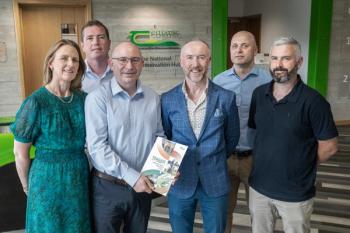
CoreFX Ingredients is opening a European headquarters and research operation in County Cork, Ireland, partnering with a public agricultural research campus to work on formulation problems that have long limited how bioactive compounds perform in finished nutraceutical products.

Live from the Future Nutra Innovation Summit, Kerry Hughes, founder and president of Ethnopharm, explains why botanicals' complex compound networks represent nutrition's next innovation frontier.

Nammex is bringing its already-introduced ErinaPrime Lion's mane mycelium ingredient, standardized to a specific neuroactive compound, to SupplySide Global.

A laboratory study using human liver cells found that Optifolin+, a choline-enriched form of 5-methyltetrahydrofolate, increased methyl-donor metabolite levels, adding cell-based data to the folate ingredient's evidence base ahead of any human methylation research.

Paul Eftang used his FNIS session to walk through lab data on lion's mane and Tongkat Ali products that pass identity and DNA testing while containing few or none of the bioactive compounds their marketing claims are based on.
At the Future Nutra Innovation Summit, Sibyl Swift, PhD, founder and principal of Swift Strategy Group, discusses supplement oversight and unpacks why mandatory product listing divides the industry.
Live from the Future Nutra Innovation Summit, Amber Thelen, director of technical services and innovation at Purity-IQ discusses strain-level verification gaps, NMR testing, and viability PCR for probiotic testing.
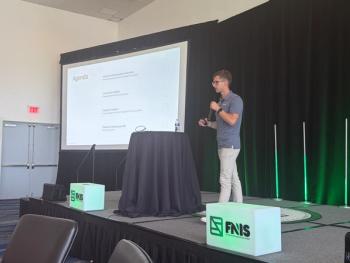
At the Future Nutra Innovation Summit, SPINS' Scott Dicker presented data showing protein and performance nutrition account for 45% of total supplement growth, while sleep, cognitive health, reproductive health, and weight loss formulas have flattened or declined.

Live from the Future Nutra Innovation Summit, Cassie Evans, PhD, RD, explains what sets Helaina's effera human-identical lactoferrin apart in multiple aspects.
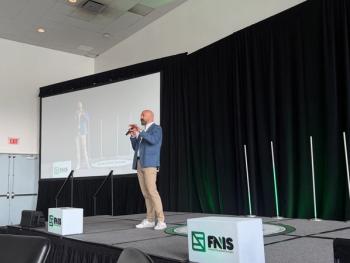
The inaugural Future Nutra Innovation Summit opened with organizers pitching a networking-first alternative to the traditional trade show, followed by an NSF presentation on certification failure rates and consumer trust that set a tone for the rest of the event.

Ahead of her keynote at The Outlook on Active Nutrition, Michelle Arent, USC's Olympic sports performance nutrition director, shares her rigorous supplement vetting process, industry gaps in usability, and a preview of her presentation.

In the eighth episode, Nicholas Saraceno examines how social media has reshaped where people get their health and supplement information, from AI-generated "wellness experts" running fabricated ads to registered dietitians and physicians building their own followings to counter it.

dsm-firmenich is directing formulators toward taste and flavor-masking technology earlier in medical nutrition product development, citing survey data on why patients stop taking oral nutritional supplements.

A 28-day evaluation of TriNutra’s 5% B'utyQuin scalp lotion reported reduced hair loss and modest density increases in 22 adults, adding early clinical data to a cosmetic ingredient formulators are positioning for scalp health claims.

The deal would add Twinlab, Reserveage, Metabolife, and Alvita Tea to cbdMD's wellness portfolio, moving through a court-supervised creditor proceeding rather than a conventional acquisition.
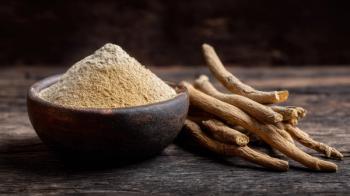
A 90-day trial of Arjuna Natural's Shoden ashwagandha extract found no clinically significant changes in liver, kidney, or metabolic markers among 62 healthy adults.

The private equity firm's agreement to buy Nature's Bounty, Nuun, Osteo Bi-Flex, and Gard from Nestlé signals continued consolidation in the vitamins, minerals, and supplements category as strategic buyers narrow their brand portfolios.

Franziska Weichmann, PhD, discusses the microcirculation, antioxidant, and gene-expression research behind Pycnogenol's effects on scalp and skin barrier health, ongoing mechanistic studies, and how the ingredient fits into combination formulas.

A third round of independent laboratory testing found 4 more finished ubiquinol products containing only trace amounts of the labeled ingredient, bringing the running total of flagged products to two dozen since testing began in 2025.

"Adaptogen" has no formal US regulatory definition, but it traces to a specific 1958 scientific origin and a defined set of pharmacological criteria that formulators can use to evaluate ingredient claims.

The company will feature a metabolic health ingredient, a postbiotic, a resveratrol, and a beta-glucan, backed by clinical evidence that spans from a single 15-person open-label pilot to a placebo-controlled trial in more than 130 women.

A 150-woman placebo-controlled trial on Waleria Healthtech's aspurūs Shatavari extract reports significant reductions, scored for both frequency and intensity.

A Phase I SBIR award will fund research into whether red blood cell fatty acid patterns can flag age-related macular degeneration and glaucoma risk years before vision loss occurs.
Franziska Weichmann, PhD, unpacks a double-blind study's surprising hair density and scalp health findings, and explains why timing, external stressors, and long-term use all valuable.

A 12-week clinical study found a topical serum containing a proprietary Ageratum conyzoides extract reduced grey hair density in adults.

A review of US research on dietary supplements for menopausal symptoms found that the field has grown slowly since 2000, with most studies concentrated on a handful of ingredients and little collaboration between research groups.

As "biotics" ingredients multiply across supplements, foods, and beverages, the terminology separating these 4 categories carries real consequences for claims, clinical support, and formulation strategy, not just marketing language.

A newly launched, heat-killed postbiotic ingredient from Superbrewed Food aims to give formulators an alternative to live probiotics that don't require viability management through manufacturing and shelf life.

Published: June 9th 2026 | Updated: June 15th 2026

July 28th 2026