


News|Articles|September 10, 2026
SPINS Data Shows Nearly Half of Supplement Industry Growth Concentrated in Two Categories
Author(s)Nicholas Saraceno
Listen
0:00 / 0:00
Key Takeaways
- Growth concentration is pronounced, with performance and protein generating 45% of total supplement growth, while the natural channel declines and supplements lose shelf space outside performance nutrition.
- Active nutrition expansion is disproportionately powered by hydration and creatine, as pre-workouts show falling penetration and the weakest year-two innovation success, partially displaced by evolving energy drinks.
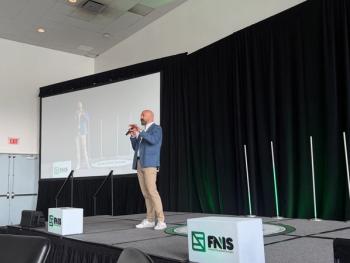
At the Future Nutra Innovation Summit, SPINS' Scott Dicker presented data showing protein and performance nutrition account for 45% of total supplement growth, while sleep, cognitive health, reproductive health, and weight loss formulas have flattened or declined.
Advertisement
Scott Dicker, senior director, head of research and insights for SPINS, opened his Future Nutra Innovation Summit session, centered around “The Trends That Used to Be and What Is Replacing Them,” by inverting the usual trends-talk format.
"Today we're going to focus on what's not doing well, what has been done well in the past and not so much anymore," he told attendees, framing the session around a question for brands: whether declining categories are worth abandoning, repositioning, or simply reformatting for where consumers have moved.
Why Is Supplement Growth Concentrated in Just Two Categories?
Dicker's market-level data set the stage. The natural channel is declining for the first time in several years, he said, with retailers giving less shelf space to supplements as more consumers discover them elsewhere; performance nutrition was the only growing category within that channel.
Across the total market, 45% of all supplement growth is now coming from performance and protein combined, a concentration Dicker said distorts the category's overall health. "If you took those out, the picture would look a lot different," he said, noting that many brands may be growing at rates that look fine in isolation but actually trail the broader department average.
What's Happening Within Active Nutrition, the Industry's Top Growth Category?
That concentration shows up starkly within active nutrition, still the industry's top growth category for 6 straight years. Nearly all of that growth, Dicker said, is coming from hydration and creatine specifically; pre-workout formulas are declining, have lost household penetration, and posted the lowest year-two success rate of any supplement subcategory SPINS tracked.
Weight-management formulas performed similarly poorly, down 7% in units despite roughly flat overall positioning. Dicker attributed part of pre-workout's erosion to energy drinks absorbing market share as they've added nootropics and better-tolerated formulations, though he expects that particular substitution effect to level off as new consumers continue entering active nutrition.
Which "Trendy" Health Categories Have Stalled?
Several long-assumed "trendy" health-focus categories have also stalled. Reproductive health, sleep, cognitive health, and joint health formulas all posted unit growth of 3% or less, and joint health has been declining outright, a trend Dicker called overdue for a correction: "You can't have active nutrition be the top growth category every year and not have joint health have its moment."
He was careful to distinguish weak formula-level sales from waning consumer interest, arguing that categories like sleep are shifting toward calming and mood-support products and formats rather than disappearing. Immune health and weight loss showed similar softness at the broader department level, with weight loss now declining at a low-double-digit rate.
How Is Mood Support Reshaping Ingredient Demand?
Mood support emerged as a clear area of consumer demand, particularly among Gen Z and millennials; Dicker cited SPINS' consumer research showing 46% of Gen Z respondents report feeling stressed or anxious most or all of the time. Within that category, ashwagandha has begun to soften after years alongside magnesium and theanine as the segment's dominant ingredients, with saffron emerging as a newer entrant worth watching.
What Does New SPINS Data Show About Product Innovation Success Rates?
On innovation, Dicker previewed data from an upcoming SPINS report defining new-product success as year-2 sales exceeding year-1 sales. Supplements overall carry roughly a 13% new-item rate and a 51% success rate, in line with other store departments, but that average masks wide variation: hydration and creatine again led both innovation volume and success, while pre-workout and weight-management formulas ranked lowest.
Categories with comparatively low innovation rates but high success included fish oil, other essential fatty acids, amino acids, and multivitamins, the latter aided when brands attach a specific health focus rather than positioning a general formula.
Why Hasn't Women's Health Investment Translated Into Sales Growth?
Dicker also flagged a gap between industry attention and sales data in women's health: prenatal, fertility, reproductive, and hormone-balance products have drawn years of industry investment but haven't yet shown up as sales growth, with women instead moving into categories like protein and creatine that historically skewed toward other demographics.
How Are GLP-1 Medications Reshaping Supplement Purchasing?
GLP-1 medication use continues to reshape purchasing broadly, with Dicker citing SPINS data showing 21% of households now include a GLP-1 user, a group that has cut overall grocery spending by 6% while increasing purchases of protein, fiber, produce, and electrolytes. Eighty percent of GLP-1 users report taking a companion supplement, most commonly protein, magnesium, fiber, gut-health products, and laxatives.
What Discovery and Formulation Trends Are Emerging?
Closing on discovery and formulation trends, Dicker noted that transparency now outweighs formula complexity: 70% of consumers report reading ingredient labels, and proprietary blends are losing favor to clearly dosed, branded ingredients.
He also pointed to a widening gap between platforms driving product discovery and those driving purchases. TikTok generates the most traffic but converts poorly compared with YouTube and Meta, and Dicker flagged the growing role of artificial intelligence in product search.
With roughly 70% of Google searches now ending without a click, and AI-driven recommendations expected to double their share of product discovery within a year, Dicker argued that ensuring product data is readable by AI systems is becoming as important as traditional consumer marketing.
Advertisement
Related Content
Advertisement



Advertisement
Advertisement
Trending on Nutritional Outlook - Supplement, Food & Beverage Manufacturing Trends
1
The Gluten-Free Landscape: Consumer Demand Meets Regulatory Change
2
Multicenter Trial Reports Safety Profile of KSM-66 Ashwagandha Over 8 Weeks
3
Formulating for Joint Structure
4
A Collaboration-First Format Opens With an Honest Look at Supplement Certification
5