A randomized, crossover trial found that ThymoDream, a standardized black cumin seed oil, raised endogenous melatonin levels and improved several sleep measures over 7 nights, with lower reported daytime sleepiness than synthetic melatonin.
In the ninth episode, Nicholas and Lana unpack several longevity launches making waves, and why regulatory clearance, novelty, and clinical data are 3 separate things brands shouldn't blur together.
In the ninth episode of “Let’s Talk Nutrition with Nico,” hosts Lana Pine of The Educated Patient and Nicholas Saraceno of Nutritional Outlook examine 2supplement launches tied to the "longevity" trend.
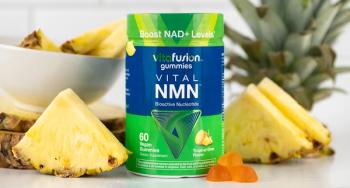
The first is Vitafusion's new Vital NMN Gummies, arriving after FDA reversed its 2022 position that NMN was excluded from the legal definition of a dietary supplement. Saraceno notes FDA's acknowledgment of new dietary ingredient notifications was procedural, not a safety or efficacy determination, and cites a 2026 meta-analysis showing favorable NMN tolerability but no significant metabolic benefits.
The second topic is a head-to-head trial from Akay Bioactives comparing its ThymoDream ingredient against synthetic melatonin for sleep, where results were mixed rather than a clean win for either side. The hosts close on a consistent theme: regulatory clearance, ingredient novelty, and clinical data are separate questions, and manufacturers and consumers alike should look closely at what a given claim actually rests on.
A transcript of Pine's and Saraceno's conversation can be found below.
Lana Pine: Hi everyone, I'm Lana Pine, senior editor of The Educated Patient, and welcome back to episode 9 of "Let's Talk Nutrition with Nico." I'm joined as always by Nico Saraceno, senior editor of Nutritional Outlook. Nico, what are we getting into today?
Nicholas Saraceno: Hey Lana! We’re diving into 2 launches that came out about a week apart, on opposite ends of the "longevity" conversation. One's a new NMN gummy, notable mainly for what had to happen regulatorily before it could exist. The other's a head-to-head trial pitting a black cumin seed oil against synthetic melatonin for sleep. Different ingredients, same wave: consumers optimizing aging, energy, and recovery, willing to trade familiar ingredients for newer ones if the story's compelling enough.
Pine: Let's start with NM. That ingredient's had an interesting few years to say the least.
Saraceno: It has. Piping Rock just
Pine: Does that mean the safety and efficacy questions are settled too?
Saraceno: It doesn’t, and this is the part worth sitting with. FDA was explicit that accepting an NDI notification is a procedural step, not a safety determination. Separately, a 2026 meta-analysis in Nutrients pooled 15 randomized trials, with a safety-focused subset of 10 trials and 383 participants on doses from 250 to 2,000 mg daily for up to 24 weeks. No increase in adverse events, no significant effect on liver enzymes, and favorable short-term tolerability.
But the same review found no significant effects on body weight, fasting glucose, or lipid profiles, only a modest, non-significant trend on insulin resistance.2
So the safety story and the efficacy story aren't the same story: NMN looks reasonably safe short-term, but hasn't been shown to do the metabolic things "cellular health" language tends to imply. And the regulatory reversal addressed legal status, not the strength of evidence behind any specific claim, so legal to sell and clinically substantiated are 2 different bars.1
Pine: Let's talk about the melatonin comparison study, a head-to-head trial is rare in this category.
Saraceno: It is. Akay Bioactives ran a randomized, double-blind, active-controlled
Sleep efficiency improved 12.6%, while total sleep time rose 8.1%, significantly more than the melatonin arm. Cortisol dropped over 21% with no significant change under melatonin, and in participants with elevated daytime sleepiness, ThymoDream cut Epworth Sleepiness Scale scores by about 25% versus a non-significant change with melatonin.3
Pine: Sounds like a clean win. Is it that simple?
Saraceno: Not quite, same nuance we've flagged on this show before, where the headline and the data don't perfectly line up. Melatonin still won on sleep latency, getting people to fall asleep significantly faster. So "comparable to melatonin" holds on some measures, not all of them. It's also a small, company-sponsored trial—24 participants, healthy adults rather than a diagnosed insomnia population—so it needs independent replication before anyone runs too far with the claims.
And melatonin itself is a shakier benchmark than people assume: a 2022 review in Sleep Medicine Reviews, covering 24 RCTs, concluded melatonin didn't appear effective for chronic insomnia in adults without another underlying sleep disorder, with clearer benefit mostly in children, adolescents, or insomnia tied to another condition.4 So "comparable to melatonin" is being measured against a benchmark with its own mixed record in general adult populations.
Pine: What's the throughline for our audience?
Saraceno: Regulatory clearance, ingredient novelty, and head-to-head trial data are 3 separate things, and none substitutes for the others. NMN being legal to sell doesn't mean it does what the marketing implies. ThymoDream beating melatonin on some measures doesn't mean it wins on all of them, or that melatonin was ever a rock-solid benchmark. For manufacturers: be precise about which claim your data actually supports. For consumers: read past "clinically studied" or "FDA cleared" and ask what, specifically, was studied and cleared.
Pine: Great note to end on. Thanks, Nico.
Saraceno: Thanks for having me, Lana. Links to both studies and the FDA letter are in the video description. See you next time!
References
1. US Food and Drug Administration. Letter re: NMN new dietary ingredient notification, response to citizen petition on drug preclusion. December 2, 2025. Accessed September 25, 2026.
2. Yang W, Huang J, Tang Z, Chen C, Sun Y. Safety and metabolism-related outcomes of oral nicotinamide mononucleotide supplementation in adults: a systematic review and meta-analysis. Nutrients. 2026;18(14):2251. doi:10.3390/nu18142251
3. Harshith CS, Jestin TV, Syam DS, et al. Responsiveness of ThymoDream as a natural modulator of the circadian axis: a comparative RCT with melatonin supplementation employing melatonin profiling and actigraphy. Front Sleep. 2026;5:1879110. doi:10.3389/frsle.2026.1879110
4. Choi K, Lee YJ, Park S, Je NK, Suh HS. Efficacy of melatonin for chronic insomnia: systematic reviews and meta-analyses. Sleep Med Rev. 2022;66:101692. doi:10.1016/j.smrv.2022.101692