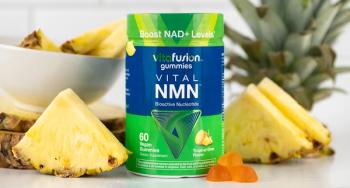
Piping Rock Health Products has launched a 300-mg NMN gummy under its Vitafusion brand, arriving less than a year after the FDA reversed its position on whether the ingredient could legally be sold as a dietary supplement.
A randomized, crossover trial found that ThymoDream, a standardized black cumin seed oil, raised endogenous melatonin levels and improved several sleep measures over 7 nights, with lower reported daytime sleepiness than synthetic melatonin.
Akay Bioactives has published results from a randomized, double-blind, active-controlled crossover trial comparing its branded ingredient ThymoDream, a standardized black cumin seed oil, directly against 5 mg of synthetic melatonin in adults with self-reported sleep disturbances.¹
The study, conducted in 24 healthy volunteers and published in Frontiers in Sleep, found that a 200-mg nightly dose of ThymoDream increased plasma melatonin levels 2 to 3 times above baseline for up to 6 hours and produced several measurable sleep improvements within 7 nights.²
For manufacturers formulating sleep-support products, the trial offers head-to-head efficacy and mechanistic data on a melatonin alternative, an evidence type that direct-comparison studies in this category rarely provide.
"Melatonin may be widely used, but it's not suitable for everyone," said Frederik Krabbe Errebo, head of business unit at Akay Bioactives, in the company's announcement. "These findings show that ThymoDream offers a plant-based approach that works with the body's natural processes while delivering measurable benefits for sleep, with select outcomes comparable to melatonin use, and with fewer reports of daytime sleepiness."¹
Researchers enrolled 24 adults who self-reported sleep disturbances using the Pittsburgh Sleep Quality Index and assigned them to 7-night intervention periods with ThymoDream and synthetic melatonin, separated by a 7-day washout, in a crossover design.²
Outcomes included plasma melatonin levels, dim light melatonin onset, serum cortisol, actigraphy-based sleep measures, and daytime sleepiness scored on the Epworth Sleepiness Scale. This approach allowed both objective, device-measured sleep data and standardized self-reported alertness to be compared directly between the two interventions in the same participants.
Within 7 days, ThymoDream was associated with a 12.6% improvement in sleep efficiency, an 8.1% increase in total sleep time, and reductions in sleep latency and wake time after sleep onset, with a significantly greater increase in total sleep time than melatonin, while melatonin produced a significantly greater reduction in sleep latency.²
Cortisol fell 21.4% in the ThymoDream group with no significant change under melatonin, and among participants with elevated baseline daytime sleepiness, ThymoDream was associated with a 25.7% reduction in Epworth Sleepiness Scale scores compared with a non-significant change under melatonin.²
The comparison is worth situating against melatonin's own contested efficacy record in adults. A 2022 review of systematic reviews and meta-analyses in Sleep Medicine Reviews, covering 24 randomized controlled trials, concluded that melatonin did not appear effective for chronic insomnia in adults without another sleep disorder, with clearer benefit limited mostly to children and adolescents or to insomnia occurring alongside another medical condition.³
That context matters for interpreting "comparable to melatonin" as a claim, since the benchmark itself carries meaningfully mixed evidence in the general adult population the new trial enrolled.
References
1. Akay Bioactives' ThymoDream: plant-based sleep support compared head-to-head with synthetic melatonin. Akay Bioactives. September 18, 2026. Accessed September 22, 2026. Press release provided via email.
2. Harshith CS, Jestin TV, Syam DS, et al. Responsiveness of ThymoDream as a natural modulator of the circadian axis: a comparative RCT with melatonin supplementation employing melatonin profiling and actigraphy. Front Sleep. 2026;5:1879110. doi:10.3389/frsle.2026.1879110
3. Choi K, Lee YJ, Park S, Je NK, Suh HS. Efficacy of melatonin for chronic insomnia: systematic reviews and meta-analyses. Sleep Med Rev. 2022;66:101692. doi:10.1016/j.smrv.2022.101692