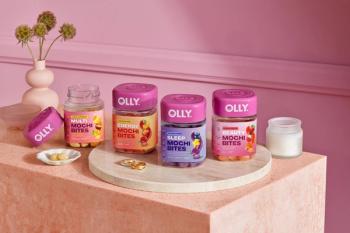
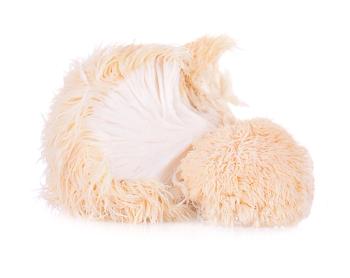
The Watsonville, California, supplier will sample formats built on its lion’s mane and multi-species mushroom ingredients, following a recent facility expansion.
With Peru's anchovy fishery opening its 2026 season with its lowest quota in a decade, Matts Johansen argues that aquaculture's growing appetite for omega-3s, not just El Niño, is what should actually be keeping supplement brands up at night.
The omega-3 supply chain is heading into a stress test that much of the nutraceutical industry hasn't fully reckoned with. Peru's anchovy fishery, the backbone of the global fish oil supply, opened its 2026 season with its lowest quota in roughly a decade, and initial catch volumes are already running at a fraction of historical norms. At the same time, demand for omega-3s is climbing from a source many supplement brands don't compete with directly: aquaculture, which now consumes the large majority of global omega-3 production and has the potential to outbid the human nutrition market for supply.
To understand what this means for finished product manufacturers, Nutritional Outlook spoke with Matts Johansen, CEO of Aker BioMarine, which sources omega-3s from Antarctic krill rather than the anchovy fishery most of the industry depends on. Johansen argues that krill's separate supply chain and tightly regulated harvest, overseen by the Commission for the Conservation of Antarctic Marine Living Resources (CCAMLR) and certified by the Marine Stewardship Council (MSC), offer a degree of insulation from the climate-driven disruption hitting Peru. But he's careful not to frame krill as a simple substitute or a guaranteed fix. Instead, he makes the case that real resilience requires brands to diversify across sources, including krill, algae, and other alternatives, before shortages force the issue.
Johansen also addresses why he believes the nutraceutical industry has been slower than aquaculture to react to tightening supply, what a genuine shortfall could mean for consumer retention if brands can't offer alternatives, and how Aker BioMarine balances near-term catch volumes against its public support for expanded marine- protected areas around the Antarctic Peninsula.
Along the way, he raises a question that’s worth sitting with: whether krill's more concentrated, tightly governed supply chain offers any lessons for a fragmented fishery like Peru's, and what traceability comes to mean once a real supply squeeze starts tempting suppliers to cut corners.
Nicholas Saraceno: Aker BioMarine sources krill from Antarctica. While much of the omega-3 industry depends on the Peruvian anchovy fishery, which opened its 2026 season with its lowest quota in about a decade, does krill's separate supply chain actually insulate the category from El Niño-driven disruption, or would you say Antarctic waters are facing their own version of the same kind of climate pressures?
Matts Johansen: There are no signs of El Niño or anything like that in Antarctica. The currents come from the depth of Antarctica, 3000 m coming up and then going north. It's one of those few fisheries that still have a lot of potential to be developed. The quota is very restrictive, so you can only catch 1% of the biomass. As a result, it's deemed as actually the most sustainable fishery in the world, but there's a lot of untaken quota.
You can continue to increase this fishery for quite some while, and it can be a viable source for both marine proteins and omega-3s in this kind of supply chain distress that we're seeing right now.
Saraceno: Certainly, and I feel many would make that argument that diversification could be considered one of the key defenses against the supply chain volatility that we're experiencing. Beyond sourcing from a different species and region, what does real diversification look like in practice? Is it about the geographic spread, is it related to the harvesting method, or is it tied to something else entirely?
Johansen: First of all, I think it's a fundamental challenge because there is more demand than supply of omega-3, El Niño or not, and it's driven from the aquaculture industry. The aquaculture industry is growing 4% or 5% per year, and they are absolutely dependent on omega-3s for their fish or their shrimp to survive. And they're using not a lot of it in the diet. They can actually pay a lot, much more than human markets, which is quite surprising.
There's a fundamental challenge of having enough omega-3s to supply the growing demands, both on the human side and aquaculture. Almost 70% to 80% of the total omega-3 production in the world is taken by aquaculture. Sixteen percent goes into the nutraceutical segment. I think the challenge we're facing in the nutraceutical industry is that the aquaculture industry is already on top of this challenge. They've been on top of it for the last 6 to 12 months, and are making moves.
They're moving into Peru, buying the human-grade omega-3 sources that we are depending on for our industry. They are going to Turkey. They're going to different type of regions of the world securing the access, and I would say our industry hasn't woken up to the severity of the situation yet, and might be taken on surprise now because it's not going to be that omega-3 will be much more expensive than today. The main problem is that there will be no supply.
Take the Peruvian fishery. As you mentioned, just this year, they are producing 10% of what they normally do for the first half of the year. The question is, what's going to happen the second season? Now, this is before El Niño is kind of happening. That's the first half of '26.
Second half, there might not be any catches at all, which means we will be left by probably 5% of the supply than what we normally have. That means that brands out there, they have to diversify their portfolio of sources of omega-3s: algae, krill, whatever different sources they can have to make sure once their fish oil supply stops, because it will.
They will have to have some alternatives to put in front of the consumers, because the problem is that if you don't have those alternatives available, most consumers will walk away and do something else. They may sign up for the gym, start eating healthier, and get some other strategies for their health, and we will lose those consumers forever.
Saraceno: You mentioned that the aquacultural field has been on top of this for the past 6 to 12 months, but is there anything specific that it'll take for our industry in terms of nutraceuticals to wake up now rather than later? What's that thing pushing them that's going to help push the needle on that?
Johansen: I think this crisis has happened before. There wasn't anything new, 2 or 3 years ago. We just made it because there was enough inventory in the supply chain to kind of keep things flowing through the crisis. The problem is that those inventories haven't been built up since then, and I think people just think that it’s probably going to sort itself out, and there’s nothing to worry about.
It sorted itself out in the past. I don't think it will [this time around]. I think those brands that are proactive now and make strategies for a situation where actually supply will be disrupted—they will be the ones that win. They will be the ones catching the consumers out there. I think this conversation can help, but we are starting to educate, put the numbers out. Don't take our word for it, just look at the data. How much are we producing versus what we usually produce? How much is going to human versus aquaculture? Just look at that picture, and I think once you see the data, everybody will understand what is about to happen.
Saraceno: Krill fishing does operate under a completely different regulatory and certification framework than the anchovy fishery, including CCAMLR oversight and MSC certification. How directly comparable is that governance model to what is happening in Peru? Could elements of it be applied to the fisheries facing similar climate pressure?
Johansen: Yes, it could be. It is deemed as the most sustainable fishery in the world because the quotas are very conservative. It's very transparent. All our vessels need to have an independent observer on board reporting everything that happens. You have a responsible industry. It’s easy to do because our sister company, Aker QRILL Company, is catching, let's say 60% of all the krill in the world.
There's 1 big player that can structure things, make things right. If you look at the Peruvian fisheries, with many small fishing vessels, it's very difficult to demand them all to have an independent observer on board. It’s going to be very difficult, but at the same time, the fact that they are shutting down the fishery now is a signal that it works. When things are in distress, they stop fishing, so I think it is a system that works. I don't think it's so much about that.
Rather, I think it's the sustainability angle here. It's going to be more about traceability, because let's say in a situation where there's a squeeze on supply chains, you will have companies making shortcuts in the supply chain, getting something that is not sustainable, mixing it in with something else, and you lose control of what it is that you're giving to the consumers. I think from that perspective, being MSC certified or being able to support your supply chain with full transparency and all of that—it's going to be very key in this stressful situation.
Saraceno: There’s always going to be "bad actors" that are looking to cut corners in those regards, so it is certainly a scary thought. You've also publicly supported a marine-protected area around the Antarctic Peninsula that would cover about 70% of that region. How does Aker weigh long-term ecosystem protection commitments against the near-term catch volumes and supply demands from customers who are in need of predictable growing quantities of omega-3 ingredients? How are you balancing those demands? What's that process like?
Johansen: It is a balance, and if you think about it, there's a goal of protecting 30% of the oceans by 2030 that most nations have kind of committed to, and we're not doing too well on actually getting there. The theory is if you protect a large amount of the ocean, and it becomes a spawning ground for marine life, it means you can catch more in the remaining areas.
That is also the way we're looking at it. By putting together these sustainable efforts, being marine-protected areas, or the way we have the krill fishery management, all those elements will ensure that we can catch at least what we catch today, but potentially also more in the future if we manage it well. I think that's a big misunderstanding when it comes to a lot of these conservation measures, that it's not necessarily a negative for industry. It’s very positive for the sector and allows us to be able to catch more into the future.
4 days ago
Powerful Plantsabout 1 month ago
The Missing Link in Nutraceutical Clinical Success