Why responsible innovation means asking whether yesterday's formulations still reflect today's best science—not just launching the next new ingredient.
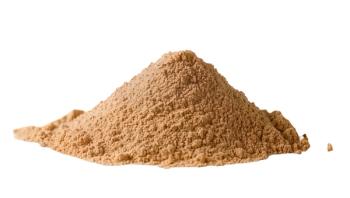
A randomized, double-blind, placebo-controlled trial in reproductive-age women found that 8 weeks of standardized shatavari extract supplementation was associated with improvements in sexual function, vaginal moisture, fatigue, and sleep disturbance.
An 8-week randomized, double-blind, placebo-controlled trial found that a standardized shatavari root extract was associated with improvements in sexual function among reproductive-age women reporting low libido, along with changes in fatigue, sleep disturbance, and psychosocial measures.1
The study, published in the Journal of Medicine and Life, included 70 healthy women randomized to receive 300 mg per day of shatavari root extract or placebo for 56 days. The published paper reports participants aged 18 to 45 years; the accompanying press release describes the study population as ages 18 to 42 years.¹,²
“The same symptom does not mean the same root cause,” said Komal Baldwa, founder of Waleria HealthTech. “That insight drove us to design this study specifically around younger women or reproductive-age women, whose ovarian function is intact but whose lifestyles are exhausting.”
The trial’s primary endpoint was change in the total Female Sexual Function Index score, a validated measure covering sexual desire, arousal, lubrication, orgasm, satisfaction, and pain. After 56 days, the total score increased 67.96% from baseline in the shatavari group, compared with 7.58% in the placebo group. The between-group difference at Day 56 was 3.3 points, with a 95% confidence interval of 1.6 to 5.0. The greatest domain-level improvement was reported for lubrication.¹
Secondary measures also favored the extract. Scores on the Female Sexual Encounter Profile-Revised increased 61.9% compared with 4.44% for placebo. Hospital Anxiety and Depression Scale scores decreased 24.81%, while sleep-disturbance and fatigue measures also improved. The investigators reported no serious adverse events and concluded that the extract was well tolerated over the study period.¹
The company’s release2 emphasized additional changes in sexual desire, arousal, satisfaction, vaginal moisture, fatigue, and sleep disturbance. It reported a 63% improvement in objectively measured vaginal moisture and described the extract as a standardized full-spectrum shatavari preparation containing specified phytochemicals.² Those ingredient-specific characteristics are important for manufacturers because results from 1 defined extract should not automatically be generalized to other shatavari materials.
Female sexual dysfunction is common and can involve desire, arousal, orgasm, or pain, with associated personal distress. The condition is multifactorial and may be influenced by biological, psychological, relationship, medication, and other contextual factors.³ A systematic review of reproductive-age women reported a high prevalence of female sexual dysfunction and identified multiple potential predictors, reinforcing the difficulty of attributing low desire to a single physiological mechanism.⁴
That context is relevant when interpreting the shatavari findings. The study evaluated women within a relatively narrow reproductive-age population rather than combining premenopausal and postmenopausal women, but the trial was not designed to establish that fatigue, poor sleep, or anxiety were the underlying causes of low desire.
Clinical management generally begins with evaluation of the individual’s symptoms, medical history, medications, psychosocial factors, and potential contributing conditions rather than treating libido as an isolated endpoint. The American College of Obstetricians and Gynecologists recommends a comprehensive approach to diagnosis and management based on the specific presentation and available evidence.³
For nutraceutical manufacturers, this creates an important distinction between evidence of an ingredient effect on validated questionnaire scores and evidence of treatment for a diagnosed sexual disorder. The present trial supports further investigation of the extract but does not establish it as a replacement for clinical evaluation or established medical management.
The study was relatively small, conducted at a single site, and lasted only 8 weeks. It also enrolled healthy women with low-libido characteristics, which limits the extent to which the findings can be generalized to women with diagnosed sexual dysfunction, significant medical conditions, medication-related sexual symptoms, or other demographic populations.¹
Longer and larger randomized trials could help determine whether the reported improvements are sustained after supplementation ends, whether they are reproducible in broader populations, and which outcome measures are most clinically meaningful. Additional research may also help clarify whether the observed changes in fatigue, sleep, and psychosocial measures are related to changes in sexual function or represent separate effects.
References
1. Satla M, Mudhigonda M, Surampalli G. Safety and efficacy of Shatavari in women with low libido: a randomized, double-blind, placebo-controlled trial. J Med Life. 2026;19(7):548-563. doi:10.25122/jml-2026-0041.
2. New Shatavari Study Evaluates Low Sexual Desire in Reproductive-Age Women, With Measures of Vaginal Moisture, Fatigue and Sexual Function. Waleria Healthtech Private Limited. October 7, 2026. Accessed October 7, 2026. Press release provided via email.
3. American College of Obstetricians and Gynecologists' Committee on Practice Bulletins—Gynecology; Lindau ST, Abramsohn E. Female sexual dysfunction: ACOG Practice Bulletin Clinical Management Guidelines for Obstetrician-Gynecologists, Number 213. Obstet Gynecol. 2019;134(1). Reaffirmed 2025. doi:10.1097/AOG.0000000000003324.
4. McCool-Myers M, Theurich M, Zuelke A, Knuettel H, Apfelbacher C. Predictors of female sexual dysfunction: a systematic review and qualitative analysis through gender inequality paradigms. BMC Womens Health. 2018;18(1):108. doi:10.1186/s12905-018-0602-4.