NNB Nutrition says the finished product is the first to carry the certification using its creatine ingredient, which also holds Informed Choice certification and has undergone third-party impurity testing.
Ahead of her keynote at The Outlook on Active Nutrition, Michelle Arent, USC's Olympic sports performance nutrition director, shares her rigorous supplement vetting process, industry gaps in usability, and a preview of her presentation.
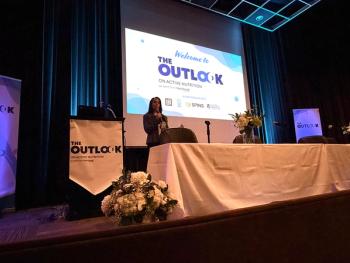
Ahead of Nutritional Outlook's The Outlook on Active Nutrition event on September 24th, senior editor Nico Saraceno spoke with Michelle Arent RD, MPH, CSCS, CISSN, director of Olympic sports performance nutrition at the University of South Carolina, for a preview of her upcoming keynote, "Formulating for Champions."
In this conversation, Arent offers a look at what it takes to fuel elite collegiate and Olympic athletes safely and effectively — and why some of the most basic nutritional considerations are still overlooked. She explains her rigorous supplement vetting process, revealing why third-party testing alone doesn't meet her bar: products must be banned-substance tested to protect athletes competing at international and world levels. Beyond safety, she walks through how she evaluates efficacy, asking not just whether a product works, but whether it's the right fit for what an athlete is actually trying to achieve.
Arent also addresses a persistent gap in the active nutrition space: practical usability. She challenges supplement manufacturers to slow down before chasing trends, and to invest in real scientific partnerships and population-specific testing that substantiate their claims rather than relying on hype. Looking ahead, she shares her perspective on where the industry is headed — including the ripple effects of GLP-1 science.
Learn more and register for the conference
Transcript
Nicholas Saraceno: Welcome everyone to another edition of the Nutritional Outlook video series, this one being conference edition. Of course, I am Nico Saraceno, senior editor of Nutritional Outlook magazine, and today I am joined by Michelle Arent. She is the director of Olympic sports performance nutrition at the University of South Carolina. We have a lot to get to today, Michelle, but first of all thank you for taking the time to hop on the Zoom call today and joining me. I really do appreciate it.
Michelle Arent: Absolutely. Thanks for having me.
Saraceno: For sure, for sure. So, as I alluded to at the top, this is a conference edition of coverage. Obviously Nutritional Outlook on September 24th is hosting The Outlook on Active Nutrition, so it'll be coming up soon before we know it. You are actually presenting and speaking on the keynote, which is all about formulating for champions. So I was wondering, without giving too much away, perhaps just as a teaser, would you mind just providing us with a snippet of what you'll be getting into during that session and during that keynote?
Arent: That one's a little challenging, so I'll leave it at this. There there's a lot that goes into fueling athletes, especially collegiate athletes in the space that I'm in, and doing it in a way that is safe for the athletes themselves and also for the organizations within which we compete. I think sometimes that's overlooked, and some of the most basic items that an athlete may need from a nutrition or supplement standpoint are often overlooked in that, so those are some things that we will be touching on, as well as highlighting some places that maybe sneak through that people aren't thinking about.
Saraceno: That's fair. And we as journalists like to pry, so I did come up with some questions that kind of do pry a little bit as to what you just said. So you just alluded to it, but obviously like when you're evaluating a dietary supplement for use with Olympic caliber athletes, could you just maybe get into a little bit of what your actual decision process is like? Because I'm kind of wondering like you have to consider obviously the third-party testing and the dosing accuracy, could you maybe like describe some of that process as to like how you handle that situation?
Arent: Yeah, I like to be very specific and very clear in my wording, and so third-party testing isn't good enough for me. It needs to be banned-substance tested, and that's very important. And that's something that I again, choose my words very wisely when I'm communicating that to my athletes and the coaches, because there are a lot of things that are third-party tested that might not hit that threshold of the banned substance testing, and that is very important for the athletes that I work with and those that go on and compete at international, world levels. So, that first and foremost. We also need to ask is the supplement in question, right, cause sometimes someone will bring something to you and say, Hey, I got this thing, is that even something that is helpful in what they're trying to accomplish, right? If is it efficacious, period, but then also does it match what they're trying to implement it for? And a lot of times the answer is no, and so that's the kind of the process that we'll go through, but it always is going to start with that banned-substance testing conversation.
Saraceno: You said that practical usability is still a gap for a lot of active nutrition products as well. Now, what does that gap look like in real terms, including for your athletes, your staff, both? And what do you think supplement manufacturers need to change in order to close that gap?
Arent: That's an interesting one because keeping in mind companies are in business to make profits, right? Very few are philanthropical, especially in this space, and so the rush to get products out that are kind of hot topics and/or whatever's going on in social media kind of happens.
I guess, my suggestion would be maybe pump the brakes a little bit. Let's see if things actually shake out from a from a scientific practicality standpoint and if brands could build partnerships or collaborations with individuals to do scientific testing, especially in in the populations that they're promoting their products to work in, to have some evidence to support what they're actually claiming, that would be a go-to.
Saraceno: For sure, and clinical substantiation evidence obviously huge in our industry. So, speaking of which, is there any specific piece of ingredient science or any sort of product innovation that's genuinely exciting you at this moment that you think people should know about?
Arent: In the in the space that I work in, maybe not, but I think there there's there are a lot of things with GLP-1s and things like that that there's a there's a whole space of things to discuss of that. That's, again, not really over here in Olympic sports side, cause that still falls under peptides, which are banned, over here. If that was something that somebody had a medical exemption use for, potential conversations of that, but so that wouldn't really come up, I'll say in my everyday world, but I think that that is a space 100% where it's really kind of exciting to see the changes that are going on and to see what other things that we can leverage to kind of build on that.