Register Now - From Scalp to Follicle: The New Science of Hair Wellness Consumers Can See and Feel
News|Articles|September 29, 2026

Senolytic Supplement Formulation: A Guide to Cellular Health Today

Author(s)Erin McEvoy
Listen
0:00 / 0:00

Key Takeaways

  • A three-step cell strategy prioritizes maintenance, senescent-cell clearance, and stem/progenitor mobilization to restore tissue capacity after senolytic-driven “space freeing,” despite limited human validation.
  • Senolytic candidates fisetin and quercetin face bioavailability constraints, making liposomal/phytosomal/beta-cyclodextrin systems relevant; early clinical signals remain preliminary and sometimes rely on drug combinations.
SHOW MORE

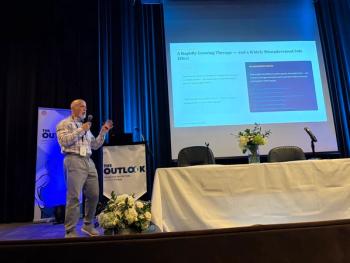
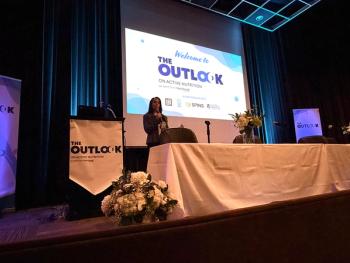
At this year’s The Outlook on Active Nutrition, Joey Savage, founder of Savage Nutra, gives supplement makers an "honest scorecard" of where the research stands and where human data is still needed.

At this year’s The Outlook on Active Nutrition, Joey Savage, founder of Future Nutra Foundation and Savage Nutra, offered formulators a framework for the cellular-health category. His presentation used a city metaphor to lay out two paths of three steps each: one for cells and one for mitochondria. The cell path starts with keeping healthy cells functioning through autophagy, DNA repair, redox balance, and NAD levels. It then clears out aged, inflammatory "senescent" cells, and finally calls in stem cells to replace them. The mitochondrial path starts with keeping the cell's "batteries" charged with ingredients such as CoQ10 and NAD precursors. It then recycles damaged mitochondria through mitophagy, and finally builds new ones by activating PGC-1α.

Savage cautioned that much of the supporting evidence is still preliminary. "There's much, much, much more human data that is going to be needed in order to really robustly prove these things out."

The Cell Path: Clear, Then Replace

Savage's cell path centers on senescent cells, which stop dividing but stay alive and release inflammatory signals. He noted that "removing even a few of them has a really huge effect on overall health span," citing mouse studies in which clearing senescent cells extended median lifespan and delayed tumor formation.

Savage defined senolytics as compounds that selectively help aged, non-dividing "senescent" cells leave the body by loosening the survival signals they depend on, prompting them to shut down without harming healthy cells. Senolytic candidates he discussed included the flavonoids fisetin and quercetin. Fisetin won a head-to-head test of 10 natural compounds for clearing senescent cells in mice, he said, and some human trials at the Mayo Clinic are underway. Quercetin was tested in a small pilot of 9 people with diabetic kidney disease, in combination with the drug dasatinib. He called out a recurring formulation problem: fisetin and quercetin are poorly absorbed, so liposomal, phytosomal, or beta-cyclodextrin delivery systems may be necessary.

Because clearing cells leaves gaps, Savage paired senolytics with stem cell mobilizers. "Clearing the senescent cells frees up this space, but mobilizing the stem cells fills it." He highlighted two ingredients:

  • Sea buckthorn extract: In a 12-person randomized, double-blind crossover study, 500 mg of the extract increased circulating progenitor cells one to two hours after dosing. These included cells specific to blood vessels and connective tissue.
  • AFA (Aphanizomenon flos-aquae) blue-green algae: A double-blind crossover trial showed an increase in CD34+ stem cells of roughly 21% within an hour. Savage noted there are patents around AFA, with ways to work around them.

He described the two as complementary, since AFA is more general-purpose and sea buckthorn is more targeted. Both studies were small and short, he said, so more research is needed.

The Mitochondrial Path: Recycle, Then Rebuild

Savage's mitochondrial framework covers energy support, recycling damaged mitochondria (mitophagy), and building new ones (biogenesis). On energy, he pointed to CoQ10, particularly reduced ubiquinol, and to NAD precursors, including nicotinamide riboside, NMN, niacin, and tryptophan.

For mitophagy, he named urolithin, found in pomegranate tannins, A as "probably the most notorious mitophagy-inducing agent that we know right now." He noted that roughly 40% of people have the gut microbiome needed to produce it from ellagic acid. A four-month study found improved muscle endurance in adults aged 65 to 90. Spermidine also contributes through broader autophagy.

For biogenesis, he focused on activating PGC-1α, which he called the "mitochondrial replicator." Candidates include berberine, resveratrol, and PQQ. He noted PQQ's evidence comes largely from cell and animal work, apart from a small human study at 20 mg per day for three days that lowered inflammation markers. He noted that a pairing of PQQ with CoQ10 made sense. He also said, "the champion of activating PGC-1α is going to always be exercise."

Formulation and Compliance Takeaways

Savage's scorecard was candid. CoQ10 and urolithin A have the most robust evidence, while most other ingredients lack strong human data.

On dosing, he advised against daily senolytics: "This is not something that you want to take on a daily basis." His suggested comprehensive regimen is senolytics one or two days a week at most, with stem cell activators on other days rather than together. On claims, he recommended structure/function language such as "supports cellular renewal," without ever making disease claims.

His presentation ended with a succinct overview: “Renewal isn't a single ingredient — it's a rhythm. Show the grumpy neighbors out, wake the builders, recycle the leaky batteries, and ring the foreman's bell. Then give the city time to do its work.”


Related to this article

"Third-Party Tested" Isn't Good Enough, Sports Dietitian Tells Supplement Brands
At The Outlook on Active Nutrition, Michelle Arent, RD, MPH, CSCS, CISSN, director of Olympic sports performance nutrition at the University of South Carolina, tells attendees that vague testing language is putting college athletes at risk, and called on supplement brands to build clearer, more transparent partnerships with universities and practitioners.