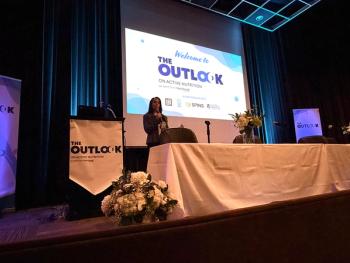
At the second annual The Outlook on Active Nutrition, sports nutritionist Doug Kalman, PhD, RD, FISSN, discussed how the rapid rise of GLP-1 receptor agonists such as Saxenda, Wegovy, and Zepbound is creating substantial nutritional gaps and, with them, a clear opening for dietary supplement and food companies.
How Do GLP-1 Drugs Actually Work?
Dr. Kalman, who was involved in his first pharmaceutical trial with a GLP-1 receptor agonist roughly 21 years ago, explained that GLP-1 is a gut hormone secreted by L cells in the small intestine and colon in response to food intake. GLP-1 receptor agonists slow gastric motility, suppress appetite by acting on satiety and hunger-related neurons and hormones (including reductions in neuropeptide Y and AgRP and increases in CART), delay gastric emptying, and appear to dampen the "hedonic," or reward-driven, perception of food by modulating dopamine pathways. The drugs also increase natriuresis, meaning users lose more sodium and require greater attention to hydration and sodium intake.
What Happens to Caloric and Nutrient Intake?
The nutritional impact, Kalman said, is a substantial reduction in caloric intake: typically 15% to 40%, with early-treatment intake often falling to 800–1,200 calories per day before settling around 1,750 calories by six months to a year. That reduction in food volume brings a corresponding reduction in nutrient quality for vitamins and a reduction in the amount of fiber, minerals, essential amino acids, and essential fats. Citing prospective studies of GLP-1 users, Kalman reported that protein intake averages only about 18.5% of calories and carbohydrate intake about 41%, while fat intake tends to rise as a share of the diet.
Which Nutrient Deficiencies Are Showing Up?
Against daily reference intakes, Kalman cited data showing that after six months to a year on GLP-1 therapy, 98% of users had insufficient vitamin D and potassium intake, 94% insufficient choline, roughly 90% insufficient magnesium, and 88% insufficient iron, while sodium was the only nutrient consistently over-consumed. Overall, he said, about 22.5% of people on GLP-1 therapy for at least six months to a year develop a diagnosed vitamin or mineral deficiency, alongside risks of anemia stemming from iron, B12, or folate deficiency.
Why Is Muscle Preservation a Central Concern?
Kalman singled out muscle loss a consequential effect of GLP-1 therapy. He cited data indicating that roughly 38% of the weight lost early in treatment is muscle rather than fat, a disproportionate share given how metabolically important muscle tissue is. Greater muscle tone, he noted, supports better blood sugar control and overall metabolic function, while its loss reduces functional capacity, particularly as patients age. To help offset this, Kalman pointed to resistance training as an essential component of care for GLP-1 patients, paired with adequate protein intake of 1.2 to 1.6 grams per kilogram of body weight and sufficient essential amino acids to support neurotransmitter and muscle protein synthesis.
On the supplement side, he cited a recently published study showing that beta-hydroxy beta-methylbutyrate (HMB) reduced muscle loss compared with placebo in people on GLP-1 receptor agonists, and also named creatine monohydrate as a strategy with mechanistic and research support for preserving muscle during GLP-1-induced weight loss.
How Does This Compare to Low-Calorie and Ketogenic Diets?
Kalman drew parallels between GLP-1 users and people on very low-calorie or ketogenic diets, noting shared risk areas including vitamins A, D, E, K and C, calcium, iron, zinc, magnesium, potassium, fiber, and protein. Unlike bariatric surgery patients, for whom monitoring of ferritin, folate, B12, vitamin D, calcium, zinc and copper is standard practice, he noted that no equivalent standard of care yet exists for GLP-1 patients, a gap he suggested the industry could help fill.
What Else Does the Evidence Support?
Beyond muscle preservation, Kalman highlighted 20 to 30 grams of daily fiber and general resistance exercise as evidence-based strategies for GLP-1 patients. He also noted that roughly 35–50% of patients discontinue GLP-1 therapy within a year, a population, he suggested, that nutrition companies are positioned to support through nutritional products, consumer retail, and education.
Where Can Industry Step Into the Education Gap?
During Q&A, Kalman noted that physicians and pharmacists rarely deliver drug-nutrient interaction guidance in practice, leaving a consistent education gap. He cited Abbott Nutrition's Abbott Health Institute as a model, sponsoring academics and researchers to educate dietitians and clinicians, as well as Nestlé’s similar education efforts, though those remain "not well organized," he said, signaling clear room for companies to invest in structured, evidence-based education beyond product promotion.