





Clean-label marketing and “low” and “light” claims drive energy drink interest. Plus: Interest in the energy category is not limited to the energy drinks market alone.
Clean-label marketing and “low” and “light” claims drive energy drink interest. Plus: Interest in the energy category is not limited to the energy drinks market alone.

Quicksilver Scientific’s liposomal delivery systems star in three new launches, including a liquid multivitamin, an energy supplement, and a hemp CBD serum.

Will a widening audience give energy products staying power?

With the global astaxanthin market projected to reach $1.1 billion by 2020, scientists are doubling down on research in new health areas.

The process patent lets Applied Food Sciences create a highly water-soluble energy ingredient.

Market researcher Mintel and beverage specialist Flavorman talk about the evolution of sports drinks.
Experts discuss emerging adulterants, strategies for catching adulteration, and whether the Designer Anabolic Steroid Control Act has made a difference.

The company emphasizes that BodyBalance is not intended to be a weight-management tool.

The company says this product offers sustainability benefits by enabling the company to use the entire beet crop.

We spoke to Erika Whitman, RD, CSSD, team sports dietitian at The Madison Square Garden Company in New York, about the role supplementation plays in professional sports today.
Nutrition 21's Velositol was found to double the rate of muscle protein synthesis when taken with whey protein, as compared to supplementing with whey protein alone.

Sports powders are expected to grow in popularity as their user base broadens.

Glanbia Nutritionals and Nutrition 21 LLC have extended their agreement to co-market Nutrition 21’s protein-optimizing ingredient, Velositol.
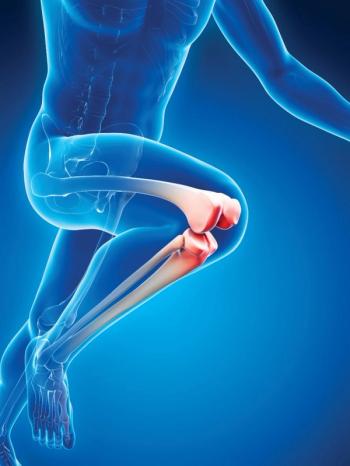
Subjects consuming the bioactive collagen peptides demonstrated statistically significant improvements in activity-related pain intensity.

New study results suggest Oxyjun, an arjuna extract developed by Enovate Biolife, may increase cardiovascular efficiency and improve cardiac conditioning in young men.

Marketers are finding new opportunities to teach consumers about the benefits of immune-health products.

A new bill introduced in the New York State Assembly seeks to prohibit the sale or distribution of creatine to minors.

NPA has formed a partnership with the Informed-Choice testing program to expand the reach of its efforts to test for banned substances in U.S. supplements for athletes.

Researchers also found that the Peak ATP ingredient from TSI enhanced peak power and muscle excitability.

Metabolic Technologies has launched a new website for its MyoeDge product, a combination of vitamin D3 and calcium beta-hydroxy-beta-methylbutyrate (HMB).

Cepham has shared soon-to-be-published study results that suggest its BlaMus black-musli extract may be an effective testosterone booster.

Bergstrom Nutrition’s methylsulfonylmethane (MSM) ingredient was found to mitigate the inflammatory response to strenuous exercise in a new study.

“Energy” has now moved ahead as the number-two reason why Americans who use dietary supplements say they take supplements in the first place, so it’s not surprising to see sales of vitamin B12 growing in all retail channels.

Sabinsa’s multi-enzyme complex shows potential for a new sports-related application in a recent study.

Tensions between dairy proteins and plant proteins are heating up, but which category stands to gain the most in 2017?