


Fun fact! Ancient Greeks would use different scents of perfume for each part of their body. Click to read more!
Fun fact! Ancient Greeks would use different scents of perfume for each part of their body. Click to read more!

Fun fact! There are two types of peaches: clingstone and freestone peaches. Click to read more!
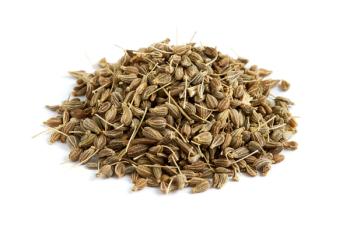
Fun fact! Historically, the superstitious would carry around a sachet of anise as protection from the evil eye.

Fun fact ! In the Middle Ages, the English used thyme in food as an antimicrobial to prevent it from spoiling too fast.

Fun fact! There are two types of pears: European or French pears that include the Bartlett, Bosc and D’Anjou varieties, and Asian pears that include the Hosui and Nijisseiki varieties. Asian pears have a more apple-like texture.

Fun fact! It takes about ten years for mulberry trees to produce fruit from the seedling stage.

Fun fact! White agaricus mushrooms contain more protein than kidney beans.

Fun fact! Caraway was an ingredient in love potions because it was thought to keep lovers from proving fickle.
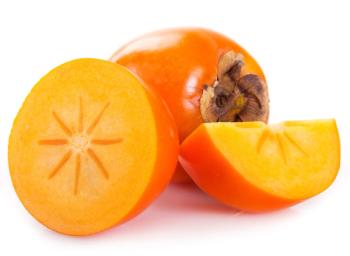
Fun fact! Cultivars of persimmon are classified as either astringent or non-astringent. Click to learn more!

Fun fact! Potatoes were first introduced to North America in 1691, and first planted in New Hampshire in 1719. Click to learn more.

Fun fact! Sugar plants in the U.S. and Brazil burn bagasse, a byproduct of sugar production, to produce electricity in their plants. Click to read more.

Fun fact! Flour made from yellow mustard is a very good emulsifying agent and stabilizer often used in sauces and prepared meats.
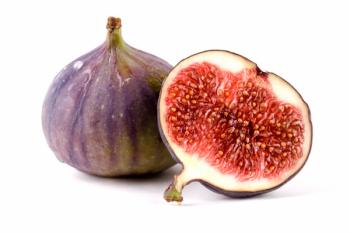
Fun fact! Oil from fig seeds has a 30% fatty acid composition that includes oleic, linoleic, linolenic, palmitic, stearic and arachidic fatty acids.

Fun fact! European varieties of plums are predominantly grown for processing into prunes, while Japanese varieties of plums are grown exclusively for the fresh market.
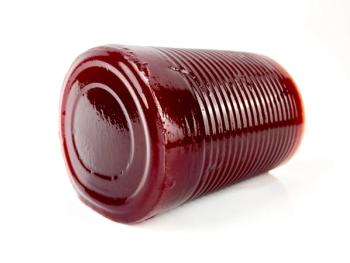
Fun fact! To make one can of jellied cranberry sauce requires about 200 cranberries.

Fun fact! To make one pound of raisins, it takes about 4-4.5 pounds of green grapes.

Fun fact! New Jersey leads the nation in the acres of eggplant harvested. In 2019, the state harvested 849 acres.

Fun fact! The flowers and leaves of sweet potato plants are in fact edible and can be prepared similarly to spinach.

Fun fact! Your typical Halloween pumpkin is not what's used to make your favorite pumpkin pie. Click to learn more!

Fun fact! Only 3% of U.S. corn production, annually, is used toward human consumption.

Fun fact! Early European settlers in the United States would serve popcorn as a breakfast cereal with milk or cream.

Fun fact! The paper and pulp industry can use fiber from the stem of flax plants for linen sheets, napkins, tablecloths, clothing, as well as fine papers like parchment paper and cigarette paper.

Fun fact! Use of added sugar (from cane and beets) peaked in 1972 at 102 pounds per person for the year. Read more!

Pecans have among the highest antioxidant capacity of common tree nuts, with 17,940 ORAC (Oxygen Radical Absorbance Capacity) units per 100 grams. Click to learn more!
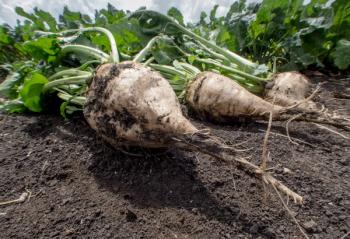
Fun fact! In California, sugarbeets are planted each month except July and August. Click to read more!

Fun fact! Rye is believed to have originated in Southwestern Asia, but in the first millennia rye moved to Northern Europe before spreading to the rest of Europe.
Fun fact! Mustard can be used as a cover crop to suppress soil born pests. When mustard plants that are still green are incorporated into soil and decomposition starts, glucosinolates are released. It is the breakdown products of these glucosinolates that are thought to have biofumigant properties.

Fun fact! In addition to their well-known red color, raspberries are also grown in black (not to be confused with blackberries), purple, and yellow varieties.

Fun fact! There are only three states in the United States that grow dragon fruit commercially: California, Florida, and Hawaii.

Fun fact! Currently, all sunflowers for oil production are developed using traditional breeding techniques, with no GMO sunflowers currently in production.