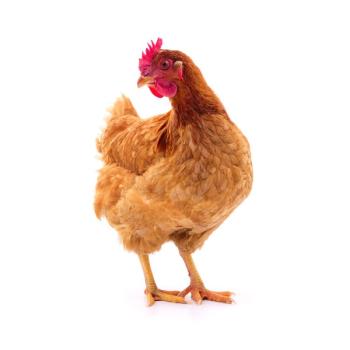
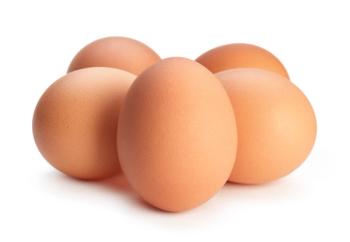
Fun fact! There are approximately 280 million egg-laying chickens in the U.S. Each chicken produces between 250 and 300 eggs per year.

Fun fact! There are approximately 280 million egg-laying chickens in the U.S. Each chicken produces between 250 and 300 eggs per year.

Fun Fact! Cinnamon comes in many varieties, including Cassia cinnamon (native to China and most commonly sold in the U.S.) and Ceylon cinnamon (native to Sri Lanka).

Fun Fact! American pioneer and nurseryman John Chapman, also known as “Johnny Appleseed,” born in 1774, is credited with introducing apples to America’s Midwest.

Fun Fact! There are two types of chamomile, German and Roman.

Fun Fact! Ginkgo has long been used in traditional Chinese medicine. In early times, Chinese royalty were given ginkgo nuts for senility.

Fun Fact! The world’s largest chicken egg was recorded in 2010 as measuring 9.1 inches in diameter. It was laid by a brave hen in the UK named Harriet.

Fun Fact! Apples are thought to have been eaten by humans for at least 750,000 years.

Fun Fact! Who makes the most strawberries in the U.S.? That would be California and Florida, the top two strawberry-producing states.

Fun Fact! One acre of hemp can yield an average of 700 pounds of grain, which can be pressed into 22 gallons of oil and 530 pounds of meal. The same acreage will also produce an average of 5,300 pounds of straw that can be transformed into approximately 1,300 pounds of fiber.

Fun Fact! This is what is required to produce 1 kg of honey: one million flowers and 50,000 bee flights, with 40 mg of nectar collected during each flight (2 g nectar=1 g honey). Each beehive can produce about 20 kg of honey each year.

Fun fact! Camelina oil has a desirable 2:1 ratio of omega-3 to omega-6 fatty acid content. The oil comprises 38% omega-3 fatty acids as alpha-linolenic acid (ALA), and unlike flaxseed, which has a similarly high ALA content, camelina oil has a much longer shelf life due to high levels of gamma-tocopherol (vitamin E).

Fun Fact! Italy is the only country in the world that produces more than 30 varieties of honey. Ironically, it is also the country that consumes the least amount of honey.

Fun Fact! As an avocado grows, so does its fruit, meaning that the fruit’s seed-to-fruit ratio remains relatively constant.

Fun Fact! While white and red mulberries can survive subzero temperatures, black mulberries are sensitive to cold and cannot survive the same conditions.

Fun Fact! That would be California. However, the majority of avocados eaten in the U.S. are imported.

Fun Fact! The U.S. is one of the few nations in the world capable of growing chestnuts, yet U.S. chestnut production is less than 1% of the total world production. The U.S. imported 3,200 metric tons of chestnuts in 2017.

Fun Fact! Mulberries are harvested by physically shaking the tree to obtain the fruit.

Fun Fact! Compared to bananas, pawpaw (Asimina triloba) is higher in vitamin C and niacin. Compared to apples, bananas, and oranges, pawpaws are higher in calcium, phosphorous, magnesium, zinc, copper, and manganese. The fruit also has more essential amino acids than apples.

Fun Fact! Mulberry trees (Morus spp.) can sometimes switch sexes from male to female and vice versa.

Fun Fact! Botanically, peanuts are not actually nuts, but legumes (a member of the pea and bean family).

Fun Fact! An avocado’s size does not indicate whether the fruit is ripe or of high quality.

Fun Fact! Buckwheat is a relatively low-input crop that has high yields even in marginal soil. It also adds nutrients to the soil, making it a good cover or rotational crop. Buckwheat also grows quickly, with a 30-day maturity rate that allows it to kill off most competing weeds. Its fast growth also makes it a good candidate for a catch crop when others have failed.

Fun Fact! A mulberry species’ name does not necessarily indicate its color. White mulberries (Morus alba), for instance, can be white, lavender, or black. Red mulberry (Morus rubra) colors can range from red to black.

Fun Fact! Pawpaw (Asimina triloba) is a fruit said to have the flavor of banana, mango, and pineapple.

Fun Fact! Cooked spinach provides a higher amount of vitamin A and iron than raw spinach.

Fun Fact! During World War II, when Great Britain was unable to import citrus, citizens were encouraged to gather rose hips from the Dog Rose plant (Rosa canina L.) as a source of vitamin C.

Fun Fact! During colonial times, George Washington grew sweet potatoes on his Virginia Farm. He even developed more than 100 different products made from sweet potatoes, including an alternative to corn syrup.

Fun Fact! Rye is a hardy crop that can survive harsh winters, sandy soils with low fertility, and drought conditions. Rye also requires an estimated 30% less water than wheat.

Fun Fact! If you’re foraging for elderberries, don’t ignore the flowers. The flower clusters can be dipped in batter and fried, though the petals are perfectly safe to eat raw. One can even use the petals to make a tea.

Fun Fact! Ice cream was introduced to the U.S. in 1744, when it was served by Maryland Governor Thomas Bladen to his dinner guests.