Antarctic Wildlife Research Fund facilitates and promotes research on the Antarctic’s ecosystem. It has financed 20 research projects and 15 host institutions since its establishment in 2015.

Antarctic Wildlife Research Fund facilitates and promotes research on the Antarctic’s ecosystem. It has financed 20 research projects and 15 host institutions since its establishment in 2015.

The paper provides transparency into how the database collects and processes the research it compiles, insights into the design of its graphical user interface, as well as the database’s strengths and limitations.

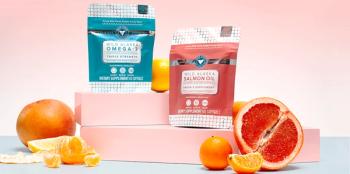
According to the Marine Stewardship Council, the number of fish oil supplements in the U.S. featuring the MSC-certified label grew 44% in the past five years.

Alternatives to meat and dairy products are getting more sophisticated—and, in turn, creating more demand from consumers.

Researchers determined that the risk of Alzheimer’s disease in the highest red blood cell DHA quintile was 49% lower compared to the lowest quintile.

The GC Rieber Foundations, a philanthropic and charitable organization, has increased its ownership in the GC Rieber Group to nearly 50%, meaning that almost 50% of the group's annual earnings goes back to society through social, cultural and scientific contributions.

Wiley’s Finest launched Cod Liver Oil Plus, an MSC-certified omega-3 with lutein, zeaxanthin, and vitamins D3 and E formulated to support cognition.

A new study shows that an odd-chain saturated fat, called Pentadecanoic acid (C:15:0), may be healthier, safer, and more effective for supporting cellular health than the leading omega-3 fatty acid, eicosapentaenoic acid (EPA).

Mara Renewables Corp. plans to invest in expanding its microalgae portfolio.

The certification comes from the Responsible Fisheries Management Group.

The Global Organization of EPA and DHA Omega-3s (GOED) has hired Ashley Becnel as its global business development director.

A whole host of emerging actives—some familiar; others less so—are vying for ground in the crowded immune-support category.

Results showed that subjects taking krill oil saw a significant increase in knee extensor maximal torque, grip strength, and vastus lateralis muscle thickness, relative to control.

GC Rieber VivoMega has announced a five-year $75 million investment plan to build a new facility at its manufacturing campus. The new facility will enable the company to more than double the output of its high-end triglyceride form of omega-3s EPA and DHA.

A recent study found that supplementation with krill oil supplied by Aker BioMarine may be beneficial for subjects going through high intensity training.

The dreaded “fishy” taste and odor associated with omega-3s is a product of oxidation. How can companies ensure oxidation remains low?

What new scientific developments are underway in algae and marine ingredients?

A recent human clinical trial investigated the safety and efficacy of a novel transgenic long-chain omega-3 rich canola oil called Nutriterra, from Nuseed Nutritionals U.S. Inc.

There are many paths to cognitive support, and creating a product that’s just right for your target customer can be daunting.

More than 50 independent research assistants reviewed over 40,000 studies on omega-3s to create a comprehensive, searchable tool detailing nearly 4,000 human clinical trials.

Guardion Health Sciences Inc. has launched Viactiv Omega Boost gel bites, the company’s first expansion of the Viactiv brand since Guardion acquired it in June 2021.

Prodalim Resources is presenting prototypes of its Capsoil FoodTech platform that turns bioactive oils, including nutritional oils, fat-soluble vitamins, and lipid-based nutrients, into water-soluble powders.

An organization devoted to advancing the science of fatty acids, the Fatty Acid Research Institute, has announced the addition of three scientists to its team of researchers.

The vitamin D and omega-3 trial (VITAL) is a nationwide, randomized, double-blind, placebo-controlled trial with a two-by-two factorial design. The study consisted of 25,871 participants, 12,786 of which were men aged 50 or over, and 13,085 of which were women aged 55 or over.

COVID will continue to impact supplement retailing. But instead of scrambling to adjust, brands have the opportunity to hone their omnichannel strategy and improve long-distance retail relationships.