

The cranberry processor has new conventional and organic cranberry products.

The cranberry processor has new conventional and organic cranberry products.

Manufacturers can now formulate UTI dietary supplements with an organic form of Pacran cranberry powder.
According to CredibleCravings, the bar was formulated under the guidance of obstetricians, nutritionists, and midwives.
Gencor's putting the sexy back in fenugreek.
This is the first published study exploring the effects of Wellmune WGP on women, says Richard Mueller, CEO, Biothera.
Early research is linking wild mint to improved menstruation periods.
New analysis of the Women's Health Initiative.

The firm’s ingredients are best known for mental performance and sports nutrition, but new patents are paving the way to new market opportunities.
A cellular study suggests that CoQ10 can be cardioprotective without getting in the way of cancer treatment.
Company research is backing up Carotech tocotrienols for vitamin E absorption.
And, unlike antibiotics, the probiotics did not increase antibiotic resistance.
Unlike a whole soybean extract, soy germ by contrast is rich in the isoflavone daidzein.

Sports nutrition supplements are addressing new interest areas, including recovery, cognitive health, and immune health.

Can anti-inflammatory food ingredients reduce inflammation?

Sex health supplements may promise hyped-up benefits. What benefits can consumers realistically expect?

Phospholipid brain-health dietary supplements can be the foundation of a healthy mind.
Frutarom participated in a review of phytoestrogen-rich plant products.
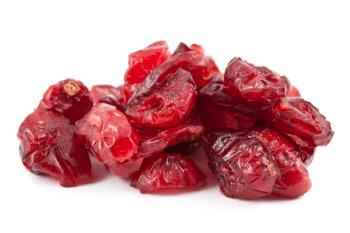
Decas has the world's only cranberry ingredient with a urinary health claim.
CSPI was threatening with a lawsuit.
A yearlong study offers another viewpoint.
ERr 731 is a phytoestrogen selective estrogen receptor modulator (phytoSERM) from Siberian rhubarb root.
The company also plans to roll out BioBactro in Venezuela, Peru, Ecuador, and Bolivia.
Results were presented in late May at the 10th Congress of the International Society for the Study of Fatty Acids and Lipids (ISSFAL) held in Vancouver, BC, Canada.
Medical Brands (Amsterdam) and Decas Botanical Synergies (Carver, MA) have earned EU medical device status for their Cranberry-Active Bladder Capsules, intended to treat or prevent urinary tract infections (UTIs).

Based on the botanical Pueraria candollei var. mirifica, Puresterol is a patented ingredient that the company says has shown to be a promising hormone and herbal support for menopausal women.