



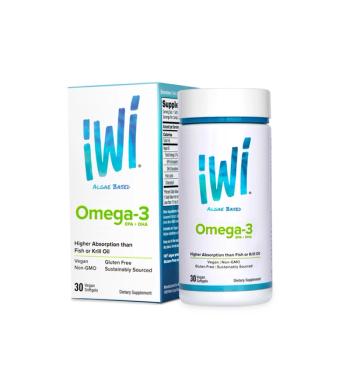
The line is based on the company’s flagship, EPA-rich algae ingredient, Almega PL.
The line is based on the company’s flagship, EPA-rich algae ingredient, Almega PL.

Nutritional Outlook recently spoke with Ellen Schutt, GOED’s new executive director, about how, under her leadership, the organization plans to identify market opportunities to move the omega-3 category forward.

Polaris will be introducing its new Omegavie DHA 650 Qualitysilver5 highly concentrated omega-3 algal oil, which harnesses the company’s Qualitysilver technology to prevent oxidation and rancidity.

Organic Technologies, the supplier of AlaskOmega omega-3 and omega-7 concentrates, says that this new company serves a European customer base looking for MSC-certified AlaskOmega ingredients.

Ellen Schutt, formerly GOED’s vice president of communications and education, has been appointed executive director of the omega-3 organization.

Algae’s flexibility as a functional-food and -beverage ingredient, a food additive, and a supplement ingredient makes it remarkably versatile.

Research updates on vitamin D, spearmint, omega-3, lutein, and zeaxanthin

Nutritional Outlook spoke with AlaskOmega representatives about a new pilot study showing that high-DHA fish-oil concentrate may support a healthy immune response in adults.

Aker BioMarine (Oslo, Norway) debuted promising new pilot-study data at last week’s Natural Products Expo West trade show, examining the benefits of the company’s Superba Boost krill oil concentrate for recovery of triathletes following high-intensity exercise.

Results from the pilot study showed that the high-DHA concentrate may indeed modulate human B-cell activity in middle-aged obese adults, but the study’s authors stressed the need for further testing in a larger cohort.

Omega-3s are poised for a comeback, thanks to innovation in the category and new research initiatives.
GOED issued a statement to its members affirming several points, including that the meta-analysis, which showed that omega-3 fatty acid supplementation had no significant associations with CHD death, nonfatal myocardial infarction, any coronary heart disease events, or major vascular events, adds little to the current body of evidence surrounding omega-3s and cardiovascular risk factors.

The acquisition is part of Frutarom’s merger plan to “enable the rapid, efficient, and comprehensive integration of the global activities of both companies.”
The novel omega-3 technology is designed to accelerate the nutrient’s absorption and ensure its delivery to the sites where the body most needs it.

The report has been posted to the Codex Alimentarius Commission website.

The “GOED Best-Practice Guidelines on Oxidation Control” were developed to help GOED members prevent and minimize the risk of oxidation that threatens omega-3 oils at multiple points along the value chain, from processing to the encounter with the consumer.

The latest research on brain health ingredients indicates products are meeting consumer needs and offer significant opportunity for category growth.
A look at why CoQ10 has remained a go-to heart health ingredient for decades.

In its response, the ITC stated that “Amarin’s complaint does not allege an unfair method of competition or an unfair act cognizable under 19 U.S.C. § 1337(a)(1)(A), as required by the statute and the Commission’s rules.”

The study is the latest product of a long-term collaboration that Rimfrost established with the University of Bergen for the purpose of learning more about the biological effects and mechanisms of action of proteins and lipids derived from Antarctic krill.

In its letter to the ITC, FDA “respectfully submits” that the Commission not initiate an investigation, citing several reasons.
How softgels help overcome omega-3 delivery challenges and yield a high-quality end product.

The company says its Omega-3 Index DHA and EPA testing campaign is a way “to raise awareness of the essentiality of EPA and DHA.”

Aker BioMarine and the Antarctic Wildlife Research Fund strengthen their mission to protect the Antarctic krill ecosystem.

The company says that the new DHA concentrates meet consumer demand for 100%-sustainable DHA formulations.