




Why we need to target the causes of aging
Why we need to target the causes of aging

A recent double-blind clinical study found that supplementation with a patented methylsulfonylmethane (MSM) called OptiMSM from Bergstrom Nutrition supported the health of hair and nails.

As part of the long-term partnership, Indena will continue to manufacture ingredients for Givaudan, provide innovation capabilities, and other supporting services.

Market researcher IRI provided its insight on which retail channels for dietary supplements are growing, or shrinking, at CRN’s The Conference.

With more U.S. adults taking dietary supplements than ever before, continued consumer confidence in the safety, quality, and efficacy of supplements will remain of utmost importance to those with stakes in the industry.

What do we know, and how much do we still need to discover?

Verdure Sciences recently launched Maplifa, an extract of red maple leaf, sourced and manufactured using a patented, eco-friendly, and sustainable process that do not negatively impact or harm the maturing trees.

A new report from Lycored called “The Inner Light,” which investigates what the concept of the “healthy glow” means to skincare consumers, sheds some light on the results consumers want from their skincare regimen, and how these results are achieved.

Deerland Probiotics and Enzymes announced that its branded enzyme-powered antioxidant ingredient Solarplast, designed to support healthy aging and beauty, has achieved Non-GMO Project Verification.
The largest study to date on BioCell Collagen found that the ingredient significantly reduced common signs of aging such as facial wrinkles and crow's feet.
And why getting U.S. consumers to see the beauty, so to speak, in collagen still won't happen overnight.
The study published in the Journal of the American College of Nutrition evaluated the herb’s ability to support skin health, by measuring skin perfusion, or the blood flow to the skin, and gene expression.

As mushroom-product sales skyrocket globally, here is a look at some of the biggest players.
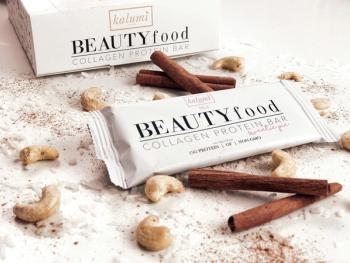
According to Innova Market Insights, the number of foods and beverages positioned toward skin health saw 15% average annual growth globally between 2014 and 2018.
The results showed that Peptan decreased wrinkled in multiple parts of the face, and increased mechanical strength of hair.

A look at herbal beauty ingredients, from turmeric to CBD.
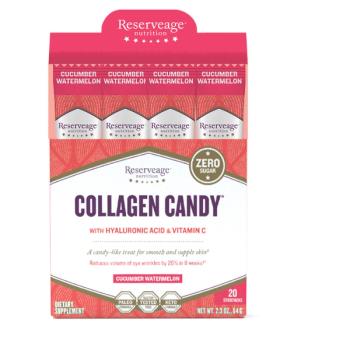
Supplement products brand Reserveage Nutrition has rolled out a brand-new delivery format for its collagen line: Collagen Candy.

Algae’s valuable nutrition stores are prized in today’s human health market.

What does resveratrol research and delivery innovation look like in 2019? An update.

For the Biome’s flagship products Adapt Essence Spray, and Invigorate Powder Mask will featuring a blend of reishi, lion’s mane, chaga, maitake, and king trumpet mushrooms sourced from Om Mushroom Superfood.

Eggshell membrane ingredients have had a presence in the joint-health market, as well as in other categories, for years now, but the ingredient still has lots of room for growth.

Dimpless is a superoxide dismutase (SOD B) nutricosmetic ingredient derived from melon that is said to help reduce cellulite.

At April’s SupplySide East trade show, Vidya Herbs (Fullerton, CA) highlighted its new ceramide ingredient derived from the konjac plant (Amorphophallus konjac) for the nutricosmetic market.
Lipofoods SLU will introduce a high bioavailability, microencapsulated curcumin ingredient for the nutricosmetic market called Curcushine at Vitafoods Europe in Geneva.
Sabinsa Corp. (East Windsor, NJ) has introduced a postbiotic cosmeceutical ingredient called LactoSporin, which the firm says has antimicrobial, antioxidant, anti-inflammatory, and anti-collagenase properties.