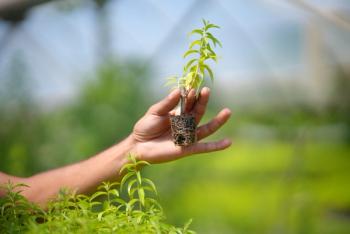
The ingredient group says supervised, multi-farm growing supports traceability and standardized quality for the botanical behind several of its branded ingredients.
In the seventh episode, Nicholas Saraceno traces how ingredients like ashwagandha, fenugreek, and shatavari moved from traditional medicine systems into mainstream supplement formulations, and why the same adaptogen category now driving double-digit market growth is also facing new scrutiny over sourcing and raw material standards.
The seventh episode of "Let's Talk Nutrition with Nico," a collaborative video series between Lana Pine of The Educated Patient and Nicholas Saraceno of Nutritional Outlook, examines the rise of adaptogenic botanicals rooted in Ayurvedic and traditional medicine systems, from ashwagandha's dominant share of the adaptogen category to a regulatory advisory in India that is reshaping conversations about raw material sourcing worldwide.
Saraceno draws on market analysis projecting continued double-digit growth in the ashwagandha and adaptogen extracts category, along with prior Nutritional Outlook coverage of an expert panel on ashwagandha adulteration at the World Health Organization's Global Traditional Medicine Summit and a more recent advisory from India's Ministry of Ayush restricting ashwagandha leaf extracts, to unpack the tension between traditional-use history and modern sourcing and substantiation requirements.
The conversation also covers fenugreek and shatavari's more targeted, lower-profile presence in formulation, and what the current scrutiny around ashwagandha signals for other traditional botanicals entering Western supplement markets.
A transcript of Pine's and Saraceno's conversation can be found below.
Lana Pine: I'm Lana Pine, senior editor of The Educated Patient, and welcome to episode 7 of "Let's Talk Nutrition with Nico." I'm joined as always by Nico Saraceno, senior editor of NO. Nico, good to see you again.
Nicholas Saraceno: Good to see you too, Lana. On today’s episode, we're going further back than usual, talking about ingredients that have been around for thousands of years before they ever showed up in a supplement aisle.
Pine: Ashwagandha, fenugreek, shatavari, that whole world.
Saraceno: Exactly, and adaptogens more broadly. Ashwagandha, considered one of Nutritional Outlook’s
Pine: That's a massive jump for something that's been used in traditional medicine for centuries.
Saraceno: Right, and that's actually the interesting tension here. Ashwagandha comes out of Ayurvedic medicine, where it's classified as a rasayana, essentially a rejuvenating herb used to support general wellbeing. That traditional-use history is a big part of why consumers trust it. But, traditional use and modern sourcing standards aren't necessarily the same thing, and that gap has become a real regulatory story over the past year.
Pine: Is that where the scrutiny comes in?
Saraceno: It is, and it actually goes back to a panel at the World Health Organization's Global Traditional Medicine Summit held in late 2025, where a group of experts specifically addressed ashwagandha adulteration. Their position was that including leaf material, rather than root only, constitutes adulteration that can alter the phytochemical profile and safety parameters of the final extract, and the panel called for
Pine: So the concern was already on the table before this most recent development.
Saraceno: It was, but there have been updates since then. More recently, the Ministry of Ayush issued a formal advisory restricting the use of ashwagandha leaves in extracts outright, and the Food Safety and Standards Authority of India followed up by
Pine: So this went from an expert recommendation to an actual regulatory restriction.
Saraceno: Exactly, and that's an important distinction. It's really a raw material issue as much as it's a finished-product issue, and trade groups like the
Pine: That feels like a formulation detail that could get lost in marketing copy pretty easily.
Saraceno: It really could, and that's exactly the kind of thing this scrutiny is forcing companies to get precise about. Plant part, extraction method, standardized marker compounds, it all matters more now than it did 5 years ago. There doesn’t appear to be a consensus on the extent to which ashwagandha leaf extracts pose a health risk to consumers, but it’s important to note that we are merely reporting the news here, not taking any specific side per se.
Pine: What about fenugreek and shatavari? Where do they fit into this conversation?
Saraceno: They're a bit different, lower profile than ashwagandha, but with more targeted use cases. Fenugreek shows up most often in blood sugar support and lactation support formulations, and shatavari has a long history in Ayurvedic medicine specifically around women's reproductive health, though the clinical evidence base behind it is thinner than what exists for ashwagandha. Neither one is facing the kind of sourcing scrutiny ashwagandha is right now, but I think that's partly just a matter of scale. Ashwagandha is the biggest, most visible ingredient in the category, so it's the one drawing attention first.
Pine: So the bigger theme here is that traditional-use history gets a product in the door, but it doesn't keep it there anymore.
Saraceno: That's a great way to put it. The traditional-use story is still valuable, it's a big part of why consumers reach for these ingredients in the first place, but it's not a substitute for the sourcing specificity and documentation regulators are now asking for. That gap is really the story of this whole category right now.
Pine: This was a fascinating one, Nico. I had no idea ashwagandha sourcing was this much of a live issue given how mainstream the ingredient has become.
Saraceno: It's honestly one of the more active stories in the industry right now. I'll drop links to everything we talked about today in the video description. Thanks for having me, Lana.
Pine: Thanks, Nico. See you next time!
Reference
1. RC Nandini. Ashwagandha and adaptogen extracts market. Future Market Insights. August 3, 2026. Accessed August 21, 2026.