Live from the Future Nutra Innovation Summit, Kerry Hughes, founder and president of Ethnopharm, explains why botanicals' complex compound networks represent nutrition's next innovation frontier.
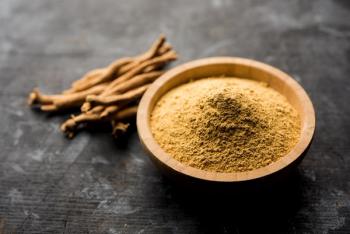
The panel emphasized the need for adopting industry-wide root-only extraction of ashwagandha.
At the WHO Global Traditional Medicine Summit in New Delhi, India’s Prime Minister, Narendra Modi, and WHO Director-General, Tedros Adhanom Ghebreyesus, PhD, announced the release of a commemorative postal stamp honoring ashwagandha. In a closing address, Modi emphasized the importance of evidence-based and safe traditional medicine, and cited ashwagandha as a model for “advancing global acceptance through evidence-based research on safety, quality and usage.”
The three-day summit, which brought together global leaders, policymakers, scientists, and practitioners from across the globe, also featured an expert panel on ashwagandha adulteration, quality standards, and regulations titled “Ashwagandha: From Traditional Wisdom to Global Impact.” That session organized by the WHO Global Traditional Medicine Centre and the Ministry of Ayush, Government of India, identified critical quality challenges and evolving regulatory frameworks that need to be addressed. For example, Ikhlas Khan, PhD, the director of the National Center for Natural Products Research at the University of Mississippi, underscored the severity of ashwagandha adulteration, explaining that tests of 25 formulations showed that 60% contained high levels of ashwagandha leaf-specific phytochemicals. He emphasized the need for robust identification methods and appropriate extraction processes, while the experts on the panel asserted that the inclusion of leaves or non-root plant material constituted adulteration that alters phytochemical profiles, safety parameters, and therapeutic properties. Ultimately, the panel called for industry-wide adoption of root-only extraction.
The Government of India, Ministry of Ayush has previously issued an
“In 2022, Prime Minister Modi recognized our commitment to quality manufacturing and raising global awareness about ashwagandha in his ‘Mann Ki Baat’, the monthly program where he addresses the nation on the last Sunday of each month,” said Kartikeya Baldwa, CEO, Ixoreal Biomed, in a press release. “Today, as India positions ashwagandha as a flagship of evidence-based traditional medicine globally, our rigorous research on safety and efficacy, conducted at leading institutions worldwide, represents exactly the scientific foundation he's calling for. The commemorative stamp symbolizes India's gift to global wellness. Our job is ensuring the substance matches the symbol.”
Ixoreal Biomed manufactures KSM-66 Ashwagandha, which is a full-spectrum root-only extract backed by over 70 clinical studies examining its ability to support stress, cognitive health, sleep, athletic performance, as well as reproductive health in both men and women.