

The U.S. Dairy Research Institute (Rosemont, IL) hailed these primary findings, noting in a press release that the benefits of dairy on type 2 diabetes risk could be related to improved glucose tolerance.
The U.S. Dairy Research Institute (Rosemont, IL) hailed these primary findings, noting in a press release that the benefits of dairy on type 2 diabetes risk could be related to improved glucose tolerance.
Researchers say that adding fiber to the diet may be more important than restricting saturated fats and cholesterol.
Compared to placebo, green tea consumption reduced total and LDL cholesterol by an average of five to six points.
Following scientific review, Health Canada (the Canadian equivalent of FDA) is increasing its allowable daily intake of p-synephrine to 50 mg per day for healthy adults.
A new functional spice can be sprinkled on starchy food, both adding flavor and lowering food’s glycemic index.
Slimaluma, a proprietary extract of the cactus Caralluma fimbriata, has demonstrated potential to reduce cravings and waist circumference in 30 overweight subjects.
News hit earlier this month that Merastin, a proprietary plant extract from InterHealth Nutraceuticals, managed to significantly improve weight loss and reduce waist and hip size in a double-blind, placebo-controlled human trial.
The original UltraMeal PLUS 360°is touted for managing metabolic syndrome, including reducing risk factors for cardiovascular disease.
The review covers the potential relationship between body composition and whey protein, calcium, and other dairy nutrients.
Can fiber be a front for fat?
The new supplement is called Anti-Adipocyte Formula with AdipoStat.
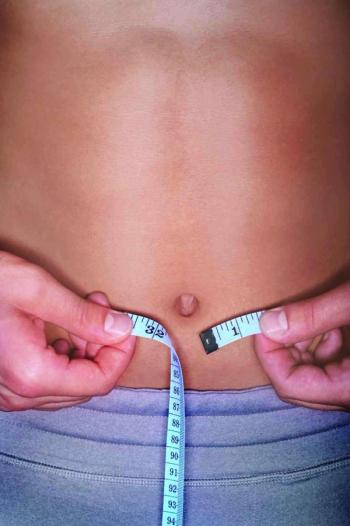
CLA, or conjugated linoleic acid, is a mixture of 28 isomers-compounds with the same molecular formulas but different structural formulas. CLA is a naturally occurring fatty acid most commonly found in dairy and in beef from ruminant animals able to synthesize it from the omega-6 fatty acid linoleic acid. Average intake of CLA by humans is estimated at around 130 to 440 mg/day.(1) The largest percentage of CLA in the diet (about 90%) is composed of the cis-9-trans-11 isomer (c9,t11).(2)
A new study on weight loss patients suggests that dairy protein can help preserve the lean mass usually lost during the transition.

A coalition of over 100 U.S. health departments and associations is uniting on a campaign to reduce consumption of sugary beverages, including sodas, fruit juices with little to no juice, and sweetened iced teas.
Icon Group currently offers six weight-management ingredients.
Cyvex will assume all sales, promotion, support, and further development for the weight-management ingredient.
Caralluma fimbriata has been shown to inhibit pre-adipocyte cell division in a mouse cell study published in Food and Nutrition Sciences.
Krill oil may benefit obese individuals by counteracting effects on the endocannabinoid system.
Additionally, consuming whey protein resulted in a significantly smaller waist circumference compared to a carbohydrate-treatment group, researchers said.
The studies were published in the American Journal of Clinical Nutrition and the European Journal of Clinical Nutrition.
Atrium Innovations Inc. (Quebec City, QC, Canada) is investing in a $5 million research program to study nutritional therapies for metabolic syndrome.
Stepan Company (Northfield, IL) has extended its line of lipid-based ingredients with acquisitions of Marinol, Clarinol, and PinnoThin from Lipid Nutrition BV (Wormerveer, The Netherlands).
Prebiotic specialist Beneo-Orafti (Tienen, Belgium) has announced the results of a new study on overweight and obese subjects and its Orafti Synergy1 oligufructose-enriched inulin.
In Cyvex Nutrition’s newest Vine newsletter, the company highlights a lesser-known omega-3 fatty acid, docosapentaenoic acid (DPA), and its newest weight management ingredient, SolaThin.
Green Leaf Medical AB (Stockholm) has patented a production process for spinach-derived thylakoids, which the company claims can promote appetite suppression.