


I spoke to CRN’s president and CEO, Steve Mister, about the registry’s progress over the past year.
I spoke to CRN’s president and CEO, Steve Mister, about the registry’s progress over the past year.

Quality assurance, compliance, risk management, and best practices were on the minds of 80 quality professionals who convened at the Capsugel Quality Summit in late August.

The Triple-T program takes a three-pronged approach to supply-chain traceability: trace, test, and trust.

In two filings submitted to the International Trade Commission, CRN argued that Amarin was “financially motivated” to expand its near monopoly over a subset of omega-3 products; if successful, CRN says, Amarin’s complaint would make it much more difficult and costly for consumers to access those products.

The company also secured self-affirmed GRAS status for its ingredient back in 2016.

China’s FDA also granted TSI Group expanded Novel Foods usage beyond existing approvals for sports nutrition and medical foods to encompass use in beverages, candies, and baked goods.

Amarin’s ITC complaint alleges that synthetically produced omega-3 products that are predominantly composed of EPA in either ethyl ester or re-esterified form are not considered “dietary ingredients” under Section 201(ff)(1) of the Federal Food Drug and Cosmetic Act, and thus, are not legal dietary supplements but unapproved new drugs.

The NPN enables Fruit d’Or’s Cran Naturelle and Cran d’Or cranberry seed oils to make claims as a source of omega-3 and omega-6 fatty acids, antioxidants, oleic acid, and “maintenance of good health.”

According to the company, these patents are expected to “fuel the company’s rapid growth in the cosmetic industry” given consumer demand for products like sunscreen lotions and hair growth formulations.

The prospect that dietary supplements might help bend the healthcare cost curve is worth examining.

The positive role dietary supplements play in the lives of consumers of all ages has only continued to grow.

How dietary supplement testing changed over two decades

Here’s what hemp CBD has going in its favor-and what challenges it still has to overcome.

Industry and FDA share the same goal: to ensure a safe dietary supplements marketplace.

Two decades later, supplement users seek choice, take control.

The ingredient can be used at daily doses of up to 2 g in ready-to-drink and powder protein drinks, meal replacement bars, and energy and protein bars, which can all be taken up to three times per day.

In celebration of Nutritional Outlook’s 20th anniversary, dietary supplement leaders share their views on how the industry has changed over the past two decades.

The organization says that the free assessment tools will enable those in the herbal products industry to more effectively evaluate and document policies and procedures that ensure high-quality herbs and ingredients throughout the supply chain.

The claim confirms soybean oil’s ability to reduce the risk of coronary heart disease.

Dietary supplement industry officials say that the study’s conclusions are incomplete, and that the vast majority of calls placed did not involve any adverse events related to dietary supplements, but were simply inquiries.

EyePro MD is a softgel supplement that purportedly offers eye-health benefits related to its “super blend” of lutein, zeaxanthin, astaxanthin, and omega-3s.

Attorney Scott Bass, who helped draft the DSHEA law of 1994, says that Congress did not intend “dietary substances” only to be limited to ingredients that are nutritional-and that this should mean that synthetic botanicals and probiotics count as dietary ingredients and be eligible for use in dietary supplements.

This standard is the first Codex Alimentarius standard for fish oil as well as krill oil.

The company says its stevia-derived antioxidant is especially rich in chlorogenic acids and has an ORAC value of approximately 9000. The company also announced its first ever branded stevia leaf, StarLeaf.

Added sugars are in the crosshairs of FDA’s revised Nutrition Facts label. Here’s how companies are cutting the sugar.

Maritech fucoidan ingredients are the first and only high-purity fucoidan extracts to achieve GRAS status, says the company.
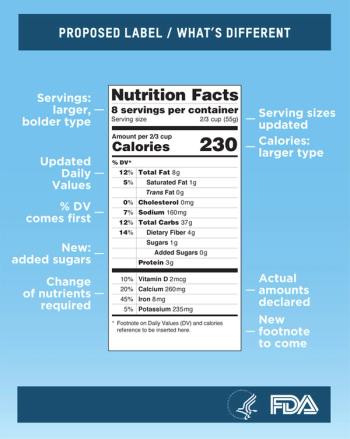
The NPA claims that FDA’s labeling changes would overly burden the food and supplement industries, and says that the new regulations around added sugars are duplicitous and that the agency’s new definition of dietary fiber is not backed by scientific or empirical studies.

GAO found that, of 490 memory supplements identified in its report, 28 of those supplements featured advertisements claiming to treat or prevent memory-related diseases-claims that are generally prohibited by federal law.

The cooperative event will include discussions on the benefits and importance of dietary supplements and functional food products, as well as the economic impact of the industry, among other key issues.

This extension is a relief to food, drink, and dietary supplement companies facing the original, fast-approaching compliance date of July 26, 2018.