

News|Videos|May 29, 2026
Is Managing Oxidative Stress & Recovery Appropriate in a Pre-Workout?
Is all inflammation bad? Experts discuss the best ways to utilize antioxidants to reduce oxidative stress and speed up recovery without affecting gains.
Advertisement
Douglas Kalman, PhD, RD: One of the things that we talked about earlier and was touched upon was… a good amount of people that are utilizing pre-workouts are engaging in resistance training, weight training. Some may engage in other forms of non-weight training, but I want to talk about aerobic versus non-aerobic exercise crossover, because there's a metabolic continuum that occurs depending upon intensity.
And why do I want to mention this? Because if you're able, through a nitric oxide-based product to do more work in less time, more efficiently, and it's more anaerobic, you're also going to create more reactive oxygen species during that anaerobic work.
For anybody that might not know, when we have reactive oxygen species, we could talk about oxidative stress, and the easiest way to think about oxidative stress, if you will, is that this is damage that's due to free radicals. And a visual would be if, for example, you see any rust on metal. That's oxidation. If you cut open an apple and you leave it out in the air and it starts to turn brown. That is oxidation. It's also in part, Maillard action, but it's oxidation.
So, what are the roles of antioxidants in exercise and around products like this?
Joey Savage: I think that's an interesting and even a controversial subject. There’s a balance to be achieved somewhere in here. Because on one side, to protect yourself from the reactive oxygen species, there's a lot of studies that say that [antioxidants] can enhance recovery, it can enhance satellite cell recruitment, so these are the cells that go and repair the muscle tissue. It can largely be looked at as a good thing.
On the flip side of it there's a lot of pro-inflammatory processes that come with oxidative stress that are also part of the recovery process. I like your rust analogy, and I was thinking of my own whenever you brought that up, and it's like slash and burn farming. You burn the entire crop, but then everything that grows back is super fresh and nice.
When you do have that, that inflammation, there's good growth that does come out of that, so it's not always something to be fought. So I think, the timing of antioxidants is probably important. If you're doing it maybe in the pre-workout setting, I would say that that might make the most sense, because you're going to be mitigating damage that happens during. But in the post-workout scenario, I personally would use antioxidants less, because there's a sadistic part of the self that believes in the slash and burn farming, and believes in that post-workout inflammation that the growth back from is going to be a lot stronger.
And because there's some involvement of the immune system going on in that muscle repair process those white blood cells get activated, you're in a pro-inflammatory environment, there's some healing that needs to go on there that an antioxidant could decrease the ability for those cells to repair tissues, because those white blood cells need to pump reactive oxygen species to certain sites on muscle tissue to cleave things off in order to repair things better.
Kalman: We at the International Society of Sport Nutrition just published a position paper on antioxidants in the face of sports nutrition and research does show, to make it easy to summarize, that the dose can be the poison. Higher dose intake of antioxidants actually has a detrimental effect on recovery and performance. As compared to studies that show lower intake—more is not always better—[which] actually can support the adaption to the stress response. So, when higher dose antioxidants are taken, whether it's pills, foods, combination, you start to interfere with the oxidative stress, immunity, and inflammatory response that's part of ebb and flow stress response. Too much to where you wasted a workout, is the way I tell my athletes.
Savage: I completely agree. You could work out really hard, and then you just throw a bunch of antioxidants on it…You might seemingly recover faster, but you're not going to get any growth progress out of it
Kalman: So with that, I think we're agreeing, Katie, that some antioxidants we know that we need from the diet, we need for health, right? And we know that we get them chiefly through vegetables and fruits. Would we want any antioxidants, letter vitamins, or natural ones from fruits, vegetables as part of a product to help support normal dietary intake, knowing that the majority of Americans don't necessarily eat 5 to 9 fruits and veggies, or veggies and fruits per day. AG1 is a $100 million company getting people to drink dehydrated vegetables.
I’m not knocking them. So, I think there's something that's worthy of discussion there. And Joey, I know that this is an area for you and Katie as an RD, and a superb expert on sport nutrition what are your thoughts?
Katie Emerson PhD, RD, CISSN: I agree with both of you. I think there's a time and place for antioxidants in sports. Joey, I love how you mentioned inflammation and the importance. I had a healthy scientific debate the other day about the importance of acute inflammation versus chronic inflammation, right? Those are two totally different aspects, and if you're looking to rebuild and recover, that inflammation process is so important, and there's also other factors: recovery time, proper nutrition, sleep. So, you've got to give yourself the appropriate training load and alternating between high and low intensities, and inflammation is so important. Then, when you add antioxidants to it, I do think there's a place, and I agree with you, Joey, I think a pre-workout is better than a post-workout because as we're physically training, our muscles are experiencing direct stress, you know, you're talking about oxidative damage, metabolic buildup, we want to include these ingredients in the pre-workout to help manage these stresses during the workout, as it's happening.
But not too much, to Doug's point. There is a dose response and a ceiling effect when we're talking about antioxidants, when they maybe start to take over a little too much so we don't get that natural response that we need for producing better strength. I really loved your analogy of burning all the crops and then building them back up, because that's literally what's happening, right? But we don't want to burn everything.
We need room for growth, we need those micro tears to come back stronger, we need to support circulation, reduce excessive cellular stress during this exercise, and a pre-workout can help to eliminate the unnecessary damage and promote faster recovery afterward, but again, it's going to come down to that dose and to Doug's point, I don't know anybody who gets 9 to 12 servings of fruits and vegetables a day?
Kudos to you if you're not a vegan or vegetarian and you're getting that much in your diet, but that's why we turn to supplements, that's why there are supplements. You’re supplementing the diet for gaps in your nutrition.
For me, I take glutathione, vitamin C, vitamin E, especially during a pre-workout or when I know I'm being exposed to immune stressors, like this flu that's going around my house right now. But there are clinical doses that are appropriate for what you're targeting, and those change, right? And so, I'm not going to take 3,000 milligrams of glutathione before my workout, because that's probably way too much, and it's going to affect the whole point of my workout, right?
Kalman: If we could pivot…Pre-workout, is getting you prepared for what you're going to engage in…Then there's a whole sector of sport nutrition that's post-workout. And then you probably have other parts of nutrition that [are] used throughout the day, right? Supplemental-wise. And maybe for antioxidants they have other roles in that. Why do I mention that? Because we always hear about the mitochondria. Mitochondrial health, mitochondria. What is this mitochondria, and how do we become good friends?
What can you teach us, Joey?
Savage: Oh, man, it's like the best friend…So, everyone knows mitochondria is a powerhouse of the cell. It's, like, the second thing people should know about after a cell's nucleus, but you have mitochondria in every single one of your cells, and in a lot of cells—muscles, cardiac tissue, brain tissue—there are some places where you're going to have more mitochondria than you will in other places. Like, fat cells are obviously the laziest cells you have, so they're only going to have one mitochondria, at least in the further out white adipose tissue cells. So, you've got these gradients of mitochondrial density based on how metabolically active the different tissue types are.
So, these things are principally responsible for making something called ATP. It is literally the chemical form of energy that your body runs on. So, the more ATP you have, the more endurance you could have, the more strength you could have. That’s what it's for, but the other thing about the mitochondria is it's principally responsible for making reactive oxygen species. So it helps break down a lot of fats and carbohydrates, different things like macronutrients that you take in from your diet, in order to turn those into ATP. A side effect of this process, is the reactive oxygen. The fun thing about this, we could tie this into antioxidants and nitric oxide.
So, antioxidants are definitely necessary, because of the reactive oxygen species, you're going to put out. So, think about working out. Your engine is running at a higher rate than usual and your mitochondria is going to be working harder. Hopefully, you had some carbs or something before your workout, so those mitochondria have fuel, but they're going to create more reactive oxygen species in this context. So, in taking, antioxidants in that pre-workout scenario, we're going to try to help neutralize some of that, because the more reactive oxygen species that you produce during a workout, the more fatigue you're going to experience. So, that's where we're really walking the tightrope.
Second thing is…When you breathe in oxygen, that's the oxygen that's used for your mitochondria and for oxidative phosphorylation and the breakdown of carbs and fats. That's where the destination is for every bit of oxygen that you're breathing in. On the flip side of this, nitric oxide can also play a role, and nitrates can also play a role, and the same electron transport chain, so that it's this molecular channel that these different anionic or negatively charged compounds are coming down the chute up. In some cases, nitric oxide and nitrates can increase this electron transfer efficiency and take the place of oxygen, and have less reactive oxygen species, and less lactic acid that's produced as a result of that.
So, those are two different strategies. One, I can use antioxidants to decrease the amount of reactive oxygen species, or two, I can replace that oxygen and get more metabolic output for less of a metabolic cost. In a nutshell, mitochondria are the metabolic engine of all your cells. It's what determines your output of work. It also determines the metabolic cost through the reactive oxygen species production. It's literally the coolest part of the cell, and the nucleus gets all the credit, but the mitochondria does the work.
Kalman: So, does the cool part deserve ingredients in a pre-workout that help support it? Is there a benefit to a pre-workout having more than a caffeine and some nitric oxide supporting thing for something else that is known to influence mitochondrial health? Is it mitochondrial health for longevity, or is it mitochondrial health for performance today and maybe tomorrow?
Savage: Why can't it be both? I would say the number 1 thing that most consumers understand and recognize, and even though they might not think it's for mitochondrial health, they might think of it under the guise of heart health, is probably Coenzyme Q10. Coenzyme Q10 is probably one of the most widely consumed things that is proximal to mitochondrial health, that people will immediately recognize. It's a fat-soluble thing, so putting it in a pre-workout kind of doesn't make a lot of sense, even though there are a lot of people that do it. It's even in energy drinks to some degree, but that's what most people understand and resonate with, and that's something that can decrease the production of reactive oxygen species. You could say that CoQ10 can work acutely, but taking CoQ10 in the long term, that's going to work in the long term, so the more consistent you are with the dose is going to determine what kind of benefits you're getting.
Am I taking CoQ10 so I can take a whole bunch of caffeine and my heart doesn't palpitate, and my mitochondria works a lot better? Or am I taking CoQ10 so I can have a longer duration of having better mitochondrial health throughout my lifetime?
Kalman: Well, one of the ingredients that seems to be popular now…is something called urolithin A. Would you guys can tell us a little bit about what is urolithin A, and do we care about it? Should we learn about [urolithin] B,C, and D also? Why is this getting such a social media splash?
Savage: I have a love-hate relationship with the Urolithin A. Obviously, I'm very biased toward being very pro-mitochondria, and it's something that's referred to as a mitolytic, and that means that it effectively can assist in the process that kills off malfunctioning mitochondria. From my perspective, I'm the kind of guy who wants more mitochondria.
Kalman: Is that known as autophagy?
Savage: Not quite, it's specifically mitochondria. So, this is the difference between a mitolytic and a senolytic. So a senolytic is promoting autophagy, but then a mitolytic is only mitochondrially specific.
So, I like taking a two-pronged approach. I don't like the use of urolithin A in isolation. I just don't like the idea of just going and killing an awful bunch of mitochondria, whether they're good or whether they're not. But if you combine this with something that helps maybe mitochondria proliferate, maybe something that activates a PGC-1 alpha, like PQQ…something that's increasing mitochondrial biogenesis. So, if we're able to create new mitochondria that are young and effective while taking out the old mitochondria with something like urolithin A, there's definitely a balance to be achieved right there, but you don't need PQQ to activate PGC-1 alpha. There's a lot of things you can do mechanically to stimulate PGC-1 alpha. You can be an endurance athlete who does a lot of cardiovascular exercise, whether that's swimming or biking or running. That alone mechanically stimulates that same pathway to generate more mitochondria.
So, if you're going do this urolithin A thing, I would encourage you to look into maybe doing it outside of your pre-workout window, because you don't want to be taking out mitochondria before you work out, because then you're going to have impaired performance.
Advertisement
Related to this article
The company says the innovation, built on its CoreNhanced BioJourney platform, is designed for beverage and gummy formats.
AuraFen, BILVORA, and IMBE debut at SupplySide Global 2026, and the company will also highlight its CaFi digestive health ingredient.

Horphag Research's Sébastien Bornet breaks down the clinical science behind Robuvit, exploring how the caffeine-free French oak extract supports mitochondrial energy, mood stability, and stress resilience.

Todd Harrison, co-chair of the FDA practice group at Venable LLP, explains how California’s AB 2779 changes date-labeling requirements for supplements, why stability testing matters, and how companies can navigate evolving state rules while advocating for federal uniformity.

FDA's final NDI guidance sets identity and safety expectations. See what AHPA and CRN say remains unresolved and what it means for suppliers.
The company plans to present Organicaps capsules in size 0, 25 years of UC-II, and liquid-filled capsule technology.
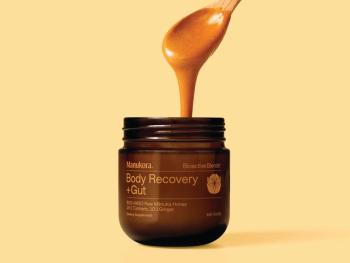
DolCas Biotech is featuring the turmeric-derived ingredient Curcugen in Mānukora’s Mānuka honey and Numin’s cognitive-support drink.

The company says it will feature studies on vitamin K2, choline, folate, and MSM, along with beverage concepts and a first-time pet corner.
Advertisement
Advertisement
Trending on Nutritional Outlook - Supplement, Food & Beverage Manufacturing Trends
1
CoreFX Launches CreaSHLD-IN Shielded Creatine at SupplySide Global 2026
2
Robuvit for Stress & Mood: How Horphag's Caffeine-Free Oak Extract Targets Fatigue at the Cellular Level
3
FDA Finalizes NDI Guidance on Identity and Safety Information, Leaving Some Industry Concerns Open
4
Logical Square’s Portfolio Expands with Menopause, Prebiotic, and Extraction Introductions
5