

News|Videos|May 29, 2026
Differentiating Your Pre-Workout Product
What else can you add to your pre-workout for relevant benefits that help you stand out? Panelists discuss the value of nootropics in pre-workout products.
Advertisement
Douglas Kalman, PhD, RD: I wanted to add in another class of ingredients that might be worthwhile for pre-workout, nootropics…Outside of caffeine, because caffeine has some fallover in those categories too, are there other ingredients that you would consider, that we might classify as nootropics, although I don't like that word, for a pre-workout, and if so, what are some basic ones, or branded ones?
Katie Emerson, PhD, RD, CISSN: You both know the one I'm going to choose. I would say I'm biased, but I'm not biased because this ingredient was the reason I came to the company Kyowa Hakko is because of the science and the reputation that Cognizin has. And as we continue to do research… I will say, very interestingly, just a week ago, we heard [results from an] in vitro study that's showing citicoline is improving neuromuscular junction. It's actually creating new neuromuscular junctions in skeletal muscle cell, something I had never really even thought was a mechanism behind citicoline. So, not only is it having that cognitive ability with focus attention, it has this motor function, reaction time improvement that's going all the way down into the muscle as well as the brain, so it's having the systemic effect throughout the body that can be translated into not just mental performance, but physical performance.
The science that we keep producing and evaluating…we just did a study…on EEG and looking at mood behaviors as well as brain function, tying that with other studies that we've seen that have physical improvements as well as mental. That's exactly what an athlete wants right before a performance or during a performance, so when you pair it with something like a vasodilator that's going to give you that blood flow…That improvement in vasodilation, that nitric oxide production, alongside something that's going to give me that mental aspect.
And I think Joey, you and I talked about the difference between physical fatigue and mental fatigue. And sometimes that physical fatigue taps in way sooner than your mental ability, so being able to have that mental toughness to push through and go, “I can do one more rep.”
Your muscles are screaming at you, saying, “No you can't, you're done,” but then your brain kind of overpowers it and says, “Yeah, we can do this.”
So, there really is a mental aspect to physical performance that I think goes unnoticed that really helps to drive people to getting those PRs or, you know, crossing that finish line faster than they have before. So yeah, I love Cognizin of choline from a performance stance.
Joey Savage: I love the concept of, like, a caffeine-free pre-workout, because you can combine these things like nootropics with vasodilators and all this kind of stuff, and suddenly, you know, if you're a little bit older, you can go ahead and work out at the gym at 5 o'clock without losing any sleep from taking a whole bunch of caffeine. So, there's definitely a place for these caffeine-free style products.
What Katie said with Cognizin, I'm a little bit biased too, but I'm also a little bit more fair because, yes Cognizin is a choline donor. It also enhances phospholipids, and that's probably why you get the neuromuscular junction effects. But I like it because I think that there's a niche that is not a nootropic for the central nervous system, but for the peripheral nervous system. This concept of nootropics for the body that enhance that neuromuscular junction and the neurotransmission to the muscles. If you think about it like this way, it's like upgrading from dial-up to broadband internet within the peripheral nervous system.
I think that’s going to be a cool new niche category that needs to be explored a bit more, which historically has been predominantly the realm of these choline donors, whether it's citicoline as Cognizin, or alpha-GPC, or choline bitartrate, whatever kind of choline you can do. And choline as itself is kind of this orphan B vitamin.It is essential. It did get an FDA, percent daily value now, so it's recommended that choline is part of your dietary intake.
But what we look at it as is this lens of being a precursor to the neurotransmitter acetylcholine, which that's the primary neurotransmitter that is for that neuromuscular transduction. It also works on short-term working and learning memory. It does a lot of things, and it also helps make you dream. So there's a lot of different roles for acetylcholine that makes it a really cool thing to start exploring.
Kalman: If you don't mind, choline as a nutrient, right, in the diet. Most common source is egg yolk, eating whole egg. One of the reasons why,
there is a daily value. There's been a lot of work behind the scenes, research and otherwise, regarding the “essentiality” of choline in brain development in utero. So, third trimester has choline, along with other nutrients, iron, B12, folate, and a few others, play a very, very big role in the development of your brain and neuronal development. We know that choline deficiency causes cognitive problems. This is when we're talking about Cognizin or acetylcholine. These have different functions also, and you mentioned neuromuscular, locomotion, the integration of mind, the mind-muscle connection, if you will. This is something that you could view as being able to help bridge that and have a different value for an athlete or somebody looking to train with a purposeful goal as an attribute for a pre-workout. Would you agree?
Savage: I think it could even be a category of itself. I think it does in most good pre-workouts, it needs to be a feature of that pre-workout. I think that the mind-muscle connection is definitely not something to be slept on when it comes to pre-workout development. But I see this as a frontier that's going to be explored more probably in the next decade, and I wouldn't be surprised if you saw products show up specifically for this use case.
Emerson: Yeah, I also wouldn't just put it in the sports nutrition space, right? There are people that can benefit: pilots, surgeons, people working at the computer. There are benefits that you get from stimulating your cognitive ability to perform well. It's not just a physical aspect, but a mind-body, mind-muscle connection that translates throughoutSo it's not limited to one task specifically, and it's been studied in kids and adults, right? So, it's for all demographics, different ages, different specifics. So, I agree, it's a standalone, it goes in everywhere, it's for longevity, right? We were talking about longevity for mitochondria.
Depends on how you label longevity, but yeah, I feel like there's a place everywhere for it.
Kalman: Moving on a little bit from that, one of the terms that we hear a lot of these days is personalization. It's hard, I don't see how somebody can make a mass product that's personalized for every different individual. That being said, how close are we to getting to personalization of these type of products?
Emerson: I've seen companies try to approach the personalization where you take the quizzes online, and then they put the packs together. I think that's the closest anyone's come, and then even then, how many varietals do you have? What's the accurate information that you're getting from your subject that's, you know, participating in these questionnaires? Are the questionnaires even appropriate to capture what you're capturing? There are so many variables there.
And I agree with you, Doug, personalization is personalized to you. How do you mass market that? It just doesn't make sense to me.
Savage: I agree, because I think personalization is on the opposite end of mass production. Like, we're making a product for everybody, and this is commercially viable because it can be scaled. This one is not because you have this one customer that you are hoping that they reorder because their personalized nutrition plan works. I think the concept is good in theory, but the amount of data points that you need to get from them, you need to know, like, a whole lifestyle survey. I think, like, your cheek swab idea, like getting a genetic profile would probably be beneficial. But, you know, at the same time, we like to think that we're all special and different, but there are only so many buckets that a person can fall into as far as what their needs are based on; their lifestyle and their DNA. And I think a lot of these personalized nutrition companies might only have, like, 3 buckets you could potentially fall into, when the reality is, you know, maybe there's 36 different buckets, that there could be different levels of personalization there. I think the best hope, when it comes to, say, the pre-workout category for personalization is finding a brand that is trustworthy, and kind of resonates with the lifestyle because there are different types of brands that market to different kinds of people.
There are brands that are specifically for endurance, and if you're an endurance athlete, and those are your needs, that's probably going to be your best bet for as close to personalization as you can get. If you're a hardcore bodybuilder, there are hardcore bodybuilding brands that can help you out and take you in that kind of thing. Or if it's just an active, health and wellness kind of lifestyle, there's brands for that, too. And you're going to find that the dosages of different things are going to vary across some of those things. In some cases, they'll be the same, but your hardcore bodybuilder product is going to be uber mega-dosed for people that are of a heavier body weight, people with an increased training load that product is catered for. Whereas, your regular average Joe, active health and wellness life style is only going to have these kind of doses over here.
In some cases, you might find them being dosed at what the half clinically substantiated dose is, and they'll even have, like, a warning that says, like, if this is your first pre-workout, start at half the serving kind of thing. And then they'll scale you up from there. I think that's as best as we've got for right now, and I don't think really anyone has tackled personalized sports nutrition in that kind of sense unless you're paying a whole lot of money, and you're taking a whole lot of products.
Kalman: What are some of the unique trends that you're seeing, if there are any new trends when it comes to pre-workout products, or the pre-workout product marketing.
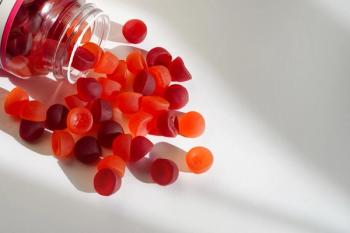
Emerson: Well, I was going to say the pre-workout gummies. I am seeing those come up and I think those are, like we were saying, depending on the formula, obviously not a vasodilator because it's too robust of a dose to put those gummies. But if they are taking an approach to going towards that nootropic aspect of a pre-workout, I think they're great. But other than that, I haven't seen the pre-workout space revolutionize itself from the powders, from the scoops. From a formulator stance, I'm sure Joey would have a different perspective than what I've seen, but I do see the nootropic becoming more inspired as a pre-workout than just being a muscle pump product these days.
Savage: I see a lot of people moving away from caffeine, and maybe that's just because I'm getting old, but there's a lot of interesting data that's out there that talks about caffeine addiction, caffeine withdrawal. And people started to move away from caffeine. Either they're going to this nootropic area, or they're looking at, like, paraxanthine, the downstream metabolite, or using something like that to kind of step their way away from caffeine. The withdrawal effects from caffeine can be nasty. Some of the studies I've read have compared it to nicotine addiction, how tenacious it is. I love the move away from caffeine, because it does allow things like these different choline donors or exogenous ketones or any of these nootropic kind of things to step forward with their vasodilators and provide a unique experience.
The other trend is it's not just gummies, but it's also beverage, it's also stick pack, it's the “convenienceification” of what used to be just a scoop and powder pre-workout, to where if you get it in a 16-ounce can, or in a bag of gummies, or a convenient stick pack that you can take with you on the go. That's happening at a much faster pace, even though it costs more, consumers are willing to pay for it. They're willing to pay for these different types of conveniences. Even outside of gummy, , there's this new and emerging realm of what is called, candyceuticals, or the confectionery side of things, where you'll find some of these different types of nootropics or vasodilators or anything, starting to be used in fast-dissolve things that resemble a pixie stick, or look like nerds or pop rocks, or even in chocolates.
The functionalization of food, and we're starting to see the lines get blurred between what is a dietary supplement, what is a functional food, and certain ingredients crossing that divide that either don't belong there yet or that are just getting data that says that they're generally recognized as safe for food, or some people just throwing the regulation out the window and just doing it because they can. I think that's happening a lot more, and it's something that on a policy level we're going to need to address.
Kalman: I would agree, especially anybody that's doing any active food ingredient or dietary supplement ingredient in a non-compliant manner. Food safety matters.
Advertisement
Related to this article
The company says the innovation, built on its CoreNhanced BioJourney platform, is designed for beverage and gummy formats.

AuraFen, BILVORA, and IMBE debut at SupplySide Global 2026, and the company will also highlight its CaFi digestive health ingredient.

Horphag Research's Sébastien Bornet breaks down the clinical science behind Robuvit, exploring how the caffeine-free French oak extract supports mitochondrial energy, mood stability, and stress resilience.

Todd Harrison, co-chair of the FDA practice group at Venable LLP, explains how California’s AB 2779 changes date-labeling requirements for supplements, why stability testing matters, and how companies can navigate evolving state rules while advocating for federal uniformity.

FDA's final NDI guidance sets identity and safety expectations. See what AHPA and CRN say remains unresolved and what it means for suppliers.
The company plans to present Organicaps capsules in size 0, 25 years of UC-II, and liquid-filled capsule technology.
DolCas Biotech is featuring the turmeric-derived ingredient Curcugen in Mānukora’s Mānuka honey and Numin’s cognitive-support drink.

The company says it will feature studies on vitamin K2, choline, folate, and MSM, along with beverage concepts and a first-time pet corner.
Advertisement
Advertisement
Trending on Nutritional Outlook - Supplement, Food & Beverage Manufacturing Trends
1
CoreFX Launches CreaSHLD-IN Shielded Creatine at SupplySide Global 2026
2
Robuvit for Stress & Mood: How Horphag's Caffeine-Free Oak Extract Targets Fatigue at the Cellular Level
3
FDA Finalizes NDI Guidance on Identity and Safety Information, Leaving Some Industry Concerns Open
4
Logical Square’s Portfolio Expands with Menopause, Prebiotic, and Extraction Introductions
5