

News|Articles|May 29, 2026
Formulation Considerations for Pre-Workout ProductsFormulation Considerations for Pre-Workout Products
Key Takeaways
- Formulation feasibility is primarily constrained by dose and ingredient count, with vasodilator “mega-doses” limiting capsules and gummies and favoring powders for practical fill capacity.
- Hygroscopic powders can clump and absorb moisture, accelerating active degradation and diluting assay results, thereby increasing third-party testing failures against Supplement Facts label claims.
Best ways to deliver ingredients to the end consumers, and exploring the limits of alternative dosage formats.
Advertisement
Douglas Kalman, PhD, RD: Switching a little bit. Now you're making these pre-workout, what are some of the formulation considerations for the consumer? How do you want to deliver it? What are some of the challenges and thoughts about whether you're going to do a capsule format for a company versus a ready-to-mix, powder, or stick pack, or whatever it might be. How do you both of you address that in your works?
Katie Emerson, PhD, RD, CISSN: Depends how much space and how many ingredients, and then looking at their dose, if they want to use L-citrulline, you're already talking about a mega dose that's going to be limiting in application that you can use it in.
And that's not going to leave much room for anything else, but if you use something else that's been shown to be able to have the same effect in a vasodilation manner, but in a lesser quantity, then you have more room for flexibility, but then you have some issues that are pH sensitive, some that can't be put into a gummy because they have negative interactions with pectin or something, so it all depends on what they want to put in the product. I would always start backwards.
What do you want your product to say? What's the claim? What's your target? What's your market? And then, let's look at what your preferred delivery system is. Do you want it in a liquid? Because that's going to change the ingredients. Do you want it in a gummy?
Typically in pre-workouts, because of wanting that vasodilation, they end up being powders, right? Because it's a larger scoop and you can fit more ingredients, but I like to work backwards in that manner. Joey has a more creative approach when it comes to formulation. He's, like, the brain chemist of putting things together and helping to solve issues, so actually, when I have issues, I actually go to Joey.
Kalman: Well, if you're having issues, let's say, you're going to either be doing some type of powder or you're going to be doing a liquid, something that's already canned or bottled, whatever. What are some of the challenges that you have in either with powders and with liquids that you have to overcome? What's some of your experience with that, Joey?
Joey Savage: So, in this particular scenario, in powder the main concern is the stability of the powder. If our dose is not a concern, am I dealing with ingredients that are known to be hygroscopic? Are they going to clump?
I know about this because I've screwed it up enough. Where you've got, like 2 or 3 ingredients that have decently high water activity that maybe they're an ingredient that was never born to be a powder, and there's certain things that are a liquid in their natural state, and they are either spray dried onto a substrate of some sort of a carrier, they're turned into a salt that has weak ionic bonds that if it's near any bit of water, it's going to start to effectively melt. You've got it in proximity to other ingredients that will react with it and then cause that process to happen even further.
So, making sure that you're using at least, a variety of ingredients amongst the things that are hygroscopic can decrease the tendency to clump. There's obviously different anti-caking agents that are used in different powder formulations. That's another common practice, and people that are purists when it comes to [using fillers]. There was a company I was working with recently where they do not like using any kind of “fillers” or anything like that. I asked them, “Are you having clumping issues with this product?” And they're like, “Yeah, we just tell our consumers to throw it in a food processor.”
I didn't find that to be a sufficient answer, because when you do that, it is going to clump again, and it's going to clump again probably faster than it did the first time.
Kalman: Some people think anybody can formulate a product and they think that formulation is just being able to pick the ingredients that would go into the cake recipe. But to be a true formulator, as you are, Joey, you you really have to also know the physiochemical properties of each ingredient, you actually have to know the science of the ingredient. The way I tell it to people is, you actually have to have an understanding of will these 1, 2, 3, or more ingredients play well in the sandbox together? And if they don't, uh-oh, what do we do?
Savage: The other thing that this moisture and clumping problem introduces is there's a quality issue that starts to come into play. This thing starts taking on water, and it starts clumping. If I'm testing via a third-party lab, my scoop of products, and I've got all these different label claims, that introduction of water not only is just diluting things because there's water there, but if it is accelerating the degradation of anything that's in there, then all of a sudden this is throwing all my numbers off that are on my supplement facts panel.
So, that's another consideration on the clumping side. The liquid story is completely different. Oh, God, I've got some fun learning lessons that I've done there. There are some things that just don't go well in liquid. There's a stability aspect to this, but then there's also…do you really want to taste that? There's that question that comes up a lot, too. I'll start there with the organoleptic thing. If you put, AG1, which you brought that up earlier. That is 100% plants going into that formula. It is not designed to really taste good, it's designed to be good for you. Most Greens products don't really taste that great. They've got this chlorophyll-y, pond kind of taste that you can hopefully put some berry and Stevia on it, and get people to be like, it's not bad. That's the best case scenario you're looking at with those products.
But if you're making a beverage, no one's going to want to drink an entire 16-ounce thing of like AG1. That's just not going to happen, but you know, I could be wrong. They're a $100 million company, but most people want something that they're expecting to either be a colored or a very clear, translucent, beautiful product. That isn't going to have a whole lot of plant material or botanical material in it…
Stability in liquids is probably, like, the next best thing. There are certain things you can put in liquids that will remain stable. There are certain things that you put in liquids that will literally react with the acid that you're using in order to bring the pH down so you don't have microbial growth that might even just precipitate out of solution. So, you could create a chemical reaction in that beverage that you hadn't anticipated, and form a new third species of molecule that was not planned, and suddenly is insoluble and ruins your entire batch.
So, knowing how this goes back to the physical properties of the ingredients, you have to know how they're going to behave, not just in liquid, but you have to know how it's going to behave at different pHs of liquid, and you have to understand how those matrices will interfere with those ingredients in that liquid at those different pH levels.
So, there's a lot of ways you could screw up a beverage, but you're also illustrating to everybody here that there are many factors that go into formulating a product and then being able to formulate it successfully.
Kalman: Gummies are one of the most popular alternative formats currently in the dietary supplement realm, both being marketed towards younger generation and throughout the whole life cycle. Do we need to worry or think about: will this vitamin mineral compound stay stable in a gummy? Does it stay stable in the formatting? Do we have a quality assurance, quality control potential issue with the plethora of gummy products that are on market, but are not necessarily nutritional?
I know that with gummies, some of the gummies are made where you are heating the slurry to over 300 degrees and you're mixing in your ingredients. Well, some ingredients, the physiochemical properties demonstrate that they can't take heats above a certain temperature, but yet they're put into these products.
How do you go about dealing with that aspect of formulating? Because it is a popular format, and I have seen pre-workouts that are sold in gummy. To me, I shake my head, but people buy it, so people make it, people sell it.
What can you share?
Emerson: I'll let Joey answer this one, but I'm going to throw something in there. We do clinical research to validate the dose, the duration, you know, timing effect and finding the efficacy, and then translating that transparently into claims. Now, when we start to change the format of the delivery system, you're talking about the compound itself degrading and changing, and so then I start to have concerns.
Are we going to have the same efficaciousness after it's been through that gummy process, after it's been through the RTD process? It's starting to have interactions with other ingredients. These are the kind of questions that we constantly get as a manufacturer. Is it going to play well with others? And of course, I go to Joey for that, but when it starts to get into this compound where the chemical structure may be changing, what does that mean for efficaciousness of the ingredient? Because at the end of the day, people are taking it for the benefits. So, we’ve got to know that the benefits are still being driven, even though it's been through an entirely new process.
Savage: By knowing what you're doing before you go into it, that's the first line of defense. I think there are a lot of manufacturers that are out there that probably have a very aggressive sales team that says no matter what you come to the table with, we can do it, and they don't give any second thought to it.
People manufacture something probably with all the good intentions in the world. And they're just going to throw these things into the slurry, and they're going to make a gummy out of it. And, you know, on the back end, maybe they're not testing, maybe they're not liable for that, maybe the customer's liable for that, and they don't know they're liable for that, so they don't do the testing, and then they just go to market with it.
They're good in theory on the packaging and everything, but when it comes to the real testing on the other side of it, it's going to fail to live up to those expectations, because whoever was putting it together didn't think about all these factors to begin with.
Emerson: The creatine gummy is the first thing that comes to mind for me. That whole scenario that came out where they were testing in post on shelves and there wasn't the appropriate amount or there wasn't creatine, it completely changed to creatinine, right?
Kalman: You know what's interesting? I think it may have been 2011, the European Food Safety Authority published manufacturing guidelines for creatine and including how much creatinine can be produced in the manufacturing, what they considered limits. When this gummy testing came out, the quality control issues became apparent in manufacturing for most of those companies.
So, sticking with gummies, would you formulate a pre-workout product in a gummy, knowing that possibly because the size of a gummy, you might be talking 6 to 12 or more gummies as the actual serving to deliver whatever it is your chief 3-4 ingredients might be.
Is it a viable approach?
Savage: So, I would never believe in a 3 gummy serving size for a pre-workout. If I were to put pre-workouts into gummies, it would have to be a multi-gummy, like, fruit snack pack kind of thing. You can't fit 10 pounds of stuff in a 5-pound bag. It's never going to work that way especially when you're dealing with some of the vasodilators we talked about, like L-citrulline. Those can be anywhere from 3 grams to 10 grams, and if you think about that, one single gummy is, you know, in a best-case scenario, a 4 gram gummy. The loading capacity of a gummy is maybe on the high side, 50%. If you're super talented, the ingredient you're working with is super soluble, and everything is green lights, and then if you were to space that out over how many gummies that would take, so if I have a 4 gram gummy, I'm putting 2 grams of citrulline in there, the best case scenario. If I want a 6 gram citrulline serving, it's going to take at least 3-4 gram gummies, and I'm giving that a huge benefit of the doubt. I don't think that they can achieve the 50% loading capacity on the gummy.
That's where the things start adding up. And that's just citrulline. That's not any other, that's not caffeine, that's not any of the other ingredients that we would want in a “ pre-workout” gummy.
Advertisement
Related to this article
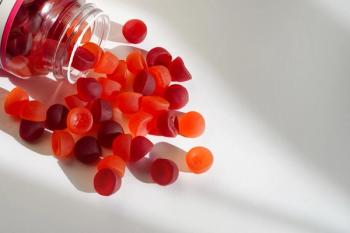
The company says the innovation, built on its CoreNhanced BioJourney platform, is designed for beverage and gummy formats.

AuraFen, BILVORA, and IMBE debut at SupplySide Global 2026, and the company will also highlight its CaFi digestive health ingredient.

Horphag Research's Sébastien Bornet breaks down the clinical science behind Robuvit, exploring how the caffeine-free French oak extract supports mitochondrial energy, mood stability, and stress resilience.

Todd Harrison, co-chair of the FDA practice group at Venable LLP, explains how California’s AB 2779 changes date-labeling requirements for supplements, why stability testing matters, and how companies can navigate evolving state rules while advocating for federal uniformity.

FDA's final NDI guidance sets identity and safety expectations. See what AHPA and CRN say remains unresolved and what it means for suppliers.

The company plans to present Organicaps capsules in size 0, 25 years of UC-II, and liquid-filled capsule technology.
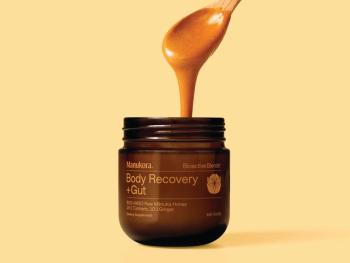
DolCas Biotech is featuring the turmeric-derived ingredient Curcugen in Mānukora’s Mānuka honey and Numin’s cognitive-support drink.

The company says it will feature studies on vitamin K2, choline, folate, and MSM, along with beverage concepts and a first-time pet corner.
Advertisement
Advertisement
Trending on Nutritional Outlook - Supplement, Food & Beverage Manufacturing Trends
1
CoreFX Launches CreaSHLD-IN Shielded Creatine at SupplySide Global 2026
2
Robuvit for Stress & Mood: How Horphag's Caffeine-Free Oak Extract Targets Fatigue at the Cellular Level
3
FDA Finalizes NDI Guidance on Identity and Safety Information, Leaving Some Industry Concerns Open
4
Logical Square’s Portfolio Expands with Menopause, Prebiotic, and Extraction Introductions
5