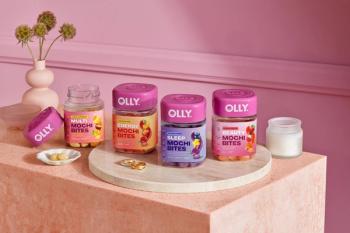
The four-formula line is Olly’s second retailer-exclusive launch this year, following the launch of a probiotic range in April.
The global market for synthetic and natural source astaxanthin may top $1 billion by 2020.
Astaxanthin suppliers have dramatically ramped up production of the microalgae-derived ingredient in recent years, and according to two companies, the market is growing more than fast enough to support the increased supply.
Celebrated for its antioxidant benefits, astaxanthin has been a challenging ingredient to produce in the past. But a growing consumer following has driven many companies to
Today, the astaxanthin demand appears as strong as ever. According to a
“There is still a steady increase in the demand for natural astaxanthin,” says Janice Brown, technical support at astaxanthin supplier AstaReal (Burlington, NJ). “I believe it’s the fact that people are becoming more aware of natural astaxanthin and all the health benefits.”
AstaReal, a subsidiary of Fuji Chemical Industries Company, Ltd. (Toyama, Japan), celebrated the one-year anniversary of its astaxanthin production facility in Moses Lake, Washington on May 14. The Moses Lake factory is AstaReal’s second astaxanthin production facility, in addition to its first site in Sweden.
AstaReal reports that the Moses Lake plant “has double the production capacity of the original factory in Sweden and is currently operating at full capacity.” The second plant also makes AstaReal the only natural astaxanthin supplier with multiple manufacturing facilities, according to a press release.
Fellow astaxanthin supplier Algatechnologies (Kibbutz Ketura, Israel) has also greatly increased its supply to meet the growing demand. The recent completion of an Algatechnologies facility expansion has doubled the capacity of its AstaPure astaxanthin brand, according to Efrat Kat, director of sales and marketing. He adds that Algatechnologies is also exploring new delivery forms for its ingredients.
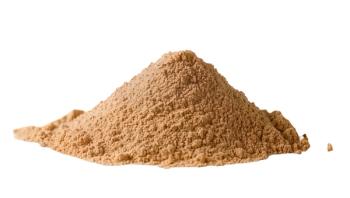
“One emerging category for astaxanthin is the food and beverage market, as well as all forms of liquid supplements,” says Kat. He adds that Algatechnologies has addressed these growth areas by creating “new delivery forms for the AstaPure brand in water soluble powder and emulsion.”
In a similar vein, AstaReal launched a 1.5% water-soluble, natural astaxanthin liquid last year, called AstaReal HBA. Brown says this form of astaxanthin is gaining popularity in the liquid supplement and functional beverage industries.
Nonetheless, there are still obstacles to even more growth of the astaxanthin market, including adulteration of astaxanthin products.
“The biggest obstacle that AstaReal faces is the infiltration of ‘not-up-to-par’ astaxanthin,” says Brown. “And what I mean by that is astaxanthin that is coming in off shores that are not meeting the USP [United States Pharmacopeia] monograph for astaxanthin and contain residual solvents. These sources of astaxanthin could have a negative impact on the growth of the ingredient in the market.”
A lack of consumer awareness may be another possible obstacle to further market growth, suggests Kat, who stresses the “need to invest in more education and promotional efforts.” He points to the outreach efforts of the
Read more:
Michael Crane
Associate Editor
Nutritional Outlook Magazine
Photo © iStockphoto.com/buccaneership