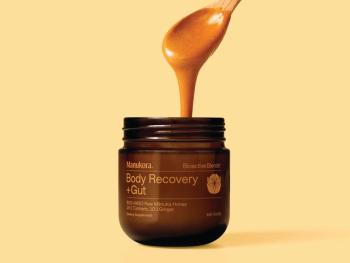
Women are constantly fed the message, do more, sleep more, be more active, achieve more, and so we've been designing formulas that are kind of a catch-all for all those things. So, they might address gut health, hormonal balance, cognitive support, and kind of do it all in 1 place in a fun delivery format. Because again, women are dynamic. These things bleed into each other, so if you're struggling in the perimenopause, menopause category, that's going to affect your sleep, your stress, and it trickles down to everything, so why not support in more than 1 way?
Dicker: It's interesting, because I really feel like post-COVID, we've seen a lot of these categories start to connect the dots. If you get better sleep, your immune system will be better, or if you get better sleep, it's called a beauty sleep product. I'm curious, Lauren, just staying with you, have you seen these all-in-one supplements having more interest, just in general? We see specific categories doing really well, and then some, not so much. I'm curious, is it focused on women's health, or have you seen that across?
Samot: We've seen that across the board, but more specifically for women, especially as it relates to gut health, because we know so much starts in the gut, so you have your postbiotics and your polyphenols that will modulate your short-chain fatty acids, and upregulate some of your hormones and neurotransmitters. Those types of formulas have been really growing in popularity.
Dicker: Awesome. And then Josh, when we think about the shift from sometimes people want 1 supplement that does everything for them, like what Laura was saying, so I want a gut health, an immune health, and energy in my multivitamin also. Then sometimes they want highly specific, I really just want a cognitive support product. What do you see from a consumer standpoint, or from a brand positioning standpoint? What do you usually recommend? Should you stay in your lane of being a gut health product, or where's the opportunity for the all-in-one, plus-plus-plus categories?
Joshua Schall: It starts to get messy. I probably think about this question, more from the commercial risks because I think on paper, if it’s benefit stack, or you start to try to pack as many things in there as possible, you might have a place to live in the endless aisle of the internet, because there's not as many rules or constraints that are out there, but when you then want to move into retail, you have cost constraints, you have psychological pricing that's in play there.
You have the consumer that needs to understand what you're offering to them in a few seconds from a few feet away on a shelf, and there's all these kinds of things that come up. It gets concerning because, I think that people naturally want to help create the most convenient products, but then there's all these constraints in the market, and sometimes those things create a little bit of an issue of which and how do you address that? I think that comes down to probably more business clarity, business strategy, and clarity with that. That's really where some of that stuff gets addressed. It's hard sometimes to always look through the consumer lens, because of these other things that are going on around.
Dicker: It's also where consumers are as well. Are you the first-time supplement consumer? Are you someone who's comfortable taking a handful of pills, or I'm sure we'll get to a couple bags of gummy bears a day.
But Spencer, and you can talk about it from the supplement side as well, but I always think about this. When we talk about the functional beverages, I really think that there's an opportunity for some of these other health-focused functional beverages to do well, but it seems like they always are trying to do too much. Especially in that beverage format, if you start putting a handful of ingredients, the cost either gets prohibitive, or you're not putting in enough of any of the ingredients then.
I'm curious what you're seeing from a challenge perspective there. Is there 1 health focus that you think is ripe to do better on it? We don't have to stay in the beverage format, but curious what your thoughts are on that.
Spencer Lynn: When I think about that from a beverage perspective, I really think you have 3 main types of functional beverages that you can play with. You have energy, you have hydration, then you have relaxation. I think most brands would be better off to stick with 1 product in each of those categories, whereas instead of trying to make an all-in-one. I get that hydration has a little bit of overlap—you could do an energy and hydration, and then hydration and relaxation, but I've always been a fan of brands more so trying to focus on 1 product per category.
I think Bucked Up is one that comes to mind that does a really good job of that. They even also have a carbonated protein beverage as well, so I think when you try to be a little bit of everything in one product, you confuse customers. You probably don't have an efficacious amount of the actual ingredients in there anyway because you're trying to cram a bunch of stuff into a 16-oz at most beverage. I'm a bigger fan of brands segmenting those products that way.
Dicker: It seems a lot more feasible in a powder, for people to mix theirselves. An open question for the panel is, what category do you think has the most white space right now for formulators? Because these trends we're talking about, it's not like they just started. We're in the middle of a lot of these trends.
Where and what white space do you see, whether it be healthy aging, healthspan, active, women's health? Or it could be something like cognitive or mood support as well.
Samot: We're seeing a lot of white space in probiotics. For so long, probiotics were just addressing your gut health needs, such as your microbiota diversity, but now, so many strains can address other things, such as skin, mood. Postbiotics also are doing great things for those easier delivery systems. You don't have to worry about formulation challenges as much with postbiotics. Definitely probiotics addressing some of the symptoms of menopause, PMS, mood. It’s still growing, still ongoing, and a very exciting space.
Lynn: That's a good call-out with probiotics, too. Here at PricePlow and Bevlab, we just came across a new ingredient, thanks to Joey Savage, and Alpha Lion is launching it in one of their pre-workouts. It's called Tensia, and it's a probiotic that leads to pump and blood flow. The way that we've seen it described is it's a 24-hour trickle of a probiotics product that helps with your blood flow for a pump. We've just seen Alpha Lion launch that in 1 of their pre-workouts under their SuperHuman line, and that's just a completely new ingredient to us. It kind of came out of nowhere. It's owned by a company called BioCC. They're out of Estonia.
Dicker: To get that all-day pump again. Remember those all-day pump fads?
Lynn: Shout out to Joey Savage. Anytime he gets excited about an ingredient, that's an indicator.
Dicker: Very cool. Josh, were you going to jump in?
Schall: You would expect me to say sports and active nutrition, since that's where I cut my teeth, but I think, maybe it's because of the lifestage that I'm in right now, and handling this—maybe some of you will agree with this—I think women's health is definitely still early stage, but even within there, a subcategory that seems to get continuously overlooked is postpartum, and the needs. If it's psychological, metabolic, you know, thyroid, there's so many different hormonal things that kind of go on that it seems like it's hands-off. Those consumers—maybe because it's risky, and there's a lot of things that probably are involved with that—but it seems like, even from a snacking, functional snacking standpoint, I think the needs of those consumers just get overlooked. There's just not much to offer out there, even if you look at recipes, or blogs. It always seems like it misses the mark on realistic needs of these consumers.
Dicker: That's a great call-out. Where there's a niche. That hasn't really been looked at yet.
Lynn: And to build off what Josh just said, too, in postpartum, I think also similar, I think of infant nutrition. Huge white space there, just because the first time I ever went to go buy infant formula for my son at the grocery store, and me just being a label reader, I'm pulling certain companies' products off the shelf, and I'm flipping it around and reading the ingredients.
The first ingredient's corn syrup, and I'm thinking, what are we doing? I'm not buying this for my son. I'm not. I put it back, and there's just a lot of white space there where I think brands can do better, can come up with better formulas that we're literally giving to infants, to babies fresh out of the womb. That's probably some of the most important nutrition that there is to give to anybody. Helaina just announced a pretty big partnership with Nestlé to use their bioidentical lactoferrin, so I'm excited to see what comes from that, but it seems like some of these big infant nutrition companies are maybe now starting to realize that there's a lot of white space and a lot of things that they can do to improve infant nutrition.