What Are Nutrition Experts Saying About Supplement Support?
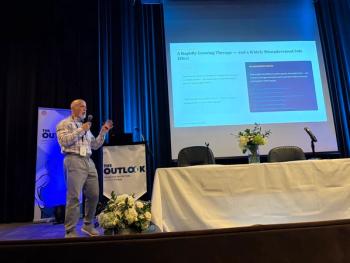
The nutritional side of GLP-1 use was also a topic at The Outlook on Active Nutrition, where sports nutritionist Doug Kalman, PhD, RD, FISSN, said the drugs cut caloric intake by roughly 15% to 40%, with early-treatment intake often falling to 800 to 1,200 calories a day.2
Kalman cited data indicating that after six months to a year on therapy, about 98% of users had insufficient vitamin D and potassium intake, 94% insufficient choline, roughly 90% insufficient magnesium, and 88% insufficient iron. He also said about 22.5% of long-term users develop a diagnosed vitamin or mineral deficiency.
A Call for Clinician Education
In related commentary, Bonnie Johnson, MS, MBA, RD, director of nutrition programs and policy at the Institute for the Advancement of Food and Nutrition Sciences, wrote that inconsistent advice for patients on GLP-1 medications can affect outcomes and erode trust.3 She described how recommendations from a provider and from a dietician may both be well-meaning yet still not be equally comprehensive. Johnson wrote that "patients should not bear the burden of unnecessary confusion," and called for practical continuing education for health care providers. Read the full article here.
On muscle, Kalman cited data indicating that roughly 38% of early weight loss is muscle, a higher share than the 30% lean mass figure the Lancet authors cite. He pointed to resistance training, protein intake of 1.2 to 1.6 grams per kilogram of body weight, and 20 to 30 grams of daily fiber as evidence-based strategies. Among supplements, Kalman pointed to a recently published trial in which people taking GLP-1 drugs lost less muscle with beta-hydroxy beta-methylbutyrate (HMB) than with placebo, and he also named creatine monohydrate, which he said has both a mechanistic rationale and research behind it for preserving muscle. He also noted that no standard monitoring protocol exists for GLP-1 patients comparable to bariatric surgery care, and that about 35% to 50% of patients discontinue therapy within a year, a population he suggested nutrition companies are positioned to support.
What Barriers to Access Did the Authors Identify?
Cost is the main barrier in low- and middle-income countries (LMICs) and among socioeconomically deprived groups in high-income countries, according to the review. The authors cite manufacturing estimates suggesting several of these drugs could be produced sustainably for roughly $1 to $70 a month, depending on formulation, while retail prices in many LMIC settings exceed $90 a month. They also cite an analysis across 99 countries indicating that nearly 80% of adults who meet clinical eligibility criteria live in LMICs, where access remains minimal.
The review also cites World Health Organization reports that shortages are increasing the presence of counterfeit products, and says women seeking cheaper options often turn to compounded versions without knowing the dosing and contamination risks. These products are occasionally misrepresented as approved by the FDA.
References
- Meek CL, Anjana RM, Chandiwana N, et al. Global barriers to GLP-1 receptor agonist treatment in women: access, safety, and equity. Lancet Obstet Gynaecol Womens Health. Published online September 29, 2026. doi:10.1016/S3050-5038(26)00228-1
- McEvoy E. Muscle loss, micronutrient gaps, and the GLP-1 opportunity for supplement brands. Nutritional Outlook. September 28, 2026. Accessed October 5, 2026. https://www.nutritionaloutlook.com/view/muscle-loss-micronutrient-gaps-the-glp-1-opportunity-supplement-brands
- Johnson B. Providing clarity in a noisy nutrition landscape. Nutritional Outlook. October 5, 2026. Accessed October 5, 2026. https://www.nutritionaloutlook.com/view/providing-clarity-in-a-noisy-nutrition-landscape