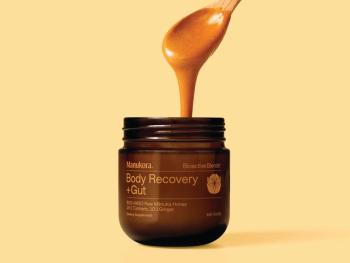
The company says the innovation, built on its CoreNhanced BioJourney platform, is designed for beverage and gummy formats.
At IFT FIRST 2026, Foodology by Univar Solutions highlighted formulation approaches for nutrient-dense, portion-controlled products, reflecting a broader industry shift already underway as GLP-1 medication use continues to grow.
Foodology by Univar Solutions used its presence at IFT FIRST 2026, the Institute of Food Technologists' annual food science and innovation expo, to spotlight ingredient strategies aimed at formulators responding to a demand shift tied to rising GLP-1 medication use.1
The company's booth featured chef-developed prototypes, including a Mediterranean protein pocket and a pea protein cracker, alongside a broader portfolio spanning bakery, beverage, dairy, and sports nutrition applications.
Independent consumer research supports the shift Foodology's positioning points to. A 2024 study by AMC Global and OpinionRoute found that 78% of GLP-1 users reported seeking smaller food pack sizes, 82% wanted more foods with functional benefits such as added fiber or vitamins, and 60% specifically sought more protein-rich options.2
The same study found 95% of GLP-1 users reported eating smaller portions overall, with reduced snacking and less frequent eating also widely reported.2 Separately, a 2026 analysis from ING projected that GLP-1 adoption could reduce total food calorie intake in Europe by 2.5% to 3.5% by 2030, though the bank noted the near-term impact through 2027 would likely remain limited given comparatively low current adoption rates outside the United States.3
The emphasis on protein in GLP-1-aligned product development is tied to a specific physiological concern rather than general nutrition trends. Research cited in industry analysis has found that up to 39% of weight lost while using semaglutide can be lean body mass, compared with 20% to 30% under conventional diet and exercise-based weight loss, making adequate protein intake a more pressing formulation consideration for this population than for general-market products.4
That distinction is relevant for manufacturers evaluating protein fortification strategies: the goal for GLP-1-aligned products is not simply higher protein content, but delivering sufficient protein within a smaller portion size and typically reduced overall appetite.
Increasing protein, fiber, or micronutrient density within a smaller serving size introduces formulation tradeoffs that don't arise in standard-portion products. Higher concentrations of protein or fiber can alter taste, texture, and mouthfeel, and industry analysts have noted that added nutrients can introduce off-flavors or aftertaste if not properly masked or balanced within the formulation.5
This is consistent with why ingredient suppliers positioning themselves in this space, including Foodology, emphasize formulation expertise and testing infrastructure alongside raw ingredient supply, since nutrient density alone does not guarantee a commercially viable finished product.
Projections for how significantly GLP-1 adoption will reshape food demand vary considerably by region and by analyst. ING's 2026 analysis outlined several diverging scenarios for 2030, ranging from a concentrated impact on a small number of food categories to a more structural, broad-based reformulation requirement, depending on how quickly adoption rates climb, particularly outside the United States.3
References
1. Foodology by Univar Solutions. Foodology by Univar Solutions to showcase GLP-1 innovation, clean label expertise, and supply chain strength at IFT FIRST 2026. Univar Solutions. June 2026. Accessed July 16, 2026. Press release provided via email.
2. AMC Global, OpinionRoute. AMC Global and OpinionRoute consumer study reveals impact of GLP-1 weight loss drugs on food choices. October 17, 2024. Accessed July 16, 2026.
3. VH Jolanda. GLP-1 drugs set to impact 2030 European food demand. Nutrition Insight. March 24, 2026. Accessed July 16, 2026.
4. Ingredion. The GLP-1 effect: reformulating for high-protein, nutrient-packed demand. January 15, 2026. Accessed July 16 2026.
5. Polaris Market Research. GLP-1 companion nutrition: how weight-loss drugs are rewriting F&B product development. July 2026. Accessed July 16, 2026.