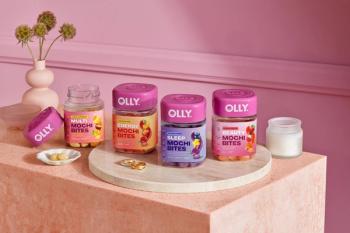
The four-formula line is Olly’s second retailer-exclusive launch this year, following the launch of a probiotic range in April.
Nutritional Outlook spoke to Kristin Dalton, associate director, product management, specialty polymers for Lonza CHI about organic capsule and supplement formulation, as well as the opportunity organic certified supplements presents for manufacturers.
According to Kristin Dalton, associate director, product management, specialty polymers for Lonza Capsugel, there is a great deal of opportunity in plant-based and organic dietary supplement applications. Last October, Lonza Capsugel
Read more about the opportunities and how Lonza Capsugel was able to overcome some of the common challenges behind organic capsule formulation.
Sebastian Krawiec: While consumers may perceive organic certified supplements as superior, are they willing to pay a premium over a non-organic option that delivers the same benefits? If so, why?
Kristin Dalton: In the nutraceuticals space, 65% of consumers say they are more likely to buy a product if it has USDA organic certification and 54% are willing to pay more for them.1 In fact, organic certified products are outpacing the growth of their non-organic counterparts in the dietary supplements market.2 This growing preference is fueled by increasing awareness of the benefits of organic products—for both personal health and the planet.With 32% of consumers revealing that they wish to steer clear of environmentally harmful ingredients,3 and 47% of consumers very likely to choose a particular brand if it has health benefits for them as well as the planet,4 it's clear that eco-conscious choices are becoming increasingly important.
Krawiec: What are the limitations when it comes to what ingredients qualify for organic certification? I assume organic ingredients need to be sourced from organic certified plant sources and must undergo specific processing? What kind of processing disqualifies an ingredient from organic certification?
Dalton: Organic certification is a label that indicates when a product has been produced according to official organic standards, such as those set by the United States Department of Agriculture (USDA). These standards require operations to use practices and materials that cycle resources, conserve biodiversity, and preserve ecological balance.5 Obtaining this certification is critical for developing trustworthy organic supplements. There are four different levels of organic certifications set by the USDA’s National Organic Program (NOP): 100% Organic, Organic (≥ 95% organic ingredients), Made with Organic, and Specific Organic Ingredients.6
Only the first two—100% Organic and Organic—are eligible for the USDA organic seal.vi Therefore, to earn this seal and attract consumers seeking certified supplements, brands must make sure that their products contain at least 95% organic certified ingredients.
The process of achieving this level of certification is complex and lengthy, involving rigorous documentation, ingredient traceability, and regular audits. It is therefore advantageous for brands to partner with experienced suppliers and regulatory experts who can help navigate these requirements efficiently.
Krawiec: What has been the primary hurdle to formulating organic supplement products? What makes organic capsules so challenging to produce?
Dalton: When it comes to creating capsules for organic formulations—polymer choice is crucial as not all vegan polymers meet the USDA’s organic criteria. Take the popular vegan capsule polymer hydroxypropyl methyl cellulose (HPMC), a wood pulp derived polymer consisting of partly methylated and hydroxypropylated cellulose units, as an example. While HPMC has many benefits for capsules, the chemical modifications involved in its synthesis mean that it cannot achieve USDA organic certification.
In contrast, another popular vegan polymer, pullulan, is an ideal choice for brands seeking USDA organic certification. It is produced through a fermentation process using a specific strain of the fungus Aureobasidium pullulans—resulting in pullulan, a water-soluble polysaccharide polymer.7 When organic starch is used in the fermentation process, the resulting pullulan can achieve organic certification.
Krawiec: When working with plant-based and/or vegan ingredients sensitive to oxygen, pH, or light, how do you go about choosing the right combination of actives and capsule/delivery method to achieve an intended health benefit?
Dalton: A successful product hinges on selecting the right capsule polymer type, as different vegan polymers are more suitable for specific ingredients. Pullulan capsules are ideal to help prevent degradation of oxygen-sensitive ingredients, thanks to their high oxygen barrier. This is especially important when formulating with plant-based ingredients, as many are sensitive to oxygen, like plant-based omega-3s and lipid soluble vitamins, such as vitamins D, E, A, and K.
In comparison to gelatin capsule polymers, the oxygen barrier of pullulan is significantly stronger.8 Take Lonza Capsugel Organicaps capsules as an example; they feature a high oxygen barrier, non-reactive shell, excellent polymer stability, and proven filling performance. This allows for optimal stability and protection, which means formulators can be confident that the potency of their most sensitive organic powder ingredients is preserved.
In addition, HPMC capsules provide a low moisture vegan alternative to gelatin for hygroscopic ingredients. The low moisture property of HPMC capsules is particularly relevant as functional mushrooms take the wellness world by storm. Now recognized as superfoods, with many in-demand benefits—ranging from immune support to focus and energy—it’s no surprise that one in four consumers are interested in trying functional mushrooms.9 However, the hygroscopic nature of mushrooms makes them difficult to formulate with, unless they are protected properly with an ultra-low moisture HPMC capsule, such as Lonza Capsugel’s Vcaps Plus HPMC capsules. What’s more, our Capsugel DRcaps designed-release HPMC capsules can protect sensitive ingredients as they pass through the acidic stomach for optimal effectiveness.
Krawiec: What are some important considerations for formulating vegan supplements? What additional challenges does this present compared to conventional or even organic products?
Dalton: While ‘vegan’ is an important purchase driver, consumers are not willing to compromise on other aspects of their supplements. Consumers expect the same quality, scientific validation, and proven effectiveness as non-vegan options. Vegan and plant-based lifestyles are also closely aligned to broader consumer values and preferences—think non-GMO, organic, and sustainability. In fact, according to recent studies, over 50% of supplement users actively look for non-GMO labels.10 What’s more, one survey found that seeing the seal from The Non-GMO Project—one of the most rigorous non-GMO certifications in North America11—made 43% of shoppers more likely to buy a product.12
As such, brands need to create plant-based products that align with health-conscious consumer’s broader values and dietary preferences, from organic ingredients to non-GMO.
Ultimately, efficacy is the cornerstone of consumer trust and product success—so much so that roughly half of UK and US consumers reported clinically-backed efficacy as a top purchasing factor.13 This means that vegan capsules must deliver the same high-performance and evidence-based standards as their non-vegan counterparts.
Research carried out by Lonza Capsugel reveals that our vegan Capsugel Vcaps Plus HPMC capsules provide high performing, immediate ingredient release comparable to traditional gelatin capsules. And thanks to the specific structure of HPMC, Capsugel Vcaps Plus HPMC capsules are not susceptible to cross-linking. This ensures excellent dissolution performance and a disintegration time of less than 10 minutes. They also dissolve consistently across different pH levels and are unaffected by cations or other food components, making them ideal for multi-ingredient low moisture vegan supplements.
By optimizing ingredient delivery with capsules like Lonza Capsugel’s Vcaps Plus HPMC capsules, brands can create high performing, immediate release solutions that meet rising consumer demands for efficacy, helping them stay one step ahead in the nutraceutical market.