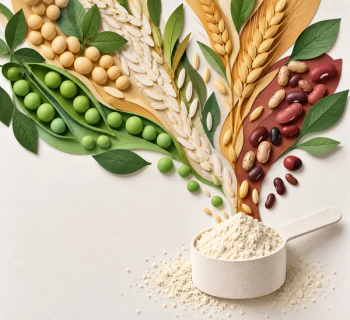
Emerging plant protein sources are redefining how protein products are formulated.
A double-blind, controlled trial showed HMB paired with whey protein prolongs muscle protein breakdown suppression in older adults.
A randomized, double-blind, controlled crossover clinical trial published in Nutrients investigated the acute metabolic effects of pairing β-hydroxy-β-methylbutyrate (HMB) with high-dose whey protein in older adults.1 Conducted by researchers at the University of Nottingham and funded by Abbott Nutrition, the study evaluated whether adding HMB to a substantial protein bolus could further stimulate muscle protein synthesis (MPS) and suppress muscle protein breakdown (MPB) beyond the effects of protein alone. The findings highlight a notable sexual dimorphism in anabolic responses and point to potential formulation strategies for the targeted healthy-aging sector.
The trial enrolled healthy older volunteers aged 65 to 75 years, with 24 subjects (13 men and 11 women) completing the protocols. Participants ingested either a control beverage or an HMB-supplemented beverage in a crossover design. The HMB was supplied by TSI Group.
Both interventions provided a 40-g bolus of whey protein concentrate. The active formulation differed solely by the addition of 3 g of calcium HMB. Researchers utilized stable isotope tracer techniques, leg blood flow measurements, and muscle biopsies to track intramuscular HMB concentrations and measure rates of muscle protein turnover.
The data revealed distinct outcomes regarding protein turnover when HMB was added to the whey protein bolus:
“Surprisingly, whereas 40 g of whey protein was not able to overcome the anabolic resistance in older women, the addition of adjuvant HMB was able to further enhance the MPS feeding response to high protein,” the researchers concluded. “HMB also suppressed the MPB response to protein feeding over a longer period of time. These data provide mechanistic evidence for the clinical potential of HMB in conjunction with high protein to improve muscle anabolism in populations at greater risk of muscle loss and falls, especially older adults.”
For product developers and brand owners in the nutraceutical space, these outcomes provide evidence for optimizing muscle-health formulations aimed at addressing age-related muscle loss, or sarcopenia. As TSI explained, while whey protein remains foundational to muscle-supportive nutrition due to its rich essential amino acid and leucine profile, calcium HMB acts as a distinct metabolic regulator that complements rather than replaces protein intake.2
Demonstrating an example of commercial use of HMB, Mengniu Yourui, a manufacturer and distributor of dairy products in China, recently upgraded its Bone Strength Golden Formula milk powder for older adults.3 Authorized to utilize TSI's proprietary myHMB, the formulation directly pairs calcium HMB with whey protein to combat age-related muscle loss. This launch highlights a major commercial shift toward multidimensional, integrated mobility products that simultaneously target muscle, joint, and bone health in aging populations.
“I have spent 30 years hoping that the science of HMB would reach the people who need it most,” said Naji N. Abumrad, MD, co-inventor of HMB. “Chinese middle-aged and older adults are exactly that population. TSI and Mengniu Yourui now make it possible for them to access this ingredient at a clinically effective dose, in a format designed for their daily lives. That is what science is supposed to do.”
References