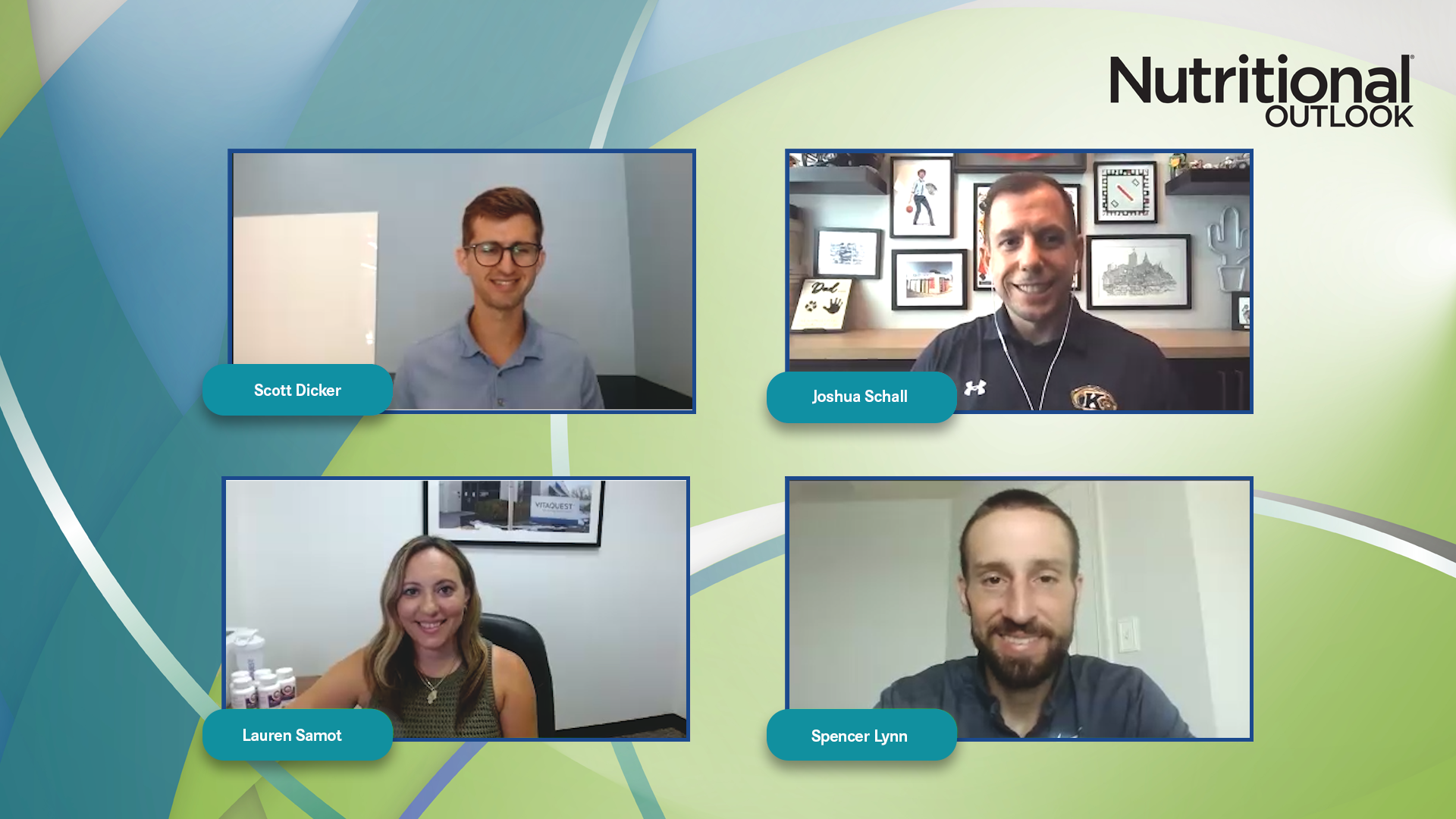
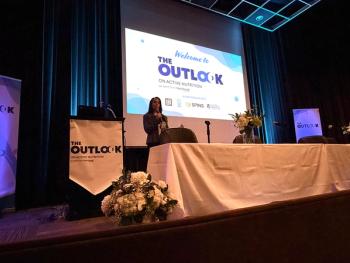
This panel is going to be about the questions I get asked the most, which is, what's going on in innovation, new products, and development? This will specifically be, of course, in the nutraceutical space.
We are going to touch on what health focuses are trending, how to address those consumer needs, what ingredients are taking off, where we see the market going, as well as the different types of formats. We go from everything from the traditional pills and powders, we'll go over gummies, other candy formats, and beverages, which are becoming, very popular as well. And so I am joined today by 3 fantastic industry thought leaders, and I think they're on the screen already. Josh Schall, the owner and president of J. Schall Consulting; Lauren Samot, the commercial innovation director for Vitaquest International, and Spencer Lynn, the vice president of both PricePlow and Bevlab.
With that short and sweet introduction, let's get into the first topic, which is the trending health categories. And really, there's nowhere to start in this space besides active nutrition. Our data has shown that active nutrition has been the fastest growing supplement category for each of the past 5 years now, and we know that this is happening due to the expanded demographics, along with some other factors that we could get into, such as GLP-1 usage, the sportification of non-athletes, all those things, specifically, you know, a lot of things like women and aging populations in here. So I'm really curious to kick it off to the panel, what do you guys think this means for both formulators as well as brand owners? So, Spencer, do you want to kick us off here?
Spencer Lynn: Yeah, for sure, I think it's an interesting topic to start on, because healthy aging is growing in popularity, and I think it's really because that initial segment of hardcore sports nutrition enthusiasts that grew up with the Muscle & Fitness magazines and the Bodybuilding.com forum, that's because that cohort—we're starting to age ourselves. That was me, that was probably you, Scott, that was Josh. Now Josh, Scott, and I we all have children, we're aging ourselves, so with that, I think our buying habits, our consumer habits are aging with us. I think that's going to provide formulators and brands the opportunity to keep doing what they were doing with those early sports nutrition days.
I think myself, I want to see brands still using patented ingredients with studies backing up their efficacy. I still want to see pretty hefty formulas. I don't want to see my grandma and grandpa's multivitamin with fairy-dusted amounts of their daily minerals, with forms of vitamins and minerals that aren't absorbed well anyway. I want to see more of the hardcore sports nutrition products age alongside me.
Dicker: Just picking up on that, Josh, we’ve talk about it for years, about trends starting in active nutrition. And then to what Spencer was saying, is there still a place for these early 2000s, hardcore brands that were more focused on bodybuilding, or has it really just evolved to where new brands, new formulators really should focus on the more expansive role of healthy enthusiasts?
Joshua Schall: It’s interesting, because I think sports and active nutrition, it's arguably, the category or the market as a whole, as gender-balanced, age-balanced, lifestyle-oriented as it's ever been. I think about it, and we mention this often, is that don't necessarily think it's a niche
category anymore. I think it impacts and influences so many other spaces, and I think that's super exciting for anybody that's looking at the space, but I always think through the flip side of that, which is that it creates a lot of complexity with all of this, including market expansion.
People have to really take a new and a fresh look at the category and say, okay. Am I going mass appeal? Am I micro-targeting? There's all these decisions that have to be made, and to your point around is there still room for hardcore sports nutrition, bodybuilder brands, I do. I think that the ceiling is obviously much lower, and I think it comes back to understanding who are you targeting and what's authentic to you? How do you provide some products that those consumers are going to want with a brand strategy that they're going to really latch onto.
There's all that kind of opportunity there, but I think you have to really be focused on that—not necessarily trying to play with that—and then also trying to play with some of these other markets. Then you start getting washed out, and people don't really understand who you are and what you're trying to accomplish in the market. It’s where brands are starting from. If you're launching a new brand, and you're trying to find a niche before expanding, or if you’re Cellucor, who has started off in the market and where they are now.
Lauren, I wanted to move over to you. You know we hit on how active nutrition's really grown and expanded by including more female-focused or just being more inclusive female and aging populations. Have you seen any specific formula trends for those changing demographics?
Lauren Samot: Absolutely, especially around strength training. It's grown not just from being with athletes and part of an athlete's regimen, but women are really looking to strength train through perimenopause, menopause, and throughout various life stages.
Protein, for sure, drives this category. Anything where you're emphasizing muscle protein synthesis. Whether it's whey protein, pea protein, like your alternatives, such as your yeast protein, it just plays such a critical role in forming muscle as we age.
Ingredients that help maintain muscle mass and also ingredients that help with joint support and recovery. I think women especially want to feel good the next day. They don't want to feel like they were necessarily hit by a truck after a workout. Things like electrolytes also. Women want to enjoy their supplement as they're taking it, so electrolytes that go beyond just the minerals. Maybe it's something with B vitamins for energy or an extra push, or it's something that tastes really good that maybe replaces a soft drink.
I think women are really leaning into the recovery part and the muscle-building part, and then with GLP-1 in the background, we know how important muscle protein synthesis is for that population as well.
Dicker: Awesome. Spencer, when we look at, a lot of these categories, we've been talking about traditional supplement categories, but beverages are a big part of it now. What are beverage brands looking to do formulation-wise to hit on these, or to circle fully back, is it just making it more accessible considering we've seen that growth?
Lynn: The more innovative beverage brands are trying to find something beyond caffeine that gives an experiential effect to the consumer. Obviously, when we're playing in beverage, we're playing with smaller doses, both from a stability standpoint, and then just from the amount of room you have in that 16-oz or 12-oz can. It’s about trying to find things that give an acute effect to the consumer, without stemming them out.
Some things that come to mind that we've been seeing a lot from more innovative brands, goBHB, putting BHBs in beverages now. Some ingredients from NNB have effects at very small doses that are working in energy drinks. We just saw Jocko put MitoPrime and SalidroPure in their reformulation of their GO Energy, so the more innovative brands are just looking for acute effects beyond caffeine.