

Clean Label Positioning and What it Means for Formulators
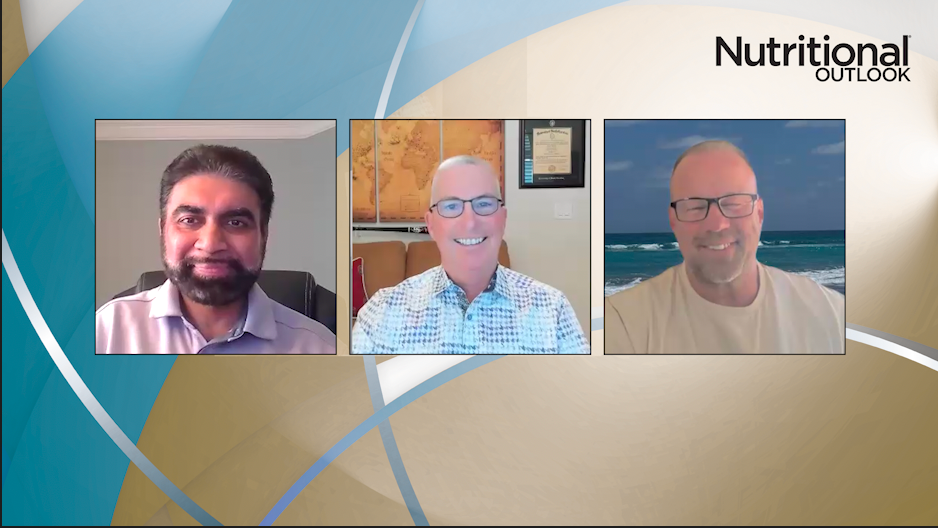
David Foreman, Hank Ramsey, and Irfan Qureshi close out their Peer Exchange with a candid look at organic certification, global sourcing, tariffs, and the innovations shaping the future of the nutraceutical industry.
Clean label claims like organic, non-GMO, and allergen-free may resonate with consumers, but achieving them is far more complicated than a package label suggests. In this final segment of the Peer Exchange, David Foreman encourages Hank Ramsey and Irfan Qureshi to get specific about what it actually takes to bring a certified organic product to market.
The conversation centers on the realities of global sourcing: why domestic-only supply chains are impractical for most brands, how tariffs have affected margins and complicated commercialization, and what it takes to qualify overseas suppliers through auditing, documentation, and rigorous testing. Ramsey and Qureshi both emphasize that trust in a supplier never replaces verification, and that lead times—stretched thin over the past two years—are only now beginning to normalize.
Pricing gets equal attention, with Ramsey walking through how brands weigh market data, price elasticity, and margin requirements against the true cost of organic certification, sometimes concluding that a product simply isn't viable at the price point required. The discussion also touches on the tension between sourcing domestically versus internationally, and why economics and ingredient availability often make that decision for brands rather than sentiment alone.
The discussion closes on a forward-looking note, with both guests pointing to the microbiome—and postbiotics in particular—as one of the most exciting frontiers in the space, alongside Foreman's own enthusiasm for the technological advances reshaping how difficult ingredients get delivered.
Viewers will walk away with a clearer picture of what happens behind the scenes on what goes into a products label positioning, and a sense of where the industry's attention is turning next.
Transcript:
David Foreman: So, anyway, multiple times we talked about clean label. So, what about concepts like allergen-free, non-GMO, of course, organic fits into this thing, so I already know Hank's got some answers for this stuff, but these are, the watermark, but for brands pursuing that USDA organic certification, what are the most common hurdles? Yeah, this is all… Hank, this has you written all over it, man. Yeah, one of the big hurdles, dude, when it comes to this, sourcing certified organic capsules, shells, excipients, and all that stuff. So, I'm just gonna let you throw up on us right now.
Hank Ramsey: Oh, yeah, I kind of said a lot of it already. It's sourcing, it's supply chains, it's finding the supply. You know, we… I don't know that we've talked a lot about tariffs, or we talked a little bit about cost, but, when brands say they get everything from the U.S., hopefully those are smaller ingredient formulations, because it's almost impossible.
We live in a global society, and some of the best ingredients are from a country you just talked about, India. Some of the best herbs come from over there, and the tariffs really hurt our supply chain and commercialization efforts, as they did everybody, I'm sure. But a lot of times, it's just finding those supply chains, finding those manufacturers that can get you those, finding those raw material suppliers that can source and get those types of ingredients that can pass the test you need passed. And then, ultimately, we go through our certifiers, our organic certifiers that go through, and there's been times that they've said, you miss this by a small percentage point, you need to either go retest it, rerun it, remix it, whatever we need to do. So, it's a challenge, but it's getting and better and better, and our hope, honestly, is that brands copy us and knock us off, and everybody does it, and the water rises up, and everybody's doing it. That's good for… that's good for us, it's good for our industry, it's good for humanity, it's good for the consumer, it's a win all the way around.
David Foreman: So, Irfan, I'm not gonna leave you out of this one, man, so I just, I didn't want you to feel hurt, okay? I’m going to share a little brotherly love with you. So, Metagenix is a massive company, we all know that. So, I'm just curious, are some of those hurdles easier for you to get by? Because, companies are more likely to, tell Hank, eh, because, you're gonna be doing more volume, or, are you still deal with the same kind of hurdles?
Irfan Qureshi: I would say maybe it's at a little different level, but those hurdles are still present, and I think the last few years have been really challenging, just with the whole tariff situation. I mean…I think, one of the things that we wanted to kind of discuss was the global supply situation and sourcing domestically versus internationally.
I think Hank hit it on the head. I mean, I don't think it's practical to source everything domestically. I mean, if some company is doing that, more power to them, but for us, I think it's a factor of limited availability on the domestic market, we use a lot of those same herbals, from India or from wherever else, and so we have to source them kind of internationally.
I think the important thing there is, how are you qualifying your suppliers? What are you doing on the quality side? What are you doing on the auditing side, and what are you doing on the documentation side and testing side? I think, those are important considerations, but the tariffs have not been easy to deal with for us, either. We've managed them relatively well, but we have a great procurement department. But we certainly face some of those same issues from time to time.
David Foreman: So when, when you're putting out, both of you guys, if you're putting out organic products, the organic certified stuff. How much of a premium does that really put on the consumer? Is it… is there, a general rule, or I guess… I'm gonna guess it depends on…The ingredient and dosage form and all that stuff, but is, what kind of a… is there a typical, like, oh, it's gonna cost the consumer 20% more than if we just decided not to go organic here?
Irfan Qureshi: Yeah, I'd defer to Hank on that one.
Hank Ramsey: Yeah, well, for us, unfortunately, it's math, and it's data, and it’s fin… financial, right? We try to start with the data. What is the market asking for? What are the, whether it's syndicated data, what's the ARP? What's the average retail price in this category for this type of product? What's the price elasticity? How high could we go above it, or do we need to be right at it, or do we need to be below it? And then we look at, okay, let's add up all the costs. What's the cost, what's our hard-landed cost for this, and what's our operating expenses with it? Where do we need to be margin-wise on this product? And at the end of the day, there's been projects that we've said we can’t sell this product for 80 bucks, nobody's gonna buy it. Is it worth it? Yes. Is it fantastic? Yes, but there's just a limit people will go to. But luckily, with the manufacturing and the supply chain and the people that we work with, we can get scale through some of those people, and we can get, economies of scale and get our prices where we need to be, but there's been plenty of times we've had to walk away.
What I can say is in my past, the guys that I worked with, we did a great job at making Garden of Life the number one brand in the industry. Unfortunately, they're still there. We did a real good job.
But that was a premium brand, and we charged premium prices. And then at Ancient Nutrition, we did a good job of getting it there, too. That's a premium brand, too. There's plenty of brands that aren't premium. Metagenix is not an inexpensive product, you know?
But, I think when people see results with their products, and they get results from their products, price is not an issue. If something works for you, and you need it, and it works, I don't know about you, but I'll pay it. But yes, it… that price is a… it's a balance to try to get where you need to be.
David Foreman: So, we covered a lot on supply chain, and again, that's… I feel it's kind of weird, because usually I like to finish on a high, but maybe I can go buy some gummies from my… go get some gummies from my neighbors after we're done here. But, because the supply chain thing is definitely an issue, let's talk a little… I don't think either one of you brought up, the, maybe documentation that's required, lead times, etc. Like, how much, and where does that play… oh, God, I probably don't know the answer to this one, but there's probably somebody watching that doesn't. Can you guys address that, too?
Like, difference in quality control, documentation that goes along with that, etc.
Irfan Qureshi: Yeah, I think I kind of touched on that a little bit before, but essentially, the documentation is only as good as the background verification that you kind of put into it, as well as the testing that you do on the back end, right? So obviously we require all of that from a documentation standpoint. It has to meet our specifications, it has to have certain criteria when we're looking for ingredients, but then, auditing the supplier, developing a relationship with that supplier to the point where you can trust them, and then verifying it on the back end is really critical, especially…I mean, this applies domestically as well, but especially when you're sourcing internationally, because you just don't have the same access or the same frequency of communication, necessarily, so you have to be really, really smart about how you do that.
David Foreman: So, Irfan, are you saying, that when, so they can send you all the right documentation, you probably still have a really good relationship with them, they're doing you right, so to speak, but are you still needing to do testing on that raw material that comes in, anyway? I hope so.
Irfan Qureshi: Absolutely, absolutely, yeah, let's make that clear. Definitely test against your specifications to ensure that they're being met, but because as much as you want to trust your suppliers, you can't do it without verifying.
David Foreman: What about lead times? What are they like right now? I know the tariffs made a lot of people… when I was in China, the people that were there that had… they made sure they actually had…quote, boats in the water before, because there was a lot of bubbling going on about the tariffs happening, so they had boats in the water that had already left, so at least they had X number of months of material coming to the United States that was tariff-free, so to speak.
Irfan Qureshi: From my perspective, I think from our perspective, it's the last 18 months have been pretty challenging, but probably the last 2 or 3 months have gotten, have improved, from that standpoint. So we're working with, for the most part, standard lead times. There are certain raw materials that… where there's a… an issue from an availability standpoint, but…lead times, yeah, were stretched out quite a bit, over the last 18 to 24 months, and things are starting to normalize within the last 3 months, I would say.
Hank Ramsey: Yeah, I would say, as far as lead times go, for us on a new launch, we've always gone to the concept of, when do you want to launch it, and what did you say in your P&L and your financials of what your revenue is going to be? And if your revenue was going to be this, that means you had a launch lined up for here, you better start here and work backwards, and you better give yourself enough lead time to get that producing get it over the finish line. A lot of that comes to good forecasting, good demand planning, working with your manufacturers, making sure you have line time to where, when all of those materials are in, that you need to be there. For us, it's a constant cadence with our manufacturers. Weekly calls, no surprises, just making sure that we're all in line, and there's been times where they're saying, hey, we're going to be delayed because of maybe this bottle, or this lid, or this component, or… You guys still owe us a label. You know, it's not even the raw material, it's the scoops. You know, it could be something like the scoops for the protein, so it's a never-ending battle, but it's having the right team and the right systems in place to monitor those, and… I guess they call it the job. That's the job, is just to do it, and the people that do it well are more successful, I think.
David Foreman: Yeah. I know you guys both said, when we talked a few times on this, certain ingredients you've got to get from certain places, right? Like, and not even just raw material. It can be… so, in raw materials, it's probably more so that way. But, you know, how much are you guys making an effort on things that aren't specific to a region of the world, like ashwagandha, or rhodiola, or whatever? Are you trying to source things domestically now? Is that a big push for your company? You're just like, we can deal… we've learned how to deal with the tariffs, we're gonna suck it up buttercup. What's it… what's it like for you guys?
Irfan Qureshi: For us, it's been a big initiative, yeah. Where we can source domestically, we definitely have made that a priority. But like you said, 70% to 80% of what we source comes from overseas, even at that point, so we just don't have the ability to source domestically, but where we can, we're certainly making that a priority.
David Foreman: I mean, it's definitely on the raw material side of active ingredients. I've done enough traveling around the world, like, yeah, you're not gonna get… there's not a lot of cool stuff growing in America, I hate to say it that way, but it's just not, yeah, so…
Hank Ramsey: From a pure economic standpoint, it makes sense, right? If you can get something and you only have to truck it across the U.S. versus truck it across the world, it makes a lot of sense there. And, there's a good story and a message there, and you're supporting, you know, the homeland and so forth, but…a lot of times, unfortunately, labor's cheaper other places. Things can be grown cheaper and even shipped over cheaper than they can down the road sometimes. So that's just the realities of where we are, but for a brand, ideally, yeah, it'd be great to source everything in our backyard.
David Foreman: So this last one is… I've got one little thing, we're gonna put a bow on this, wrap it up. So…Unrelated to our topic, and it doesn't have to be related to our topic today, of dosage forms, etc, what innovations are really exciting you in the nutraceutical space right now?
Irfan Qureshi: Yeah, I was going down the microbiome pathway. I'm just fascinated by what's going on in the microbiome space. I know Hank mentioned spores and probiotic organisms like that. Even in standard probiotics, there's a lot of research that's coming out that's really condition-specific, if you want to call it that way, but beyond that, I would say we're really excited about postbiotics. I think postbiotics is a huge space for us. There's research now that's showing that postbiotics are active just like probiotics are. They deliver health benefits, and from a stability standpoint, there's significant advantages over probiotics.
But beyond that, herbals and other nutrients that are targeted towards GI health, just impacting the microbiome, I think it's just such a fascinating area, and there's such a potential for health benefits, systemic health benefits by interacting with the microbiome, that it's just such a phenomenal area to follow.
David Foreman: Awesome. Hank, what about you, man?
Hank Ramsey: I would agree. I would say the microbiome is huge for us. We just released, a whole new digestive suite, an area that we're really leaning into a little bit. We have a microplastics detox, and a glyphosate detox which, are heavily probiotic focused, because those Bacillus and some of those lactospores break down those biofilms. We know we're all accumulating a lot of plastics. So they kind of a trap and bind method. Some of those are an okra… an extract of okra that's been shown to also bind to it.
But a lot of that… and postbiotics are huge. Completely agree that we say that postbiotics are, like, the best house guests you can have. When they leave, they leave the house cleaner than it was when they got there. They make it a great environment for the probiotics when they come in. So, I mean, Hippocrates said you live and die in your gut, and we believe that. We're foundationally a digestive health company, so I would agree.
David Foreman: Alright, so since you guys both pretty much said the same thing… boring, just saying, okay? I'll throw in mine then, okay? How about that? I'm super turned on by that technology right now. You know, we're…the technology thing in this industry is really changing the whole…the whole space, because we're taking ingredients, that… you know, years ago, you couldn't… there was no powdered omega-3, right? There were things like turmeric, you know, curcumin that incredibly nasty, impossible-to-get-into solution, etc, whatever. So, for me, not that you guys asked me the question, but I'm telling you anyway. Yeah, I think the technology thing, it's really allowing us to…to really think outside the box, and speaking of that, I keep one on my desk.
If you guys want one, I'll meet you at, SupplySide, and I'll hook you up with a box. Awesome. Yeah, so I really appreciate you guys. Seriously, I really appreciate you guys. This is going to conclude the Peer Exchange, for today. I want to thank everybody for watching Navigating Dosage Forms in a Modern Supplement Market.
Seriously, big thanks to Irfan and Hank for all your insights and literally putting up with me. Again, thank you, everybody, and please take care.