


In public comments submitted to FDA on July 15, 2019, the American Herbal Products Association made a number of suggestions to the agency, which has been in dialogue with the industry to modernize regulation of dietary supplements.
In public comments submitted to FDA on July 15, 2019, the American Herbal Products Association made a number of suggestions to the agency, which has been in dialogue with the industry to modernize regulation of dietary supplements.

Many groups submitted public comments to FDA this week, following FDA’s recent May 31 open hearing on the issue of CBD regulation and call for public comment.
FDA has not exhausted its current arsenal of tools, such as import alerts, to enforce new dietary ingredients notifications, says NPA.
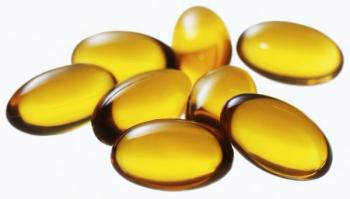
In comments submitted to FDA, Amarin Pharma, maker of the omega-3 drug Vascepa, stated its intentions to file a citizen petition to FDA asserting that ethyl ester omega-3s are not legally allowed to be marketed as dietary supplements.

The Council for Responsible Nutrition (CRN; Washington, DC) this week submitted public comments to FDA addressing the agency’s plans to evaluate and potentially update regulations for dietary supplements.

Dynamine, a nature-identical compound of a purine alkaloid found in kucha tea, positioned to support energy, mood, and focus, is now self-affirmed GRAS (generally recognized as safe).
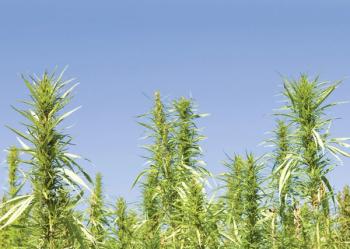
The Missouri Hemp Association announced that the state planted its first legal industrial hemp plot on July 1, 2019 after Missouri’s Lt. Governor Mike Kehoe signed Senate Bill 133 into law.

The Flavor Extracts Manufacturers Association has issued GRAS approval for Vitosa natural flavors, a line of stevia products manufactured by HB Natural Ingredients, a subsidiary of BGG World.

FDA will now have the funding to determine and establish a safe use level for CBD consumption outside of pharmaceuticals.

ChromaDex CEO Rob Fried: “Although it is uncommon, perhaps, for a company CEO to request stronger regulations and regulatory enforcement for his or her industry, that is precisely what I am doing.”

FDA has issued a new guidance on food labels for single-ingredient sugars and syrups, as well as certain cranberry products, after producers of single-ingredient sugars raised concerns about how consumers would perceive Added Sugars declarations on product labels.
This amendment appropriates funds to perform a Health Hazard Evaluation that would ultimately set a safe use level of CBD for consumers.

FDA said it will allow food and supplement companies to use a qualified health claim linking omega-3 fatty acids EPA and DHA with blood pressure benefits.
NPA has announced that its lobbying efforts have resulted in Representative Jerry McNerney (D-CA) filing an amendment to modify the House Agriculture appropriations bill to include the critical funds for FDA to establish safe use levels for CBD products.

In a statement last week on CBD regulation, FDA emphasized the need for clinical research, with no new details on a possible regulatory pathway for CBD food and dietary supplements.

What’s in a name? When that name applies to an oat “milk,” soy “cheese,” or macadamia nut “ice cream,” the answer may be: the seeds of controversy.

Diana’s new USDA-certified organic color portfolio targets dairy and other food and drinks.

Senators Tim Scott (R-SC) and Kyrsten Sinema (D-AZ), as well as Representatives Tony Cárdenas (D-CA) and Mike Rogers (R-AL) have introduced a bill called The SNAP Vitamin and Mineral Improvement Act of 2019.
The United Natural Products Alliance and Hemp Industries Association have signed a memorandum of understanding agreement in an effort to advance hemp extract product research, safety, identity, and quality standards.
BacoMind from Natural Remedies is now self-affirmed GRAS
In the latest controversy over FDA and vinpocetine, the agency has issued a warning to women of childbearing age from taking vinpocetine products.

Zolesse works well when combined with other stevia products. It can help to modify the taste of stevia extracts, for instance, reducing bitterness and linger and resulting in a more sugar-like taste.

At FDA’s highly anticipated public hearing on hemp cannabidiol (CBD) today, May 31, the message from dietary supplement industry representatives was clear: The supplement industry needs a regulatory pathway for CBD-and needs it now.
GOED, in conjunction with its sister organization UNPA, will be hosting a webinar about FDA’s draft guidance on mitigation strategies to protect food against intentional adulteration, a part of the Food Safety and Modernization Act.

The definition of a dietary substance in FDA's New Dietary Ingredient draft guidance differs greatly from the definition of a dietary ingredient under DSHEA, the actual law governing supplements.
The Trump Administration and U.S. Trade Representative have opened an exclusion process for List 3 China 301 tariffs, which encompass many ingredients used in the natural products industry.

Higenamine is a beta-2 agonist added to the list of banned substances by the World Anti-Doping Agency (WADA) in 2017.
Dietary supplement industry leaders and consumer advocacy groups turned out in force at a hotly anticipated public meeting with FDA last week to discuss federal regulation of dietary supplements.

BLIS M18 is the second oral-health probiotic strain from Blis Technologies and its North American distributor Stratum Nutrition.

What can this rare sugar do that other alternative sweeteners can’t?