


Ohio House Bill 943 seeks to restrict minor access to dietary supplements containing creatine, green tea extract, and other ingredients marketed for weight loss or muscle growth.
Ohio House Bill 943 seeks to restrict minor access to dietary supplements containing creatine, green tea extract, and other ingredients marketed for weight loss or muscle growth.

NPA's president and CEO explains how the organization decides when to challenge industry-critical research, breaks down what he sees as “flawed” methodology in a recent glucosamine-Alzheimer's study, and weighs in on a lawsuit that could reshape how supplement health claims are made.

As a new lawsuit challenges FDA's food-only interpretation of authoritative health claims, Steve Mister, president and CEO of CRN, discusses its own First Amendment case over New York's age restrictions and how Sergeant Searchlight fits into serious policy advocacy.

Nestlé USA completes its transition away from petroleum-based food dyes while expanding into targeted functional nutrition lines and emphasizing ingredient transparency.
The association’s president and CEO explains the strategy behind Sergeant Searchlight, and why voluntary product databases fall short of the mandatory registry the industry has pursued for 6 years.

From colonial-era herbal remedies to today's daily multivitamin, this reflection on America's 250th birthday traces how the impulse behind dietary supplements has been part of the nation's story from the very beginning.
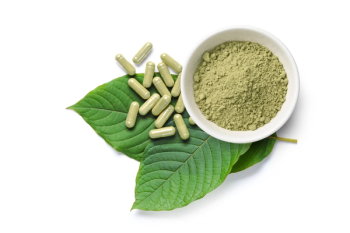
The scheduling does not apply to botanical kratom, but rather synthetically derived 7-hydroxymitragynine (7-OH), MP, MGM-15, and MGM-16, which the plant contains in small amounts.

UNPA, one of the architects of the Dietary Supplement Health and Education Act, will wind down operations at the end of 2026, prompting reflection across the industry on the regulatory framework it helped build.
The FDA’s 2026 Human Foods Program agenda highlights caffeine labeling, “healthy” claims, and facility registration topics for manufacturers.

A 2024 UK regulatory determination on the novel food status of monk fruit decoctions has added momentum to a less-refined ingredient format that formulators are positioning as a clean-label alternative to high-purity mogroside extracts.

From El Niño disruptions to the Peruvian anchovy fishery to a forthcoming expert panel recommendation on EPA and DHA, GOED's Harry Rice breaks down what's shaping the omega-3 category in 2026.

The regulatory distinction extends an already-established human health probiotic strain into the companion animal category, adding to a growing list of pet supplement ingredients seeking formal recognition in Canada's veterinary health product framework.

The newly issued patent protects compositions combining a standardized black seed oil ingredient with astaxanthin, building on published research into the pair's synergistic effects on inflammation and antioxidant activity.

BAPP releases new Laboratory Guidance Document to help supplement manufacturers optimize testing protocols and ensure cGMP compliance.

A nonprofit advocacy group and several supplement companies argue that statements published on government health agency websites should qualify as the basis for new disease-risk reduction claims, a position the FDA has long rejected for supplements specifically.
Sonoran University of Health Sciences will honor the United Natural Products Alliance founder for more than four decades of work that helped establish the regulatory framework still governing dietary supplements today.

With 7 US states having enacted packaging extended producer responsibility laws and more on the horizon, a new cross-industry guidance document offers a standardized approach to the packaging data management requirements that are proving to be a significant operational challenge for finished product companies.

Oliver Catlin of BSCG calls on the dietary supplement industry to reinforce the boundary between lawful supplements and unapproved pharmaceutical drugs.

A state-level enforcement probe citing third-party testing data, and the industry's methodological objections to that data, raise compliance and quality control questions for finished product manufacturers.

The FSA and FSS authorization of a standardized tetrahydrocurcuminoids ingredient for use in food supplements expands the market access case for a curcumin derivative with a distinct stability and bioavailability profile.

Voluntary pledges from accreditors and medical schools to increase nutrition education may gradually shift how physicians engage with diet-based and supplement interventions.

The development underscores continued innovation in plant-based sweetener development and regulatory review.

A new PLT Health Solutions-Alethios collaboration focused on decentralized clinical research reflects growing demand among nutraceutical manufacturers for product-specific evidence.

New clinical findings involving Lactiplantibacillus plantarum 299v reflect growing interest in population-specific probiotic validation and microbiome research across Asian markets.

New funding and recent FDA approval activity are highlighting a growing industry interest in fermentation-derived natural colors.

The Dietary Supplements Access Act proposes expanding tax-advantaged healthcare accounts to include eligible supplements, reflecting growing attention on preventive wellness and consumer-directed health spending.

The Food and Drug Administration has formalized a new post-market assessment process for chemicals used in food and simultaneously opened reassessments of butylated hydroxytoluene and azodicarbonamide.

Companies must understand California Senate Bill 343, aka the Truth in Recycling Law, to meet compliance requirements by the October 4, 2026, effective date.
Food and Drug Administration Commissioner Marty Makary resigned from the agency, with FDA Deputy Commissioner for Food Kyle Diamantas acting as commissioner until a replacement is confirmed.

The US Food and Drug Administration reported mostly low or undetectable contaminants in infant formula, while signaling continued oversight and future action.