

The trade association urges FDA to formalize flexible labeling practices, arguing that current ambiguity around DSHEA disclaimer placement is driving litigation risk and regulatory uncertainty.
The trade association urges FDA to formalize flexible labeling practices, arguing that current ambiguity around DSHEA disclaimer placement is driving litigation risk and regulatory uncertainty.

With a positive EFSA opinion in hand, Nutriearth highlights a bioactive vitamin D3 oil and functional powder designed for improved absorption, lower dosing, and sustainable fortification strategies at Vitafoods Europe.
Associations in the natural products space argue that FDA’s interpretation of “dietary substance” is too narrow, potentially limiting innovation, safety oversight, and market access for emerging ingredients.
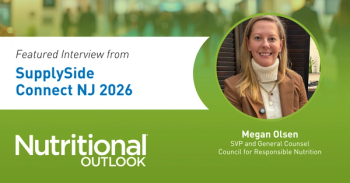
Live from SupplySide Connect, Megan Olsen, the SVP and general counsel for the CRN, discusses the FDA public meeting on dietary ingredients, the NDI vs. GRAS pathway, and the need for a clear, modern regulatory scope.
Live from SupplySide Connect, Megan Olsen, the SVP and general counsel for the CRN highlights growing concerns around DSHEA’s drug preclusion provision, underscoring the need for industry alignment and legislative reform in order to enable industry innovation.

Nutritional Outlook offers a practical guide for industry professionals on multivitamin efficacy, formulation trends, and regulatory considerations.
At SupplySide Connect New Jersey, Megan Olsen, SVP and general counsel of CRN, explains the organization's recent petition to the US Supreme Court to review a recent New York State law regarding supplements violates free speech.

New legislation introduced by Rep. Maxine Dexter aims to establish a federal product registry, drawing mixed reactions from leading industry organizations over implementation and impact.
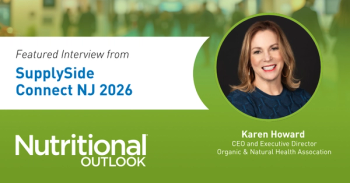
At SupplySide Connect New Jersey, Karen Howard, the Organic & Natural Health Association’s CEO and executive director, discusses shifting industry strategy away from fragmented lobbying toward unified, consumer-focused education to drive meaningful regulatory and public health outcomes.

In a sit down with Nutritional Outlook, Brightseed’s Lee Chae explains how the company’s branded platform leverages artificial intelligence and structured biological data to accelerate ingredient discovery, strengthen substantiation, and reduce risk across nutraceutical product development.

Regulatory approval from Brazil’s health authority opens the door for Benicaros to enter a fast-growing supplement market, reinforcing global momentum for clinically validated, sustainable gut health ingredients.

New regulatory clearance for soy protein highlights growing demand for clinically substantiated, plant-based ingredients targeting cardiovascular health.
In the second part of this interview, Todd Harrison, Co-Chair of the FDA Group at Venable LLP, discusses how the FDA and the industry handle novel ingredients in functional foods.
In the first part of this interview, Todd Harrison, Co-Chair of the FDA Group at Venable LLP, shares insights into regulatory methods, GRAS notices, and nutrition facts labeling surrounding the lawsuit against David Protein.

The trade association is challenging speech-based restrictions on supplement sales to minors, raising broader questions about First Amendment protections and regulatory precedent in the nutraceutical industry.
Combining clinically studied ingredients with enhanced bioavailability, at Natural Products Expo West, Asha Ramesh, Sabinsa’s CEO – Americas, highlights the growing importance of safety data, regulatory compliance, and full documentation as brands navigate increasing scrutiny in supplement development.

From stress and cognitive support to formulation challenges and regulatory considerations, this FAQ explores the science and market forces shaping ashwagandha’s role in modern nutraceuticals.

What are the broader implications of the recent lawsuit against David Protein bars and food science, regulation, and consumer perspective on novel functional ingredients?

The lawsuit alleges the actual fat and calorie content of its protein bars is higher than stated on the labels, and the company defends its labeling accuracy, citing methods for determining nutrient content for non-bioavailable ingredients, such as its fat substitute, EPG.

In this interview, Dana Osborn, Marketing Manager at California Natural Color discusses overcoming technical challenges resulting from the industry-wide shift toward natural colorants, following recent FDA regulatory updates.

The saffron extract recently received a license approval for stress-related health claims from the Ministry of Food and Drug Safety in South Korea, a growing market for this health category.
Common pitfalls and important precautions that will make dealing with recalls more manageable.
The FDA initiated an examination of the safety of the chemical preservative butylated hydroxyanisole (BHA) through a review of scientific information.

The U.S. Food and Drug Administration will allow products made without petroleum-based synthetic dyes to carry the claim, and also approved two more natural color additives.

Congressman Nick Langworthy introduces the Dietary Supplement Regulatory Uniformity Act to reaffirm FDA oversight and end the "patchwork" of conflicting state laws.

The Institute for the Advancement of Food and Nutrition Sciences (IAFNS) released nine principles to guide how foods are classified based on processing and formulation, aiming to improve consistency and transparency.

Best practices for clinical trial design to meet EFSA standards for scientific evidence. This means methodological honesty through clear hypotheses, proper controls, unbiased procedures, transparent reporting, and no manipulation of design or data to force an outcome.

In this interview, Laura Allred, PhD, regulatory manager at the Gluten Free Certification Organization (GFCO), discusses ongoing concerns around gluten-free oat safety and explains why third-party certification remains critical regardless of potential regulatory changes.
In this interview, Laura Allred, PhD, of the Gluten Free Certification Organization explains why GFCO requires products to test below 10 ppm of gluten while maintaining support for the FDA’s 20 ppm regulatory threshold, highlighting analytical variability in testing methods.
In this interview, Laura Allred, PhD, regulatory manager at the Gluten Free Certification Organization (GFCO), discusses the U.S. Food and Drug Administration’s recent Request for Information on gluten labeling in packaged foods, highlighting key gaps in current regulations, including rye and barley labeling and oat safety.