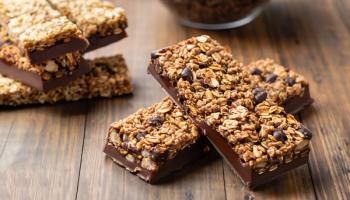
A look at the market data and functional ingredient innovations driving the next generation of nutrition bars.
From effervescent powders to protein donuts, panelists discuss how brands are using format and flavor innovation, including unexpected soda-inspired flavors, to turn daily supplementation into something consumers look forward to.
This segment examines how format and sensory experience are becoming as important as ingredient selection in product development. Panelists describe strong demand for enjoyable, sensory-driven formats, including effervescent powders, stick packs, and direct-to-mouth formats suited to oral-microbiome and dental-health probiotic strains, alongside the ongoing formulation challenge of fitting clinically meaningful doses into palatable, pleasant-tasting products.
Flavor trends draw particular attention, with panelists noting a shift beyond traditional lemon-lime and berry profiles toward more exotic options like lychee and mango, alongside a notable rise in soda-inspired flavors such as cola and root beer. Panelists connect this trend partly to GLP-1 medication users pulling away from traditional soft drinks while still wanting familiar, nostalgic flavor experiences, and cite recent licensed beverage flavor partnerships as evidence the trend has real commercial traction. One panelist suggests GLP-1 use may also be intensifying consumers' desire for bolder, more pronounced flavor and texture experiences generally, as appetite and eating patterns shift.
The conversation extends into emerging functional food formats beyond traditional bars, including protein donuts, protein chips, and other "healthier alternative" snack formats that panelists see as a growing area of innovation, alongside continued consumer appetite for playful, nostalgic textures like effervescent tablets and pop-rock-style sensory ingredients that appeal to adults as much as children.
The segment closes with a caution about novelty for its own sake: panelists argue that new formats need genuine, hard-to-replicate utility, not just a fun delivery mechanism, to move from a one-time purchase into a daily routine, especially given the development costs and complexity that come with building an unfamiliar format from scratch. Dissolving sleep strips are offered as an example of a format whose utility, avoiding a middle-of-the-night trip for water, justifies its added complexity, in contrast to formats adopted mainly for novelty's sake.
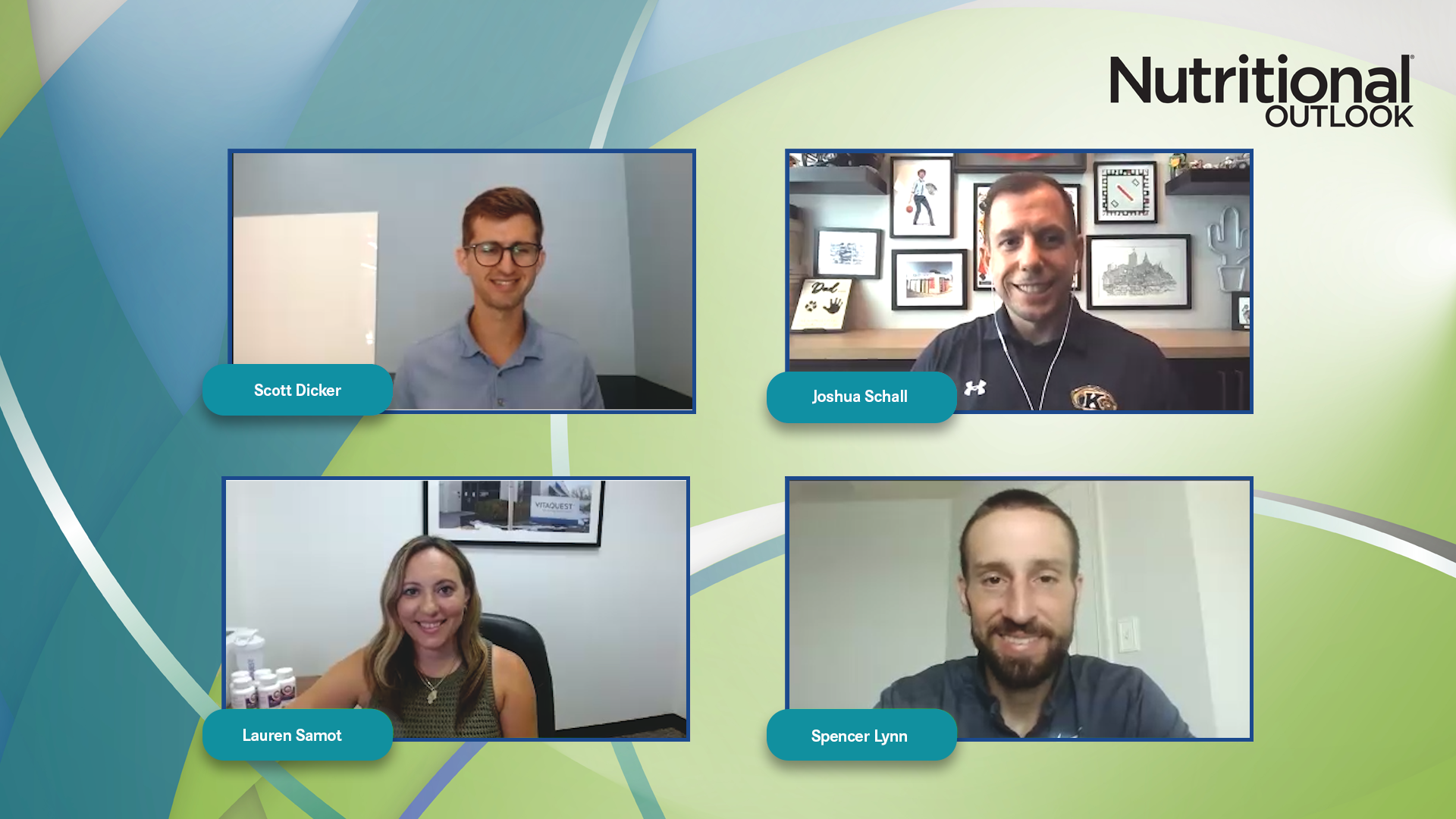
Participants include Scott Dicker, senior director, head of research and insights for SPINS; Joshua Schall, owner and president of J. Schall Consulting; Lauren Samot, commercial innovation director of Vitaquest International; and Spencer Lynn, vice president at PricePlow and Bevlab.
A transcript of their conversation can be found below.
Scott Dicker: Spencer, are there any other ingredients that you think can take that same road where they started out in 1 category? Obviously, my position is I think that is where the next big ingredient is. Do you have any predictions there?
Spencer Lynn: Nothing that really comes to mind. You did ask a question previously though about creatine and other formats, or other analogs of creatine. I think creatine monohydrate is here to stay. I do think people are going to care more about the purity of creatine with the well-known branded ones like Creapure, and NNB has their purest creatine that they're touting as well. I think that will grow in prevalence, but I don't think your Kre-Alkalynes, your creatine HCls, are really going to make much of a comeback, unless somebody is able to demonstrably prove that it's stable in beverage.
Dicker: That’s a great segue into talking about format. Lauren, we've hit on a bunch of formats, whether it be beverage, or gummies. What should people know about the demand for the fun, convenient formats versus the technical aspects of actually delivering the doses that consumers are looking for?
Lauren Samot: From a manufacturing and formulation standpoint, sometimes it can be challenging to either fit the clinical dose in or a meaningful dose in, or the flavor profile is really challenging. That just depends on the ingredient. There are a lot of ways to go around it.
You can have something in a capsule, something that doesn't taste that great—maybe it's a smaller dose, you put it in a capsule—but there are ways around it. We have versions of ingredients that might taste better depending on the source that they're from, or depending on if they've been processed in some way. We're seeing a really big demand for enjoyable formats that have a sensory component to it, so something that is ready to mix, but might effervesce when you pour it into a glass of water.
It can be a stick pack to have something on the go, or even direct-to-mouth formats for kids. There's a lot of oral microbiome, a lot of probiotic strains that work on dental health, oral health, ENT health. That could be a good format for something that is direct-to-mouth. It really depends on your formulation. A lot of things just cannot work in powder format.
Technology is kind of taking us in a unique path, and maybe eventually we will have a version of berberine that will taste good, or palatable, to be used with other powders. It's just focusing on your client base and what they want. Do they want to just take their supplements and be done with it? Do they want to have an enjoyment component, where it's part of their healthy routine? That depends on age, and trending flavors.
We've seen a lot of uniqueness around some flavor systems also—not just your lemon-lime, but maybe something more exotic, with a lychee twist to it, or a mango twist to it, something a little bit tropical. But your berries, your grapes, your lemon limes will always reign supreme, but there's ways to tweak them and make them interesting from a sensory perspective.
Dicker: It's really interesting. Are there any exotic flavors that are surprising you that are popping up?
Samot: We've been seeing lychee quite a bit, but it's not surprising, because it's absolutely delicious. I don't think there’s anything that's necessarily surprising, but I think with the GLP-1 wave and people looking to have a healthier lifestyle, there's been a little of a pull away from soft drinks and beverages, so we've been seeing a lot of cola flavors also in some of our ready-to-mix powders.
Dicker: You see a lot of those ready-to-drinks with the partnerships, whether it be a partnership with the candy, or a soda brand. Spencer, what are you seeing around flavor in some of these?
Lynn: That's always a fun one to talk about. GHOST, with their partnership with KDP, they literally just announced the A&W Root Beer GHOST Energy. They had the 7UP one not long ago, and we all know which one's coming next, maybe a little bit later this summer or early fall, if you follow KDP at all. The DP in KDP, hint, hint.
Lauren, to your point, those soda flavors are definitely gaining popularity in beverage, and that makes sense. A lot of energy drink flavors have a root beer now, they have a cream soda now, they have an orange soda. Even just a standard cola flavor in an energy drink is pretty cool. That's definitely a flavor trend that's carrying over from powder, and back into beverage, where it originally came from with sodas.
Dicker: It's funny, I remember a lot of the brands used to just try to mimic, have the name of their flavor not be, but sound like some of those things, and now you're seeing a lot more of the actual partnerships. Josh, do you think that novelty is a limited time offer? Do you think it's going to stand the test of time, or what do you see going on with flavors?
Joshua Schall: Do you mean with some of the license stuff, or you're saying some of the more exotic flavors?
Dicker: Well, I was asking about licensing, but where do you see the more exotic? For example, we've seen salty flavors, and spicy and sour, where people are trying to not just do alternative sweeteners, but alternatives to sweetness as well. Curious what your thoughts were on those.
Schall: I think there's an interesting kind effect also when you play the GLP-1 aspect of if there's some taste elements going on there, and just them wanting each calorie or thing they consume to be punchier or stronger. Flavor has been kind of dialed up in a lot of cases, or I think people are wanting that. I think that's even past just the flavor and into textures and those types of things.
It’s interesting how we spend most of our day touching this supercomputer that's glass, and you get this weird, kind of dullness out of that aspect, and then I think people are naturally searching for things that pop and have a little bit more of an effect when they do consume them. I think it's probably not something that pops off the screen for people, or something that maybe shows up a lot, but I do think, subconsciously, there's a lot of that going in with some of this flavor and texture.
Dicker: Absolutely. Are there any up-and-coming formats that we want to talk about? Gummies, everything was a gummy for a few years. We've seen it, depending on the category, either flattened out, or in certain categories doing well. Powders, ready-to-drinks, tablets, they're all going to have their moment, but it's interesting to see that when brands are innovating, they're stretching both across adjacent categories, but also adjacent formats.
The one we always talk about is, such as the powder to ready-to-drink version of that. Then there's also the extension being a stick pack, a convenience option of that. Are there other categories that are being talked about? People are talking about pouches as a big one. There's other types of candy formats, whether it's above chocolate bar instead of a traditional protein bar. Anything else that you guys are seeing that want to hit on?
Lynn: I love the functional food formats, specifically for protein. We've forever had protein bars, but now we're starting to see slight variations into a protein donut, or a protein Pop-Tart, or protein chips. I'm here for all those snacks like that. I do my very best to limit my actual junk food intake, so anytime I can get a, “healthier alternative” that’s full of protein, I'm here for it. I had the Legendary Protein Donuts the other day, and I thought they were pretty good for being with 170 calories and 20 g of protein in them.
Dicker: Everything’s healthy depending on what you compare it to, right?
Lynn: Yes.
Dicker: Laura and Josh, any formats that you think people should keep their eye on?
Samot: I think just lots of fizz, effervescence, pop rocks type sensory input, you know, anything that has something a little bit interesting. Even just beyond kids, adults enjoy it also.
Dicker: You find adults enjoy most of the same stuff that you would think the kids enjoy.
Lynn: Nostalgia is a powerful emotion.
Samot: It really is.
Joshua Schall: I I think when we're looking at any of these things, when you're going through that adoption curve, and you're trying to jump that spot from the novelty into the daily routine or the ritual, it comes down to sometimes that there needs to probably be an undeniable, hyper-specific utility to that. As an example, we're talking about the waterless, direct-to-mouth type of things. When you think about a sleep product, you think about those dissolving mouth strips that used to be—when we probably all remember them, like the Listerine strips during the early days. You have a sleep product so you don't have to consume extra water, and you have to go to the restroom in the middle of the night. There's a lot of those things that play into it. It's convenient, it's fun, it's interesting. It might have a lot more utility in that area than having and putting it in for hydration.
There's other people that are using that format or form factor in ways that tends up coming off as novelty over not having a long-term thing. When you're adding business complexity, you're adding sometimes significant development costs to create these things, you want longevity into these initiatives, especially if you're doing a lot of work yourself, or, on Lauren's side if somebody's approaching them from a turnkey environment, you want to know that this thing is going to stick and be around for a while. If not, you're just throwing a bunch of money into something and complicating it, when there's probably a more simplistic solution that's already ubiquitous across the market that you're trying to fight against.
Dicker: Great point. It's all about what health focus fits with the format, as well as what ingredient from a formulating standpoint.