

Does this ruling open opportunities for companies to sue over food labels already compliant with FDA’s Food, Drug and Cosmetic Act?
Does this ruling open opportunities for companies to sue over food labels already compliant with FDA’s Food, Drug and Cosmetic Act?

One Commissioner calls FTC’s requirements “unduly high."

The good news? China is considering making major changes to its regulatory process.

If passed by the State Assembly in the coming months, the bill could mandate warnings on drinks with added sugars.

Lawsuits abound due to lack of a formal regulatory definition for "natural" and "all natural."

Finally, Europe gets its first probiotic health claim approved. Could this pave the way to an EU claim?
But it will allow certain ALA claims.
GMO-labeling is a hot topic in the U.S. But elsewhere, GMO regulations are already well in place.

The limited availability of verified non-GMO feed makes sourcing non-GMO ingredients somewhat difficult.
The DEA could release Kentucky's hemp imports as early as this week.
Thanks to a helpful petition from colors supplier GNT USA (Tarrytown, NY), FDA now permits spirulina as a colorant for food products. The rule is effective on May 13, 2014, and it overrides previous legislation that restricted spirulina as a colorant to candies and gums.
Last year, FDA permitted spirulina for coloring of candies. This year, the agency is extending the use to food products.
The NPN means BLIS K12 can now use health claims in Canada, including helping to recolonize the oral cavity with healthy bacteria after a consumer rinses with an antibacterial mouthwash.

Advantame is deemed safe for use as a tabletop sweetener and a flavor additive for all foods, except meat and poultry.

July 4th is one expert’s prediction.
The DEA seized hemp seeds that were destined for research programs in Kentucky. But the Kentucky Department of Agriculture is not having it.

The DEA seized hemp seeds that were destined for research programs in Kentucky.
When does an ingredient merit a public standard (monograph)?
Does this indicate a stumbling block for nutrigenomic marketers?
FDA's former dietary supplements division head is now back at the Natural Products Association. What agency insights does he bring back?
Are supplement companies responsible for the health claims its customers make in social media?
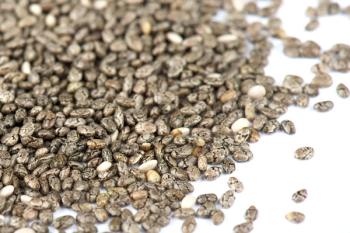
Will Andean Grain Products get its wish to become the next chia seed supplier for Europe?

Oliver took jabs at POM Wonderful, Coke, Kellogg’s Frosted Mini-Wheats and Cocoa Krispies, & Hellmann’s mayonnaise.
Worldwide, halal certification is a mark of quality and access to a growing market.
“It does not in any manner look to me like consumers will be better informed or that lawsuits will reduce."

Antiaging, functional foods, and EU regulatory developments take center stage.

The American Beekeeping Federation says honey guidance is not enough to preserve honey's image.

Key lessons for food, supplement manufacturers
NSF recently established this new certification program in 2013. It is an extension of the company’s larger GMP registration program.

“The Green Mountain State” could soon be the third state to approve mandatory GMO labeling.