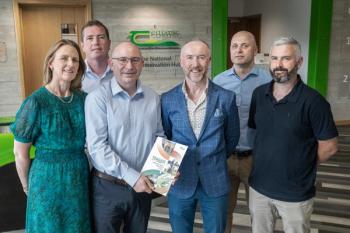
At the Future Nutra Innovation Summit, PLT Health's Steve Fink discusses joint, cognitive, and longevity nutrition explaining why "experiential longevity" is reshaping formulation strategy.
Recent molecular research finds an inter-organ communication pathway facilitated by aged garlic extract, revealing a potential mechanism for addressing age-related muscle decline.
As global populations age, addressing sarcopenia and the functional decline of skeletal muscle has become a critical objective in healthspan research.
While traditional interventions have often focused directly on muscle tissue, new research suggests that system-level coordination, specifically the crosstalk between fat tissue and the brain, may be a pivotal target for sustaining physical function in older adults.¹
The recent study2 focused on S-1-propenyl-L-cysteine (S1PC), a bioactive metabolite found in aged garlic extract. This metabolite is also found in Kyolic Aged Garlic Extract (AGE),which is manufactured by Wakunaga of America. Researchers investigated how this compound influences cellular metabolism, specifically targeting liver kinase B1 (LKB1), a primary regulator within white adipose tissue.
The study revealed that S1PC enhances the ability of LKB1 to form a complex with two essential proteins, STRAD and MO25. This complex formation triggers the SIRT1 pathway, which governs the secretion of extracellular vesicles containing the enzyme eNAMPT from adipose tissue. Rather than acting locally on muscle, these eNAMPT-enriched vesicles circulate to the hypothalamus.
Within the brain, this enzyme boosts the local production of NAD+, which modulates sympathetic nervous system signaling to skeletal muscle, ultimately supporting muscle force and function.
The functional implications of this pathway were demonstrated in aged murine models. Long-term administration of S1PC resulted in significant improvements in physical outcomes, including increased skeletal muscle force, restored body temperature regulation, and a substantial reduction in markers of frailty.2
"Our findings present a previously unrecognized and unique function of S1PC in activating LKB1, and in promoting an inter-organ communication that ameliorates muscle frailty," said Dr. Shin-ichiro Imai, chairman of the Institute for Research on Productive Aging. "We anticipate that S1PC is likely to have a broader anti-aging effect that warrants detailed investigation."
For manufacturers, these results are particularly noteworthy because they establish a clear, mechanistic basis for the potential anti-aging benefits of aged garlic extract, a staple of traditional medicine with a long-standing history of use and a favorable safety profile.¹
Beyond the experimental models, the research included a randomized, double-blind clinical trial with healthy middle-aged participants. A single oral dose of S1PC-enriched garlic powder was found to effectively increase circulating levels of eNAMPT in individuals who maintained healthy body fat mass.²
These findings suggest that S1PC may represent a viable, evidence-backed approach for addressing age-related physiological decline. As sarcopenia impacts approximately 16% of the elderly population, the potential to integrate an S1PC-based nutraceutical into daily dietary routines presents a practical strategy to support independence and physical health in later life.1
Future research is expected to continue characterizing these improvements in muscle function in humans, as well as evaluating the long-term safety and efficacy of the compound. As the industry looks toward innovative, systems-biology-based approaches to healthy aging, this identification of the S1PC-LKB1-eNAMPT axis marks a significant step forward in understanding the coordination of organ responses to aging.¹
References
1. Compound found in aged garlic extract shows potential to improve muscle health during aging. PR Newswire. May 8, 2026. Accessed May 20, 2026.
2. Institute for Research on Productive Aging. Garlic-derived metabolite activates LKB1, promotes adipose eNAMPT secretion and improves age-related muscle function via hypothalamic signaling. Cell Metab. 2026;38(5):601-615. doi:10.1016/j.cmet.2026.04.006