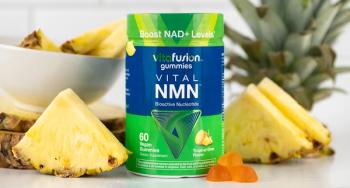
Piping Rock Health Products has launched a 300-mg NMN gummy under its Vitafusion brand, arriving less than a year after the FDA reversed its position on whether the ingredient could legally be sold as a dietary supplement.
In the sixth episode, Nicholas Saraceno breaks down why collagen, skin microbiome science, and nutricosmetics are converging into one of the fastest-growing categories in the industry, and why claims substantiation remains the biggest gap between where the science is and where the marketing tends to go.
The sixth episode of "Let's Talk Nutrition with Nico," a collaborative video series between Lana Pine of The Educated Patient and Nicholas Saraceno of Nutritional Outlook, examines the beauty-from-within category, from collagen's role as the category's largest commercial segment to emerging skin microbiome research and the regulatory scrutiny facing "microbiome-friendly" and probiotic-adjacent marketing claims.
Saraceno draws on prior Nutritional Outlook coverage of the gut-skin axis, commentary from Christina Vegge, vice president of research and development at Probi, and dermatology-backed reporting from sister publication NewBeauty on the gut-skin-microbiome connection, along with market projections showing the global nutricosmetics category nearly doubling by the mid-2030s.
The conversation also covers the growing regulatory attention on claims substantiation in this space, and what that means for manufacturers trying to differentiate on real science rather than marketing language alone.
A transcript of Pine's and Saraceno's conversation can be found below.
Lana Pine: I'm Lana Pine, senior editor of The Educated Patient, and welcome to episode 6 of "Let's Talk Nutrition with Nico." I'm joined as always by Nico Saraceno, senior editor of NO. Nico, good to see you again.
Nicholas Saraceno: Good to see you too, Lana. This one's been a long time coming, honestly, beauty-from-within products.
Pine: I feel like that category has exploded over the past couple of years.
Saraceno: It really has. There's a projection out there showing the global nutricosmetics market going from around $8.1 billion this year to $18 billion by 2036.1 More than doubling in 10 years is definitely not a small trend.
Pine: So what's actually driving that? Is it just collagen, or is there more to it?
Saraceno: Collagen is still the anchor—it's described as the largest commercial segment within nutricosmetics right now—with ceramides and omega fatty acids trailing behind as the next growth categories.2 But what's changed is the framing around it. It's less "collagen alone fixes your skin" and more "here's the whole system underneath your skin," gut health included.
Pine: That's actually something we've covered on our end. I feel like I've also seen this gut-skin idea in NO's own coverage.
Saraceno: We have, actually. My colleague Sebastian Krawiec wrote a
One nutritionist in that article—Dr. Jennifer Martin-Biggers, who is the VP of scientific affairs and education at HUM Nutrition—made the point that there's a real link between gut health, mood, and skin, and that it's becoming a core part of any beauty regimen, not an afterthought.3
Another expert in that same piece called out the microbiome's role in acne specifically, naming strains like Lactobacillus paracasei and Lactobacillus rhamnosus GG that have research behind them for skin inflammation.3
Pine: Okay, so it's not just "probiotics are good for skin" in a vague sense, there's actual strain-level specificity being discussed across both of these.
Saraceno: Exactly, and that specificity really matters. Christina Vegge, who's VP of R&D at Probi, made a similar point when I came across her commentary. She explained the mechanism in more depth: the gut microbiome produces metabolites, things like short-chain fatty acids and specific amino acid derivatives, that enter the bloodstream and can reach the skin, where they influence barrier integrity, inflammation, and cellular aging.2 Her bigger point was that the science is moving away from broad probiotic claims and toward strain-specific interventions with endpoints that actually map to visible skin outcomes.2
Pine: So "probiotics are good for skin" isn't really a claim you can stand behind anymore on its own.
Saraceno: Not really, no. It has to be a specific strain, tested in a well-powered clinical study, with a measurable skin endpoint. And that gap, between broad category science and product-specific substantiation, is really the whole story of this episode.
Pine: Is that actually catching regulatory attention, or is it more of an industry concern at this point?
Saraceno: It's catching real attention, particularly around the claims language itself. There's growing scrutiny from both the FTC and the European Commission over terms like "microbiome-friendly" or "postbiotic-powered" when they're not backed by real clinical substantiation, things like maintaining skin microbial diversity or specific bacterial ratios, which actually require a defined testing protocol to support.4
Pine: That's more rigorous than I would have guessed for a claims category like this.
Saraceno: It really is. And I think that's the real takeaway for manufacturers in this space. The consumer demand is there, the underlying science is often legitimate, but if you're making a specific claim, like joint mobility, skin elasticity, a microbiome-related benefit, you need clinical data on the actual finished ingredient or product making that claim, not just general category science borrowed from somewhere else.
Pine: That feels like a theme that keeps coming up in these episodes, honestly. The gap between "the science exists somewhere" and "the science exists for this specific product."
Saraceno: It really is a recurring theme, and beauty-from-within might be the clearest example of it yet, because the consumer appetite—one that belongs to patients and quite frankly our audience as well—is so far ahead of where a lot of the substantiation currently sits.
Pine: This was a great one, Nico. I feel like I actually understand why my skincare aisle now has a supplement aisle next to it.
Saraceno: That’s a good way to put it. I'll drop links to everything we talked about today in the video description. Thanks for having me, Lana.
Pine: Thanks, Nico. See you next time!
References
1. Future Market Insights. Nutricosmetics market size, market forecast, and outlook by FMI. June 2, 2026. Accessed August 7, 2026.
2. Farkas Z. Six ingredient trends shaping beauty's next chapter at in-cosmetics Global 2026. BeautyMatter. Published May 3, 2026. Accessed August 7, 2026.
3. Hogan A. The ultimate guide to skin supplements. NewBeauty. April 30, 2024. Accessed August 7, 2026.
4. Substantiating "microbiome-friendly" and probiotic claims: protocols, certifications, and scientific rigor. Cosmetics Testing News. February 11, 2026. Accessed August 7, 2026.