In the ninth episode, Nicholas and Lana unpack several longevity launches making waves, and why regulatory clearance, novelty, and clinical data are 3 separate things brands shouldn't blur together.
The panel closes by discussing which ingredient pairings show real biological synergy, whether brands are thinking about nutrient absorption competition, and why the budget-conscious end of the market may be the industry's most overlooked opportunity.
The panel's final segment turns to ingredient combinations, with panelists citing a pairing of two NNB Nutrition ingredients recently launched in a low-caffeine energy drink as an example of a stacked, complementary effect. Brand requests are increasingly moving beyond simple ingredient bundling toward genuine biological synergy, such as ingredients that enhance hydration status alongside electrolytes or support creatine's effectiveness, rather than pairing ingredients solely because they share a marketing category. When asked whether brands actively consider ingredients competing for absorption, panelists note this consideration varies significantly by formulator, with some brands attentive to it and others largely unaware it's a factor worth managing.
The conversation then broadens into a discussion of overlooked market segments, with one panelist pointing to the industry's tendency to focus on premium, higher-income consumers while largely ignoring the lower end of an increasingly bifurcated economy. Panelists agree this represents significant opportunity, citing value-focused brands that deliver foundational formulations at accessible price points as an underappreciated success story. Supporting data referenced in the discussion shows that lower-income consumers have actually accelerated their purchasing of natural and organic products at the highest rate of any income bracket, reinforcing that affordability and preventative health interest aren't mutually exclusive. Private label is highlighted as one vehicle already filling this gap, not only as a lower-cost alternative but increasingly as a more affordable route to premium or organic positioning as well.
The panel closes by reflecting on the breadth of ground covered, from ingredient-level trends to formulation and business strategy, thanking the moderator and panelists for a wide-ranging conversation about where nutraceutical innovation is headed next, with formulators encouraged to weigh commercial strategy and consumer accessibility as seriously as ingredient science when deciding where to place their next bet.
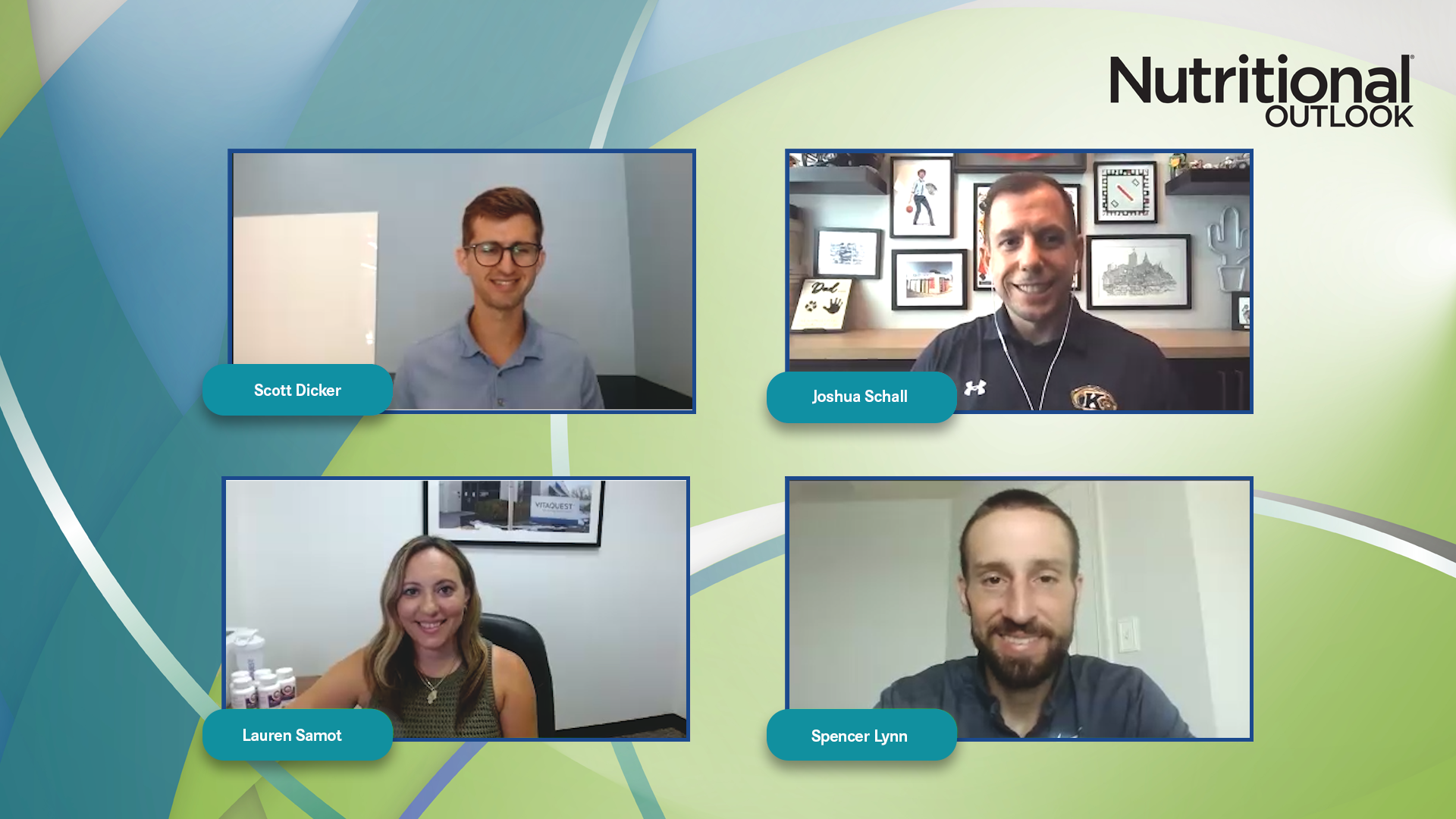
Participants include Scott Dicker, senior director, head of research and insights for SPINS; Joshua Schall, owner and president of J. Schall Consulting; Lauren Samot, commercial innovation director of Vitaquest International; and Spencer Lynn, vice president at PricePlow and Bevlab.
A transcript of their conversation can be found below.
Scott Dicker: We hit on a lot about single ingredients, single health focuses, but I do want to note that obviously, things are not usually single ingredient or single health focus. Are there ingredient combinations or, to what Josh kicked us off with, is there a health focus format that we really think that there's opportunity for? Are there ingredient pairings that are 2 plus 2 can equal 6? What are people looking at? Spencer, creatine drinks don't count for this question, but is there anything else that you guys are looking at?
Spencer Lynn: When you said ingredient pairings, I really like the effects of both SalidroPure and MitoPrime paired together. Those are both NNB ingredients that just launched in Jocko's GO energy drink. That only has 95 mg of caffeine in it, but you really feel it, on par with caffeine in much higher amounts, and then just more of a relaxed focus as well. So that's an ingredient combination for me that's pretty powerful.
Dicker: Lauren, anything?
Lauren Samot: Nothing specific, but 1 thing that does come to mind that we've been asked recently is for more synergism with ingredients. We have brands that come in, and they understand, okay, if we want to talk about menopause, maybe we'll put something that addresses hot flashes together, and maybe something that addresses cognitive health, but what we've been asked recently is for ingredients that are synergistic.
So, if I have a hydration formula with electrolytes, what can I put in that formula to sort of increase someone's hydration status, to make it work better? Or if I'm giving someone creatine, what can I pair with creatine to make it work better? We've been thinking of things that, not from a marketing standpoint, just you throw together in a category, but maybe from a biological standpoint, have some synergy to it.
Dicker: Do the brands think about what ingredients are competing for absorption? Is that a big part of the conversation, from the brand side?
Samot: We don't typically get asked about ingredients that compete for bioavailability or bioabsorption, no.
Lynn: To me, that depends entirely on the brand and who the formulator might be at the brand, too. Some formulators that come to mind definitely would ask about that, and others would be completely unaware that that's even a thing.
Dicker: It's an unfair thing to say, but I think the question is, should they?
Lynn: I definitely think they should, yes.
Dicker: I guess that was kind of a rhetorical question, when we asked it. We're coming up on time here. I just wanted to give everyone a chance, to ask if there is anything else around the industry? We covered a whole lot of topics around nutraceutical formulation, format, health focus in general. Any other topics you guys feel we missed that you want to get some points in on?
Joshua Schall: I could probably take this in a slightly different direction, but it might provide some add-ons for people. A lot of times we get caught up into this situation where we think through ultra-premium, and we think about what the upper end of the K-shaped economy wants, and can afford, and nobody seems to address or think deeply about the lower end of that. As the market continuously bifurcates, and there's lot of people on the lower end of the economic spectrum, here's a ton of opportunity there, and I'm curious if anybody else has thought through that.
I know it's not the most sexy thing in the world for people to wake up, especially formulators, and say oh, let me think about that, but I do think that's where the biggest opportunity is, is to provide some great products for those people that maybe can't afford the $120 all-in-one product that's being sold direct-to-consumer.
Lynn: Really good point, and I think of a brand like Nutricost that does that really well. They make really value-forward products. You can find them at very reasonable prices all over Amazon, and every A to Z Vitamins—a pre-workout, to pump product, to greens product, they have it all—and it's all very value-forward, but still the base of what you need. That's a good point, Josh.
Dicker: Just to piggyback off that, earlier in the year, when we were doing some research—and this wasn't specific to supplements, but to natural and organic products in general—we actually found that the lowest income bracket accelerated their purchasing of these types of products at the highest rate. They weren't the highest consumer, of course, but it shows there's so many reasons for being interested in that they're on GLP-1s also. Preventative healthcare is big on people's minds, and so I agree. That's a huge opportunity, because there's usually a limit to how many can be the most premium.
There're still a lot of ways to fill in. We see private label filling in a lot of those gaps, especially in food right now, where it's not just the value version, but also the value compared to the premium version. Again, this is not nutraceutical, but it applies as well, whether they're being cheaper than the conventional pasta sauce, or being more expensive than the conventional pasta sauce, but being organic and cheaper than the premium organic pasta sauce.
There’re different ways that private label can fill in. That is a great place to end. I want to thank my panelists, Lauren, Josh, and Spencer. This was a great discussion. Thank you, Nutritional Outlook, for letting me moderate this peer exchange, and hopefully, they will post where to find everyone here, and that's a wrap.