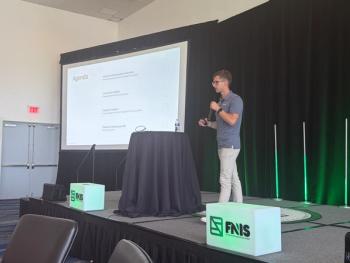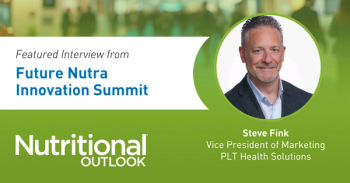
At the Future Nutra Innovation Summit, PLT Health's Steve Fink discusses joint, cognitive, and longevity nutrition explaining why "experiential longevity" is reshaping formulation strategy.
At Natural Products Expo West, Julie Daoust, PhD, chair and founder of the Functional Medicine Council and chief commercial officer of M2 Ingredients, discusses how collaboration, clinical research, and improved food applications are helping drive credibility and innovation in the rapidly expanding functional mushroom market.
At Natural Products Expo West, Nutritional Outlook spoke with Julie Daoust, chair and founder of the Functional Mushroom Council (FMC), about the origins of the organization and the growing momentum behind functional mushrooms in nutrition and dietary supplements.
Daoust explained that her passion for mushrooms began in childhood, growing up in a French family that regularly foraged for wild mushrooms and herbs. That early interest eventually led her to pursue advanced academic training in natural product chemistry at the University of British Columbia, where her doctoral research explored mushrooms as a source of novel pharmaceutical compounds.
According to Daoust, fungi produce complex chemical compounds as defense mechanisms, making them rich sources of bioactive molecules with potential benefits for both drug development and nutritional applications.
Her career eventually brought her into the dietary supplement industry, where she focused on helping people support their health through nutrition. Four years ago, she joined M2 Ingredients as chief science officer, where she became more deeply involved in research surrounding functional mushrooms. Through conversations with other growers, researchers, and brands, she noticed that many companies were independently funding similar research initiatives. That realization inspired the creation of the Functional Mushroom Council, a nonprofit trade organization dedicated to pooling resources across the industry.
The FMC focuses on three primary areas: research, education, and promotion of functional mushrooms. By bringing companies together, the council aims to accelerate scientific validation and encourage laboratories and researchers to further study the health potential of different mushroom species.
Daoust emphasized that continued clinical research will be essential to the category’s long-term credibility and growth. At the same time, innovation in food science and formulation will help expand how mushroom ingredients are delivered to consumers, from beverages and chocolates to gummies and chews.
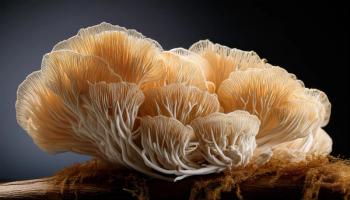
She also highlighted the diversity within fungi, noting that mushrooms represent a vast biological kingdom with millions of species, each with unique chemistry and potential functional benefits. As research expands, Daoust believes the functional mushroom category will continue evolving into a broader platform for nutrition and wellness innovation.
A transcript of her conversation can be found below.
Nicholas Saraceno: Hello everybody. Welcome to the 45th installment of Expo West. I'm Nico Saraceno, senior editor of Nutritional Outlook, and of course, we were talking before the cameras were rolling, Julie, but you are the founder of the FMC. Yes. So, would you mind just reiterating to the public, what your inspiration was behind that, and how it came about? I'm sorry I interrupted you when you started it, but it was a great story.
Julie Daoust: Okay, great. I'm the chair of the Functional Mushroom Council and the founder. I love this industry, and I love mushrooms. I have a deep passion for it. And really my passion for mushrooms started as a child. I'm from a French family, and we used to forage for mushrooms and other herbs, and I discovered the benefits of mushrooms through that.
I went on to do studies in natural product chemistry. I obtained my PhD from UBC, and we studied mushrooms because they're a great source of new pharmaceuticals, or new drugs because they're soft. They can't run away, so they defend themselves with their chemistry. They have really rich chemistry, and that's true for pharmaceuticals, but also true for developing nutritious ingredients and dietary supplement ingredients. I had a lot of passion for that space as well.
I love supporting people through nutrition and different supplements for them to be empowered to take care of their health, and jumped into that industry, had different roles, and four years ago, got the opportunity to join M2 ingredients as the chief science officer, which is a dream job for me, and we started investing in different areas of research and talking to other mushroom growers and other mushroom brands. I was realizing we're all trying to invest in the same thing, but doing it on our own.
What if we could come together, pull those dollars and do a lot more with the research and do a lot more to encourage other labs to support us and really form a trade organization? So that's what we created. The Functional Mushroom Council is a nonprofit. We're focused on research, education, and the promotion of functional mushrooms, and it's been a great group, and we have so many projects already showing results.
Saraceno: I love that. The other thing I wanted to get into was there's a lot of obviously, for the FMC, there's a lot of innovation happening in the space, so I think it's important to share that. Would you mind getting into what kind of considerations need to be made continue to develop these innovative products? Because I think obviously consumers want things that work—and they want to have that great user experience—so what kind of things need to be considered to avoid any hyper or trends that might just be rumors?
Daoust: Yeah, I mean, definitely more clinical research. The level of evidence is building. We see a lot of growth in the number of clinical trials on functional mushrooms, and so that's great. And as the FMC and as m2 ingredients, we're funding research, and furthering that. That's one area that needs to continue to grow. The food science piece is also key. How do we provide ingredients that can be included in a lot of different food application, whether it's beverage, chocolates, chews, gummies, and helping formulators to really integrate those ingredients in a formula in a way that's stable, that's enjoyable for the consumer, so that you have many different ways to consume these ingredients. One thing I'll add is, we talk about mushrooms as if it was one ingredient, but mushrooms are part of the kingdom of fungi. There's millions of species, essentially, and so lots of opportunity for different functional benefits.
Sometimes people say like, well, how can mushrooms do so many things? Well, think about medicinal plants. You have mint, you have ashwagandha, you have ginkgo, all with different functional benefits because they're unique species and have unique chemistry. It's the same with mushrooms. It’s really a platform that's going to continue to grow as we're building the clinical research behind it, but that's definitely key, and that needs to continue to grow.
Saraceno: It’s going to be exciting to see how things develop here, and I'm sure over these next few years there'll be more and more developments. So thank you, Julie, for taking the time to kind of break it down. I know, I know the public will get a lot of benefit from it as well. So well,
Daoust: Thanks for your time, and thanks for listening.