
The appointment comes as the CDMO continues to expand its gummy, softgel, and fizzy tablet format offerings for brand partners.
In this interview, Sybille Buchwald-Werner, PhD, explains how Oceanium takes a risk-aware approach to seaweed processing in order to create a resilient and circular bioactive platform.
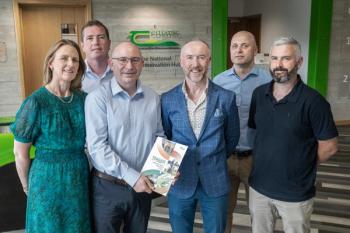
In this interview, Sybille Buchwald-Werner, PhD, provides a board-level perspective on how Oceanium is navigating the seaweed ingredient industry. Buchwald-Werner, founder of Vital Solutions GmbH and of the consultancy platform Newday, was recently appointed as a non-executive director of Oceanium, and shares how the company is building a circular bioactive platform rooted in long-term resilience and scientific integrity.
From capital efficiency to responsible scaling, Buchwald-Werner discusses how Oceanium balances marine innovation with a disciplined, risk-aware strategy designed for durability in the evolving nutraceutical landscape.
For more on innovations in algal-sourced ingredients, look for our upcoming article in the March 2026 issue of Nutritional Outlook.
Nutritional Outlook: From a board perspective, what differentiates Oceanium from other seaweed or marine ingredient companies entering nutraceuticals?
Sybille Buchwald-Werner: From a board perspective, the key difference is that Oceanium is not built around a single ingredient. It is being developed as a circular bioactive platform.
Many seaweed companies focus on selling one extract or one health benefit. Oceanium takes a system view. The company aims to catalyse the seaweed industry through close collaboration with farming and sourcing partners, combined with low-impact processing. This allows the same biomass to be used efficiently, with multiple high-value applications rather than a single output.
What matters at board level is long-term resilience. Oceanium’ s model is capital-efficient and risk-aware, reducing dependency on one product, one market, or one health trend. The processing platform preserves the natural complexity of seaweed bioactives while allowing the use of different species, keeping future options open across nutrition and health.
This approach supports disciplined scale-up. It enables consistent quality, regulatory readiness, and responsible use of marine resources. For investors and partners, that means Oceanium is building a company designed for durability and optionality—not short-term volume.
Nutritional Outlook: How does Oceanium approach scaling in a nutraceutical market that is often driven by aggressive claims and high-consumption trends?
Sybille Buchwald-Werner: From a board perspective, responsible scaling is a strategic choice, not a constraint.
The nutraceutical sector has seen repeated cycles of over-promising and over-consumption, which often lead to regulatory pressure and loss of trust. Oceanium takes a deliberate risk-aware approach. Growth is guided by scientific credibility, regulatory realism, and long-term brand integrity rather than short-term volume.
The focus is on dose efficiency, formulation relevance, and partner alignment. This allows Oceanium to support applications where functionality can be delivered without encouraging excessive intake or unrealistic health expectations.
This approach is reflected in ingredients such as
At board level, this discipline is essential. It protects the company’s reputation, supports sustainable partnerships, and enables capital-efficient growth. By scaling in a measured and transparent way, Oceanium is positioning itself as a long-term platform rather than a trend-driven ingredient supplier.
Nutritional Outlook: What role does science play at board level in guiding Oceanium’ s strategy beyond product development?
Sybille Buchwald-Werner: At board level, science is a decision framework. It helps the company distinguish between what is technically possible and what is commercially and regulatorily viable. It informs us about where to invest, where to wait, and where not to proceed. This discipline is essential in a category where enthusiasm can easily outpace evidence.
This perspective also shapes my engagement on the board. My role is to help connect consumer health needs with scientific and regulatory excellence, so that innovation remains credible, relevant, and responsible. Grounding strategy in evidence allows Oceanium to pursue growth that contributes to a healthier and more sustainable future—for people, for the planet, and for the business.
Nutritional Outlook: Many global nutrition and health companies originate outside the US but prioritize US market entry early. How does Oceanium think about building a global platform while engaging the US market?
Sybille Buchwald-Werner: While the company’s origins are in Europe, where partnerships and scale are being established, the US plays a central role in driving innovation and shaping future growth.
From a board perspective, the focus is on building a platform that meets global quality, regulatory, and performance expectations, so market entry is driven by readiness rather than geography. Oceanium prioritizes strategic partnerships that value quality, reliability, and long-term collaboration. For the US market, this means aligning with partners who share a commitment to evidence-based innovation and responsible growth.
By building globally from the outset, Oceanium is positioning itself to scale across regions without compromising scientific integrity or strategic focus.
Nutritional Outlook: How is sustainability integrated into Oceanium’ s business model as the company scales across different markets?
Sybille Buchwald-Werner: At board level, sustainability is viewed as a fundamental part of Oceanium’s business model.
As the company scales, the focus is on doing this in a way that is both disciplined and adaptable. Seaweed supply can come from different models and regions—for example farmed or responsibly managed wild harvest, in Europe or in other parts of the world—depending on the market, the application, and partner needs.
The governance lens is consistency and credibility. Sustainability standards must be clear, traceable, and defensible, even when sourcing routes differ. At the same time, execution can be tailored. Different markets, points of sale, and consumer expectations may require different sustainability narratives and proof points.
By treating sustainability as both a foundation and a scalable capability, Oceanium can grow responsibly while remaining commercially agile across regions and categories.
Nutritional Outlook: What motivated you to join Oceanium’s board at this stage of the company’s development?
Sybille Buchwald-Werner: Oceanium combines a strong scientific foundation, a platform approach to innovation, and a clear commitment to responsible growth. As a women-founded and women-led company, it brings a thoughtful, future-ready perspective to how scale and impact are built.
My board work is guided by the belief that science, people, and culture must evolve together. When aligned, they support healthy aging, human resilience, and confident leadership.
I joined Oceanium’s board to help ensure the company scales with clarity and discipline—keeping science, sustainability, and long-term value creation at the center of its global growth.