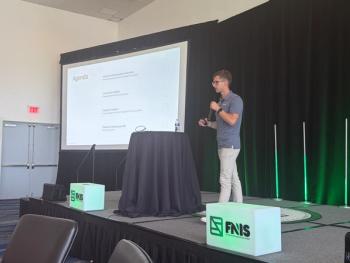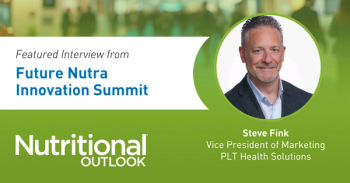
At the Future Nutra Innovation Summit, PLT Health's Steve Fink discusses joint, cognitive, and longevity nutrition explaining why "experiential longevity" is reshaping formulation strategy.
In the keynote presentation for The Outlook on Women’s Wellness, Amanda Frick, ND, LAc shared strategies for supplement brands to address clinical gaps in menopause support.
At the 2026 The Outlook on Women’s Wellness presented by Nutritional Outlook, Amanda Frick, ND, LAc, Vice President of Medical Affairs and Scientific Affairs at Thorne, delivered the keynote presentation titled When Science Sees Her: Rethinking Innovation in Women’s Health, outlining the critical gaps and commercial opportunities within the women's health sector. The address, focusing on perimenopause and menopause, highlighted a stark disparity between market demand and historical research allocations, urging finished product manufacturers, ingredient suppliers, and brand holders to transition from biomarker-centric formulations toward experiential, quality-of-life-driven product development. For nutraceutical developers, the presentation established a clear mandate: elevate clinical standards, practice empathetic consumer communication, and deliberately integrate women into every stage of the formulation and validation process.
Dr. Frick opened the presentation by contrasting the current state of scientific literature regarding men's and women's health indicators. A quick survey of academic literature reveals a significant imbalance: while there are approximately 36,000 Google Scholar entries dedicated to perimenopause, there are over 350,000 entries evaluating erectile dysfunction. This scientific deficit exists despite the fact that women comprise half of the global population and universally navigate distinct metabolic and endocrine transitions throughout their lifespans. “We know more about how a caterpillar makes a little cozy home, turns into a pack of goo, and it comes out a beautiful butterfly, than we knew about perimenopause,” Dr. Frick stated.
She also notes the scale of the macroeconomic and demographic of this market segment:
Despite this consumer base, clinical comprehension and targeted product development remain underdeveloped. Dr. Frick highlights that this research deficit is compounded by historical systemic delays. For example, National Institutes of Health (NIH) sponsored clinical trials were not legally mandated to include women until 1993. Furthermore, correcting the widespread consumer misinformation and clinical anxiety instilled by early, flawed studies on Hormone Replacement Therapy (HRT) required approximately 23 years. Consequently, the modern nutraceutical industry faces an acute need to generate high-quality, female-specific data to rectify decades of scientific neglect.
As a central challenge for product developers, Dr. Frick points to the traditional reliance on objective biomarker shifts at the expense of subjective consumer experiences. Traditional clinical trial methodologies focus primarily on metrics that are quantified or validated via laboratory testing. However, physiological biomarkers frequently fail to capture the multi-dimensional, lived experiences of women undergoing endocrine transitions.
While standardized clinical symptom lists identify myriad distinct perimenopause indicators, an open-forum initiative conducted by Thorne in New York revealed that psychological and emotional symptoms—most notably rage and a fractured sense of identity—emerged as the most universal and impactful complaints. Participants frequently report that their bodies and cognitive faculties do not function predictably, leading to a diminished sense of self and an overwhelming feeling of being unheard by their primary clinical providers.
The industry routinely formulates products that satisfy a biochemical metric but can fail to improve a user's perceived quality of life. Innovation can address this, Dr. Frick explains, by expanding product evaluation metrics to encompass daily functionality and quality of life. “We have an opportunity to bridge clinical rigor with human understanding, and when RCTs are not available and applicable, we can still apply consumer evaluation studies, we can still have opinions from women, we can open conversations with women, and have expectations for how they should expect something to make an impact for their lives,” she explains.
To address these unmet needs, Dr. Frick offered ideas for commercial differentiation and product innovation:
Dr. Frick concluded the keynote presentation with challenges directed at all stakeholders within the nutraceutical supply chain, calling for an industry-wide elevation of scientific and operational standards:
By addressing the consumer with transparency and humanity, the industry can transition from selling transactional remedies to offering authentic women’s wellness. “My call to action is even clearer: lead with science and empathy do the freakin’ work, raise the bar for how we study ingredients, for how we communicate formulations, and how we open conversations, communications, and collaborate with each other on how to do this in a better way,” Dr. Frick stated.
This article was created with assistance from AI. The content has been reviewed and edited by Erin McEvoy, Associate Editor. For more information on the extent and nature of AI usage, please contact us.