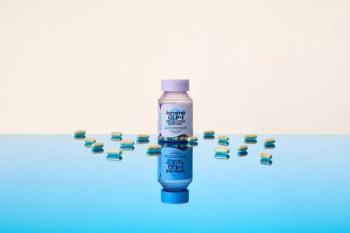
The four-formula line is Olly’s second retailer-exclusive launch this year, following the launch of a probiotic range in April.
How building clinical evidence through multiple exploratory studies to inform clinical trial designs reduce risk and help make more commercially viable products.
Editor’s Note: this article has been updated on January 6, 2026 at 10:53 ET to correct the name of the author.
When we ask, "Does this vaccine work?" the answer rarely arrives from a single study. The same is true for dietary supplements. Jumping into a single, expensive randomized controlled trial without prior evidence can be wasteful and misleading. Sponsors who build a staged clinical program—early exploration, dose finding, then a confirmatory pivotal trial—dramatically reduce scientific and commercial risk.
Before launching a pivotal randomized controlled trial (RCT) to substantiate marketing claims, sponsors should ask: Is my product ready? Do I have enough prior data?
The U.S. Federal Trade Commission (FTC) has long emphasized that “two well-controlled human clinical trials” are often expected to substantiate advertising claims. The 2022 FTC Health Products Compliance Guidance softened this into a flexible, evidence-based standard — but brands should still consider multiple studies. Why stop at two? Many companies are now strategically investing in several trials across the product development cycle, generating evidence for different claims, markets, and consumer groups.
A first, smaller pilot study can help de-risk the pivotal trial. When the investigational product (IP) has little prior human use, exploratory studies provide critical insights: optimal dosage, onset of action, effect size, and safety signals.
Running one big, expensive trial without this preparation risks wasted resources, reputational harm, and lost opportunities. By contrast, a thoughtful sequence — one or two exploratory studies followed by a confirmatory pivotal trial — can maximize return on investment and credibility.
Consider a weight management ingredient. It may not work equally well across all ages, body types, or genders. A subgroup analysis in a pilot study could reveal much stronger effects in a specific population. Narrowing inclusion/exclusion criteria for the pivotal study may result in a far more robust outcome — and a sharper claim.
It is better to deliver significant benefit to one or two consumer groups than to spread resources thin across a broad population and risk disappointing most.
How fast does the product work? Hours, days, or months? An exploratory study can map the trajectory of benefits — first onset, peak effect, and durability. This informs study visit schedules and endpoint assessments.
If onset is missed due to poorly timed visits, valuable marketing claims may be lost. Conversely, terminating a trial just before the maximal effect appears can mean the difference between a failed outcome and a breakthrough result.
In our two and a half decade experience, we have often seen products under-dosed (leading to inconclusive outcomes) or overdosed (adding cost without benefit).
Pilot studies help establish:
This data prevents costly mistakes in pivotal studies and supports future formulation adjustments.
Effect size matters. If the anticipated difference between active and placebo is small, only highly sensitive, validated tools can capture it. Without prior insight, sponsors may underpower their studies or select endpoints that fail to detect meaningful changes.
Pilot data provides essential inputs: mean values, variance (standard deviation), and sample size calculations. Often, only the second trial — informed by this groundwork — can realistically achieve statistical significance.
Mechanisms of action often come from non-clinical research. Animal or in vitro studies can inform hypotheses, dosing, and safety. These should be leveraged fully before the first human trial.
Clinical trials should not begin until:
Ethically, any potential hazard to humans must be ruled out before dosing begins. While many natural-origin nutraceuticals can leverage history of safe use, proprietary ingredients often require more rigorous quality standards.
Ultimately, clinical development strategy is a business decision, not just an R&D choice. If the goal is to achieve regulatory-grade substantiation for specific claims, or to build a long-term scientific narrative for premium positioning, then a multi-trial strategy is essential.
Rushing into “one and done” trials risks both money and reputation. Viewing clinical trials as a journey — pilot exploration, pivotal confirmation, and claim expansion — allows sponsors to align science with marketing and regulatory expectations.
Only a few CROs are structured to guide sponsors with this long-term, strategic perspective, but those that do can turn cautious investments into durable competitive advantages.
Is my product ready for clinical trials? The answer depends not only on the science, but also on the business objective.