The ingredient group says supervised, multi-farm growing supports traceability and standardized quality for the botanical behind several of its branded ingredients.
The root-only ingredient's new verification arrives alongside clinical data on bioavailability, stress, and sleep.
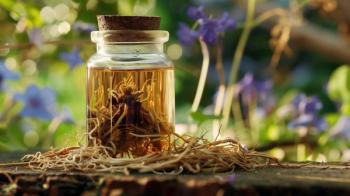
OmniActive Health Technologies has announced that Zenroot, its root-only ashwagandha (Withania somnifera) extract, has entered the U.S. Pharmacopeia's (USP) Ingredient Verification Program for Dietary Ingredients.1 According to the company, Zenroot is the only USP Verified root-only ashwagandha extract formulated at a daily dose of 125 mg.
Brijesh Shah, OmniActive's chief operating officer, said the ashwagandha category's growth has coincided with rising concerns about adulteration. "Ashwagandha continues to gain attention as consumers seek natural solutions to support overall well-being, but category growth and adulterations are also raising the bar for quality and transparency," explained Shah. "Brands are looking for botanical ingredients backed by independent quality assurance. With Zenroot, we are proud to offer a differentiated ashwagandha solution that delivers science, quality, and formulation flexibility."
“USP is delighted to recognize OmniActive's approval of Zenroot as a USP Verified Dietary Ingredient,” stated Emily Rose Britton, PhD, senior manager of market development for verification programs at USP.
Zenroot is standardized to 1.5% withanolides and is tested using USP-published methods, which OmniActive says are available to laboratories that want to independently verify withanolide content. The company positions the ingredient for use across capsules, tablets, gummies, ready-to-mix formats, effervescent tablets, and beverages, categories in which ashwagandha use has been expanding.
Citing Mordor Intelligence data, OmniActive projects the global ashwagandha market will grow from $0.76 billion in 2025 to $1.18 billion by 2030, with gummies, chews, and functional foods and beverages growing faster than the category overall.
Two Zenroot studies published in Advances in Therapy examined the extract's clinical effects and pharmacokinetics at the same 125 mg dose.2 A single-dose bioavailability study in 20 healthy adults compared Zenroot against two higher-strength ashwagandha extracts and found higher plasma withanolide levels for Zenroot at multiple measured time points.
A separate 84-day, placebo-controlled trial in 90 adults with mild to moderate stress reported improvements in standardized stress, anxiety, mood, and sleep-quality scores relative to placebo, though changes in cortisol and salivary alpha-amylase, two biochemical stress markers, did not differ significantly between groups.
“The ashwagandha category is booming as consumers look for clean label, nonpharmacological solutions to support mood, sleep and stress management,” Keya Shah, category manager at OmniActive, had stated on the studies. “Zenroot’s studies reinforce its ability to deliver a clinically validated, high-performance botanical ingredient that meets these demands in a crowded, fast-growing market. As we continue investing in new science, we see Zenroot as a cornerstone ingredient for formulators seeking to lead in the mental and overall wellness space.”
OmniActive has also recently moved into an adjacent botanical category. In July 2026, the company introduced Fenavari, a combined fenugreek-shatavari ingredient developed for perimenopausal and menopausal support.3 A randomized, placebo-controlled trial in 150 women found that both a 300 mg and a 500 mg daily dose reduced total Menopause Rating Scale scores compared with placebo over 84 days, with somatic, psychological, and vasomotor symptom domains all showing improvement and a general dose-response favoring the higher amount.
“Shatavari may be trending, but both shatavari and fenugreek have a long history of use in women’s health,” Shah stated. “Fenavari harnesses the power of both botanicals in one clinically studied, integrated extract, giving brands and doctors a natural solution for the full menopausal journey.”
References