TriNutra is presenting new data on its standardized black seed oil ingredient at SupplySide Global, adding to a growing body of research on how gut bacteria and the body's stress response may influence each other.
In part II of his chat at Natural Products Expo West, Todd Runestad, NXT USA’s chief storytelling officer, discusses emerging nutraceutical strategies—from botanical ingredients targeting NAD metabolism for longevity to digestive support products—designed for consumers using GLP-1 weight-loss therapies.
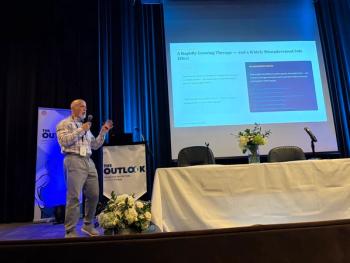
Women’s health—particularly products aimed at supporting hormonal balance—has emerged as a rapidly growing segment within the dietary supplement industry. At the 45th annual Natural Products Expo West, Todd Runestad, chief storytelling officer at NXT USA, discussed how concentrated botanical ingredient—such as shatavari—are being positioned to address this demand while offering formulation flexibility.
Shatavari (Asparagus racemosus), a plant widely used in Ayurvedic medicine, has historically been associated with women’s health. Runestad noted that interest in hormonal balance supplements has accelerated in recent years, reflecting increased consumer awareness of hormonal fluctuations across different stages of life, from menstruation through menopause.
According to Runestad, shatavari functions as a hormonal adaptogen—an ingredient intended to help the body maintain balance under varying physiological conditions. He pointed to clinical research examining shatavari extracts in different populations, including women with polycystic ovary syndrome (PCOS) and perimenopausal women. In these studies, hormonal markers moved toward more balanced levels, though the direction of change differed depending on the baseline hormonal profile of participants.
One factor influencing product development is the concentration of active compounds. Conventional shatavari powders typically contain about 5% shatavarins—the plant’s primary phytochemicals. Runestad explained that the Xeya Modern Shatavari ingredient is standardized to approximately 15% shatavarins, allowing effective doses of 50–100 mg, compared with roughly 400–500 mg for less concentrated forms.Lower dosing requirements may provide advantages for certain delivery formats.
Runestad also noted that ingredient developers are exploring additional formats, including water-soluble versions suitable for beverage applications.
As consumer interest in women’s health continues to expand, ingredients historically used in traditional medicine—such as shatavari—are increasingly being evaluated through clinical research and modern formulation approaches.
A transcript of his conversation can be found below.
Nicholas Saraceno: Let's shift gears a little bit to BlueNAD Booster. It's got this dual mechanism, so it increases NAD production and preserves levels. Could you get into how it differentiates itself from other NAD supporting ingredients?
Todd Runestad: NAD+, so this is great molecule that it's DNA repair; mitochondrial health is the power plant of the cell. And so it's really in the lead in today's longevity ingredients. But NAD+ is a really large molecule, and so you can't really supplement with it. The Hollywood set, they'll get IV drips of NAD+, which is okay, if you want to sit in a chair and get an IV in your arm for 45 minutes, but it's a little invasive. So it’s not for everybody.
The market has gone to precursors, which are molecules that will metabolize to NAD+. The two leading ones are nicotinamide riboside (NR), or NMN. And NMN has made a lot of noise because the FDA approved it, and then they pulled it, and then they reapproved it, so it's back on the market, but those are synthetic. When they're produced, they're synthetic. So our BlueNAD booster, it's two herbs, it's two botanicals. We screened about 900 in order to find ones that had this activity. Not only does it act on NAD+ pathway to elevate levels—we did a human clinical trial comparing it directly to a head-to-head against NR, and it was better.
Then what we did is we had three arms, so it was BlueNAD versus NR, and then a combination, and the combination actually worked better than either individually. That’s an opportunity for companies that already have an NR for their longevity on put a little BlueNAD booster, and then it'll be even better. Part of the reason why it's better is not only does it act as a precursor at boost levels, but then it also acts on the CD-38 enzymes, which consume NAD+, and so it prevents them from acting on that, and so it preserves it. The story isn't how much you make, but how much keep, and so that is the really special aspect.
Saraceno: You actually knew where I was going with that. Digexin is positioned as a digestive health ingredient designed for individuals using GLP-1 therapies, with clinical data involving GLP-1 users. How does the growing use of GLP-1 medications shape demand for digestive support ingredients in the nutraceutical market?
Runestad: I'll take a big picture for like 15 seconds. So GLP-1s, there's three areas. One is you have supplements that are saying that they act on a GLP-1 pathway to boost levels, but that's BS, because they're not doing it anywhere near what Ozempic does. And so they're trying to pretend like they're a drug, but they're not. That's bad for the supplements industry, because you take these things and you're not going to be dropping 50 pounds in two months.
But then two other aspects is you lose weight, but you want to lose fat, but you don't want to lose muscle, and so protein and like creatine. HMB, some of these muscle-building ingredients, that's a great, huge opportunity there for the supplements world for that. And then there's the side effects of GLP-1, which is gastrointestinal upset.
You have a lot of ingredients that are marketed for gut health and then they're just sort of rebranding as a GLP-1 gain, but nobody is actually studying them on actual GLP-1 users to confirm that, okay, does it actually work? But we did. It was a small study of about, I think, 12 or 14 people, but it showed that it actually worked. The reason it works is that it works on peristalsis, which is the movement of your food through your system.
People get confused. They think that the way that the semaglutides—GLP-1 and the Ozempics— they think that the reason it works is because it sort of stuffs your system up, and it slows your digestion. And so then people ask, well, wait a minute, if digestion speeds your digestion and doesn't encounter what's happening with GLP-1? Turns out that's just a side effect of GLP-1. GLP-1 doesn't work on that way.
GLP-1 works on the central nervous system, and so it stops that sort of food noise that tells you to eat. That's why there's also studies coming out on Ozempic where it'll help people who have like alcohol addictions or smoking, and it gets them to stop that too. It works in your brain, not in your gut. The side effect is in your gut, and that's where something like Digexin comes in and just helps your body move for healthy daily regularity.