NutriScience Innovations has introduced SalidroPRO, a fermentation-derived salidroside complex, backed by a newly published clinical trial examining its effects on perceived stress and anxiety in adults.1
Rather than extracting salidroside from Rhodiola rosea, the plant most commonly associated with the compound, NutriScience is producing it through precision fermentation, a distinction the company says addresses supply and sustainability concerns tied to the botanical source material.
"Our goal wasn't simply to develop another adaptogen," said Edward Dosz, PhD, chief science officer at NutriScience Innovations and a co-author of the underlying study. "We wanted to develop an ingredient with compelling human data, formulation flexibility, and a sustainable production platform so our customers can formulate with greater confidence."
What Did the Clinical Trial Actually Measure?
The study, published in the journal Nutraceuticals, was a 6-week, randomized, double-blind, placebo-controlled trial conducted in a large adult population reporting meaningful room for improvement in perceived stress.2
Participants were assigned to a high-dose group, a low-dose group, or placebo, and outcomes were tracked using validated measures of perceived stress, anxiety, and related psychological wellbeing.
According to the published findings, the high-dose group showed clinically meaningful improvements that emerged early and were sustained across the 6-week period, while the low-dose group showed comparatively smaller effects, suggesting a dose-dependent response.2
Post hoc subgroup analysis also indicated that men and non-premenopausal women experienced enhanced benefits in emotional appraisal and sleep-related measures, though this finding warrants confirmation in a study designed specifically to test that subgroup difference.2
Why Does Sourcing Matter for an Ingredient Like This One?
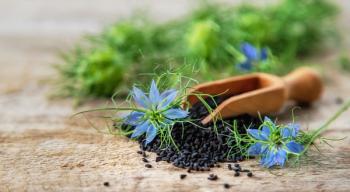
Rhodiola rosea has a long history of use as an adaptogenic botanical, with salidroside considered one of its primary bioactive markers.3 Rising global demand, combined with the plant's 2023 addition to the CITES list of protected species, has raised sourcing and sustainability concerns for manufacturers relying on wild-harvested or conventionally cultivated Rhodiola.4
Producing salidroside through fermentation rather than plant extraction is positioned as a way to decouple ingredient supply from those pressures, though this shift also means finished product manufacturers evaluating the ingredient are assessing a fermentation-derived, nature-identical compound rather than a whole-plant extract, a distinction worth noting when comparing it to Rhodiola-based competitors.
How Should This Data Be Interpreted in Context?
The proposed mechanisms behind salidroside's effects on stress, including modulation of the hypothalamic-pituitary-adrenal axis and monoaminergic signaling pathways, are consistent with mechanisms described in prior adaptogen research, lending some biological plausibility to the trial's findings.2
At the same time, self-reported psychological measures like perceived stress and anxiety are inherently subjective, and a single trial, however well designed, does not establish the durability of effects beyond 6 weeks or their generalizability across broader populations.
What Remains Unanswered?
The company has not yet disclosed whether additional trials are planned to confirm the subgroup findings related to sex and hormonal status, nor has long-term safety data beyond the 6-week study window been published. As with most single-trial ingredient launches, independent replication would strengthen confidence in the reported effect sizes.
References
1. NutriScience Innovations introduces SalidroPRO: A new clinically validated adaptogen for stress support. NutriScience Innovations. July 2026. Accessed July 8, 2026. Press release provided via email.
2. Nathan V, Shah I, Conley D, Lelah M, Dosz E. An innovative dietary ingredient complex with salidroside and L-malic acid improves markers of perceived stress and anxiety in adults: a randomized double-blind placebo-controlled clinical study. Nutraceuticals. 2026;6(3):43. doi:10.3390/nutraceuticals6030043
3. Stojcheva EI, Quintela JC. The effectiveness of Rhodiola rosea L. preparations in alleviating various aspects of life-stress symptoms and stress-induced conditions—encouraging clinical evidence. Molecules. 2022;27(12):3902. doi:10.3390/molecules27123902
4. Montemarano M. Rhodiola added to CITES list of protected species. Nutraceuticals World. February 7, 2023. Accessed July 8, 2026. https://www.nutraceuticalsworld.com/exclusives/rhodiola-to-be-added-to-cites-list-of-protected-species/