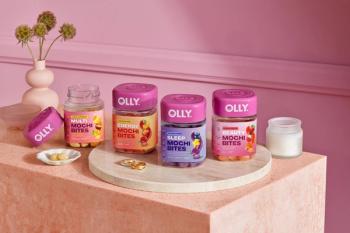
The four-formula line is Olly’s second retailer-exclusive launch this year, following the launch of a probiotic range in April.
Multi-benefit supplements are the wave of the future, but successfully concepting, developing and marketing them is a present-day work in progress.
Today’s market for multi-benefit nutritional supplements reflects a decided shift in the ways brands are approaching portfolio strategy and product architecture. Rather than viewing multi-benefit formulations as exercises in ingredient accumulation, many developers are seeing them as opportunities to engineer more efficient, purpose-driven products that organically mesh with consumers’ daily routines.
Somewhat refreshingly in an era of exhaustive focus-grouping, the multi-benefit boom has largely been “science first, salesmanship second”—that is, less about chasing trend-driven claims and more about solving for precision, consistency, and compliance within a single dosage format. And promisingly for nutrition industry purists, this shift is set to deepen, with increasing focus on delivery systems, release kinetics, bioavailability, and the seamless integration of formulation design with scalable, high-quality manufacturing.
The brands most likely to succeed in this eclectic landscape—let’s call it the “Multi-Verse”—are those who treat multi-benefit design as a systems-level challenge rather than a mere marketing vehicle.
Precisely how robust is the current multi-benefit products market? The answer is a middling version of “that depends.” At the crux of this hazy outlook is the category’s subjectivity—most importantly, how narrowly or broadly the category is defined. Some studies focus on multi-claim positioning, some on multi-ingredient formulations, and still others on lifestyle-driven functional outcomes. These differing prioritizations result in distinct, often disjointed data, making any “real” market assessment surrounding multi-benefit supplements unreliable at best, and unobtainable at worst.
The raw research, then, is a bit of a multi-mess. But more telling than any single data point is the consistency of the underlying consumer signals across these sources. And any clear-eyed consumer-centric assessment quickly reveals a market for multi-benefit products as deep as it is broad.
Simply put, the need is there. It doesn’t take an Excel spreadsheet to understand that more and more consumers are managing increasingly complex wellness routines. Many are juggling multiple vitamins, minerals, and condition-specific supplements each day—and sometimes without fully knowing which ones are truly pulling their weight.
In that context, there is growing appreciation for formulations that consolidate complementary benefits into a single, well-considered product. In fact, retail trend analyses and functional nutrition reports consistently suggest that simplification and multifunctionality are becoming baseline expectations rather than differentiators.1 More than anything, it’s this data that is well worth digging into and acting upon.
At its core, the preference for multi-benefit products over expanded single-benefit portfolios comes down to efficiency—both for brands and consumers. From a consumer standpoint, supplement regimens have become increasingly fragmented, with numerous products competing for space, attention, and adherence. A thoughtfully engineered multi-benefit product reduces that cognitive and behavioral burden, supporting more consistent use without requiring consumers to make trade-offs across multiple formats or dosing occasions.
For brands, multi-benefit products bring the opportunity to “win via winnowing.” In the nutrition segment, the “all things to all people” days are decisively in the rearview mirror. Leaning into this new customization-centric norm means focusing more narrowly on fewer, higher-performing SKUs—which, in turn, allows brand owners to justify deeper investment in formulation quality, substantiation, and manufacturing execution. The value lies not in doing more at once but in doing fewer things exceptionally well, even when that requires more deliberate formulation decisions upfront.
Fortunately, this realization seems to be sinking in, with more brand owners turning away from simply adding incremental benefits to legacy products, and toward thorough reconsiderations of the dosage formats themselves.
In many cases, brands begin by honestly scrutinizing whether an existing format can realistically support both the dosing requirements and the performance expectations of a multi-benefit product. This frequently leads to a strategic pivot toward formats that enable higher ingredient loads, improved stability, or more controlled release behavior. Generally, the goal is a more streamlined portfolio—one in which each multi-benefit product serves a clearer role and delivers more tangible value. Like any nutrition supplement, multi-benefit products have the best chances for success when formulation strategy, process design, and scale-up considerations are aligned early in development rather than addressed reactively.
Within this framework, a rough roadmap is emerging concerning what benefits work well together from a marketability standpoint. Indeed, certain benefit combinations inherently lend themselves to multi-benefit design, particularly when the underlying physiological pathways or usage occasions overlap. For instance, pairings such as stress and sleep, energy and focus, gut health and immunity, or beauty and joint support tend to resonate because they reflect how consumers experience wellness in practice: not as isolated biological functions, but as interconnected outcomes.
From a formulation and manufacturing standpoint, these combinations are most viable when ingredient compatibility, dosing thresholds, and delivery requirements are carefully balanced. The most successful examples are those where the pairing feels intentional and coherent, rather than arbitrarily expansive. Jacks of all trades being masters of none, the whole of a multi-benefit product is only greater than the sum of its parts if those parts are thoughtfully paired to address complementary consumer needs.
But of course, just because a benefit pairing makes sense in theory doesn’t simplify its real-world development and manufacturing. Here, dosage format selection plays the most prominent role in determining whether a promising multi-benefit concept becomes an actual multi-benefit success story. The right dosage format is always critical, and rarely obvious.
For example, while two of the most popular formats—gummies and soft chews—earn high marks for daily wellness applications, they also impose practical constraints on dosing, ingredient compatibility, and long-term stability. As formulations become more complex or require higher doses, alternative formats like tablets, capsules, multilayer designs, and lipid-based softgels are emerging as more viable solutions. In these cases, the dosage format is not simply a delivery vehicle, but an active contributor to product performance, enabling precision, protection, and consistency that would otherwise be difficult to achieve. While gummies and soft chews may make for great-tasting multi-benefit supplements, they don’t necessarily make for optimally effective ones.
Unsurprisingly, the production pain points associated with multi-benefit formulations increase in direct proportion to their complexity. For instance, ingredient compatibility becomes more difficult to manage as the number and diversity of actives grow, particularly when combining vitamins, minerals, botanicals, and lipids with differing chemical and physical properties.
Dosage degrees can throw additional wrenches into the works. For example, dose uniformity becomes more challenging when very low-dose ingredients must be distributed evenly alongside higher-dose components; such scenarios place heightened demands on blend design and process control. Long-term stability introduces additional risk, as interactions between ingredients, moisture uptake, and oxidative pathways can compromise potency over time if not addressed holistically. And beyond formulation itself, multi-benefit products typically require more rigorous quality systems, packaging strategies, and shelf-life validation to ensure performance is maintained throughout the product lifecycle.
A common concern among consumers is that a multi-benefit product may dilute the impact of individual ingredients. Brands can address this by demonstrating formulation discipline, ensuring that each key ingredient is included at a meaningful, evidence-based dose and clearly explaining why those ingredients belong together. Communicating the rationale behind the combination, along with the delivery strategies used to protect performance, helps reinforce that the product is engineered for efficacy rather than convenience alone. When supported by transparency and credible substantiation, multi-benefit products are more likely to be perceived as sophisticated solutions rather than compromises.
Looking ahead, over the next five years the multi-benefit landscape is likely to become both more crowded and more refined. As enabling technologies continue to advance, more brands will enter the space, accelerating product proliferation. At the same time, these same innovations will raise the bar, allowing for more precise, stable, and effective multi-benefit formulations. In this environment, differentiation will not come from the number of claims, but from how well those benefits are designed, delivered, and substantiated.
The industry will get there by integrating dosage-format selection, release behavior, and manufacturing strategy earlier in development, ensuring that complexity is purposeful and controlled. In this environment, multi-benefit products will represent not only added value but also a more evolved standard for how supplements are designed, manufactured, and thoughtfully integrated into daily wellness routines.