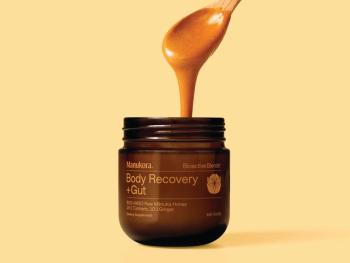
DolCas Biotech is featuring the turmeric-derived ingredient Curcugen in Mānukora’s Mānuka honey and Numin’s cognitive-support drink.
There's a wide toolkit of micronutrients, minerals, biotics, and herbs that can offer proactive immune support for children if they're delivered in the right package.
Children are notorious for spreading germs and illness. It’s almost unavoidable, but that doesn’t mean you can’t be proactive. Outside of vaccinations, dietary interventions to fortify immune health are an additional step to help make children more resilient. Unfortunately, many parents still aren’t thinking about dietary interventions until the dreaded cold and flu season, or even until their kids are already sick
“Many consumers still only think about immune health during peak cold and flu seasons.But really, immune health isn’t just a seasonal concern,” says Melanie Bush, vice president of science & research, Artemis International (Fort Wayne, IN). “It should be top of mind year-round. Typical activities like taking buses and trains, plane travel, working in an office and kids being in school all provide opportunities for immune support products to do their thing. Plus, maintaining a strong and healthy immune system goes beyond colds and flu to overall gut health and many other body systems and health benefits.”
This mindset is changing of course, and the dietary supplement space is offering more solutions for parents to fit immune health into their children’s dietary supplement regimen. “Our research suggests nearly half (45%) of parents of children aged 4-6 report interest in a supplement that supports immune health, with an even higher percentage, 56%, of parents with kids in the 10-12 year-old bracket expressing similar intent,” saysJustin Green, PhD, scientific affairs lead for EpiCor, Cargill (Minneapolis, Minnesota). “Importantly, the trend extends beyond seasonal support. More than half of parents (57%) say they’re interested in products that help maintain their children’s immune health year-round. That shift toward prevention rather than reaction underscores a broader movement in family wellness focused on building resilience before illness strikes.”
A balanced diet is a major foundation of immune health, but families’ current fast-paced lifestyles can leave much to be desired on that front. Dietary supplements can help fill in the gaps. Let’s take a look at important nutrients, as well as herbs and botanicals that will help maintain children’s immune health.
When it comes to immune health, everyone knows vitamin C. So much of the immune system relies on vitamin C for proper functioning such as the growth and function of both innate and adaptive immune cells, phagocytosis and microbial killing, as well as the production of antibodies and supporting the function of the epithelial barrier.1 That said, many other vitamins also support immune function, such as vitamin A, vitamin B6, B9 and B12, folic acid, vitamin D, and vitamin E.
The immunomodulatory effects of these vitamins include1:
During the COVID-19 pandemic, zinc became particularly popular to support immune health, and for good reason, since the normal development and function of innate cell-mediated immunity, neutrophils, and natural killer cells are closely related to zinc homeostasis, with zinc deficiency compromising macrophages, phagocytosis, intracellular killing, and cytokine production.1 In fact, research has found that zinc plays a significant role in low and middle-income countries for preventing respiratory infection in children between two and 60 months.2
A mineral that is commonly deficient, but important for immune health is iron. The mineral is crucial for the proliferation and maturation of immune cells, namely lymphocytes, and iron deficiency has been associated with a decrease in immune response to infections, fatigue, and response to metabolic stress.1 One study found that the combined supplementation or iron and vitamin A reduced the incidence of diarrhea and respiratory illnesses in Chinese preschool children. It’s notable to mention that vitamin C also improved the absorption of iron.3
Research also shows that prebiotics, which feed the bacteria in the gut, are also an important dietary factor for immune health. Not only can prebiotics increase the number of beneficial bacteria in the gut, but they also promote the production of short chain fatty acids such as butyrate, which has been shown to modulate proinflammatory cytokine production, exhibiting anti-inflammatory properties.1,4
Postbiotic ingredient such as EpiCor, derived from the fermentation of Saccharomyces cerevisiae (baker’s yeast) are positioned specifically for immune support. “It contains a complex blend of metabolites and other beneficial bioactive compounds that interact with the gut lining to help support a healthy immune system,” explains Green. “Unlike probiotics, postbiotics don’t need to be alive to deliver benefits. This makes them far more versatile when formulating into products like gummies, chews and other complex delivery formats. Another advantage is dose efficiency. The recommended dose of EpiCor is just 500 mg for both adults and children, an amount that easily fits into one or two capsules, tablets, chews or gummies.”
One recent study found that children given the postbiotic in at 500 mg per day in gummy form saw significant less severity in cold/flu symptoms when contracted, and kids in the placebo group were 1.73 times more likely to take cold/flu medication compared to those taking the postbiotic.5
Elderberry is a particularly popular herb associated with immune health benefits that may be a great fit for children’s products. One randomized, double-blind, placebo-controlled study investigated the impact of elderberry supplementation on air travelers and found that out of 312 participants assigned to take either an elderberry supplement or placebo prior to international travel, the elderberry group saw fewer instances of cold episodes (12 compared to 17 in the placebo group). This group also experienced significantly shorter and less severe cold episodes compared to placebo. While the differences in number of cold episodes was not statistically significant, the differences in length and severity were. Additionally, a review of four clinical trials with a total of 180 participants found that supplementation reduced the duration of upper respiratory infections and that this effect was particularly more pronounced in those with influenza.6, 7
This is crucial for both kids and parents as Bush points out that “fewer sick days means fewer missed school days and fewer missed work days for parents.”
Ingredients like elderberry are associated with syrups, but also have a lot of potential in other formats. “Syrups are still a well-known and utilized delivery of elderberry ingredients, although innovation has brought about many other kid-friendly options including gummies, lollipops, and confections,” says Bush. “What’s most important is for parents to seek out options that have significant amounts of elderberry per serving and use high-quality ingredients such as standardized concentrated extracts.”
“Gummies are the hands down favorite with children, but chews and drink powders are examples of other convenient, family-friendly options. Ultimately, the goal is to empower parents with options that offer efficacy, safety and ease of use,” says Green.
Not all ingredients are suitable for gummies, but technology has vastly improved, making it more and more possible, even for difficult to work with ingredients. Even tasty sounding ingredients like elderberry need some work.
“One characteristic of a good quality black elderberry extract is a strong, astringent flavor, so for children’s products it is often formulated with sweetening agents or other flavors to make it more palatable,” explains Bush.
At the end of the day, taste is crucial, making life all the more easy for parents and children alike
11 months ago
Is there a clear advantage to clear protein?11 months ago
Supporting GLP-1, naturally