Transcript
Erin McEvoy: Hello everyone. I'm here with Bryce Wylde with CAVU Nutrition here to talk about ThymoQuin Cortisol Support. Thank you for joining us.
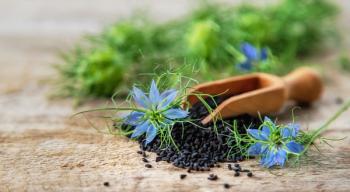
Bryce Wylde: Amazing to be with you at Expo West 2026 almost 100,000 in attendance here. So excited. One of the first times we've launched, in this type of environment, CAVU Nutrition’s cortisol support, using proprietary ThymoQuin extract of black seed oil.
McEvoy: Perfect. So what differentiates this ingredient in this product compared to other products for stress management?
Wylde: Science, evidence, human clinical trials. Which is not always the case in the industry. Still a little bit buyer beware out there. In an environment like Expo West, you really got to not only read the label, but as a consumer, be educated as to where to look for the science. So it's a really interesting thing.
One of the trends this year is cortisol management, right? And we all know that stress is sometimes bad in high doses, but it's not all bad. Little bits, we deal with stress, physical, emotional, mental, all the time. I like to explain this kind of like an elastic band. We like to stretch, but staying stretched for too long, that can be bad. In fact, we can stretch so much that we break right? But the body is meant to have this, basically a response of stress called a cortisol surge, or an adrenaline surge. This we call sympathetic and we've heard of this as fight or flight, but then there's a parasympathetic response that we refer to as rest and digest. That's what we're not so good at these days, is getting back to a rest and digest, this parasympathetic state. So what's the arch nemesis of that? Cortisol. Turns out, when the adrenal glands that sit on top of your kidneys push the adrenaline and the cortisol for too long, it's no good for the body. Inflammation rises, something called reactive oxygen species, free radicals. This is why we're told eat more blueberries and take our antioxidants, right? By the way, you must have had this experience yourself—stress for too long, you get sick, colds, flus, your immune system can't handle it anymore. So there is no such thing as suppressing cortisol with natural ingredients. What there is, is supporting the immune system, supporting inflammation in the body, supporting the antioxidant reactive oxygen balance in the body, using studied human clinical evidence, studied antioxidant neutralizing capacity of something like black seed oil, standardized thymoquin. And one thing we're looking for in this day and age is a black seed oil like ThymoQuin that has been standardized, not just for the amount of thymoquinone, the active ingredient, but also that it's free from specific amounts of free fatty acids.
McEvoy: All right. So can you talk a little bit more about the specific results in the clinical research and how this positions ThymoQuin different from other products, yeah.
Wylde: So one really easy way to test for stress is physical stress. Mental, emotional stress, it's kind of hard to gage. We all have a different threshold. I consider this as human threshold. Like boiling water, water boils at sea level at 100 degrees. We all have that sort of threshold. For me, it might be 90 degrees. For you, maybe you can handle more and you're 110 but once we reach that maximum threshold that we boil over, we need support, or again, our systems fail, we fall apart.
That's kind of hard to gage, but what we do know is that physical stress has specific levels and barriers from which then the body starts to break down. So really great group to study are athletes. And Dr. Shawn Talbott looked at a group of marathon runners and the physical stress that they underwent when they were running long distances. Yes, there's the mental, emotional component to that, as well the pre race day and the preparation so forth. But the very physical stress that the body endures during marathon running, he was able to find that actually the cortisol, which is a purposeful response by physical stress in the body, post run, by taking the ThymoQuin, was able to reduce cortisol to a safe and healthy level by managing the inflammation that ensues by what we call the hypothalamus-pituitary-adrenal axis. By managing that and again, back to the inflammation that ensues from too much stress and the reactive oxygen species, the free radicals and all of that stuff that results as a too high stress for too high period of time—hence, marathon running—studies showed that they were able to significantly reduce that level of cortisol.
McEvoy: Nice, very nice. So how is this being positioned in the stress management category? What highlights it as different, and what makes it stand out
Wylde: So cortisol is trending now in a huge way. Folks can reference sites like SPINS and SPATE.NYC, and they can see #cortisol that comes through platforms like Instagram or Tiktok or Google searches. People have deemed cortisol bad and vilified cortisol. And part of the message I like to get out there is that cortisol is not necessarily the enemy. It's just bad when it's too high for too long. So the way that we're positioning the CAVU Nutrition cortisol support is, how do we ensue balance back into your body? How do we make sure that we're managing cortisol? So when you wake up in the morning, your cortisol is supposed to be high, and so that dip, it's called a 4-point cortisol analysis, is what I test on my patients all the time. That is supposed to then dip at around noon and then have this nice little plateau into the evening before bed, to allow your body to relax and adjust into sleep. That is a natural circadian rhythm of cortisol. However, in this modern age, we're flipped. We wake up exhausted, tired, depleted, and then by the end of the day, somewhere around two, three o'clock, our cortisol strikes upward, starts to go up. It's the exact inverse or opposite direction we should be looking for, for optimal health. So the way we're positioning is this, we're trying to restate that optimal bounce. We're trying to re imagine that curve going the opposite direction. And so where everyone else is talking about cortisol busting, cortisol suppression, we're trying to say no, let us help you get back to a cortisol rhythm, a cortisol balance that mother nature intended.
McEvoy: Definitely a lot of nuance to address there. Thank you so much for your insights.
Wylde: My pleasure. Thank you so much for having us.