The comprehensive review synthesizes mechanistic and clinical evidence on the probiotic strain's role in enhancing non-heme iron absorption.
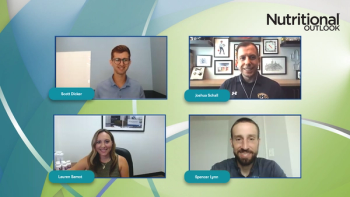
In this interview clip, Andrea Fuso, PhD, compares the effects of supplementation with S-adenosyl-L-methionine (SAMe) with supplementation of B vitamins.
Andrea Fuso, PhD, is an Associate Professor of Clinical Biochemistry and Clinical Molecular Biology at the Department of Experimental Medicine, Sapienza University of Rome. He is also a member of the Interdepartmental Center for Research in Neurobiology “Daniel Bovet” (CRiN) at Sapienza, an associate editor for Frontiers in Molecular Biosciences and Frontiers in Epigenetics and Epigenomics, review editor for Frontiers in Nutrition, and member of the editorial board of Clinical Epigenetics and Epigenomes.
In this interview clip, he compares the effects of supplementation with S-adenosyl-L-methionine (SAMe) with supplementation of B vitamins, highlighting the health or diet conditions where supplementation is most effective.
Transcript
Nutritional Outlook: How does supplementation with SAMe impact processes like DNA methylation compared to supplementing with B vitamins or consuming foods that the body can metabolize to produce SAMe?
Andrea Fuso: Nice question, yes. My answer is, it depends on the subject, probably. Maybe in young people with a correct nutritional behavior, we have a sufficient B vitamin intake, and we have a sufficient B vitamin absorption, so the one-carbon metabolism can work correctly.
The problem can be manifest when you have some alteration of the one-carbon metabolism. For example, one of the main alteration is the MTHFR polymorphism, which is a mutation in the gene involved in the folate reduction. And 30% of the population has a polymorphism in this gene, and that causes a reduction in homocysteine transformation to methionine, and in this case, B vitamins cannot be sufficient, so in this situation, or in aged people with the reduced absorption or reduced introduction of B vitamins, or in some cases, in people following vegan or vegetarian nutritional protocols without correct checking of the nutrients intake, deficiency in B vitamin can be real, and in this case, I understand that the question is correct, why cannot we just supplement B vitamins?
My idea is that if we directly give the methylating agent, we apply a shortcut, and we can have a more rapid effect. The point is that if we have a problem, for example, with vitamin B absorption, we can supplement B vitamin, but the gastrointestinal tract is not ready to guarantee a sufficient intake. So in that case, SAMe supplementation can be more effective. And the other point is that, as I told, B vitamins are cofactor in many enzymatic activities, not just enzymes involved in one-carbon metabolism. So the B vitamin supplementation can be, let's say, fragmented in many biochemical pathways, whereas some supplementation point right to the transmethylation reaction. So it can be effective for cognitive health via the synthesis of neurotransmitters. Can be effective in the protection of the of the liver, can be effective in a long-term way, restoring the correct methylation potential. Because, for example, in our experiments in pre-clinical model, in animal models, we observed that when we deprive animals of B vitamins, and so we have an alteration of the SAMe/SAH [S-Adenosyl-L-homocysteine] ratio, so a decreasing of methylation potential, giving some can overcome this block and can restore correct methylation in in the brain of the mice.